In the process of manufacturing industry transformation and upgrading, the production of automated machines has brought a new wave of revolution. While traditional factories are still worried about rising labor costs, efficiency bottlenecks and safety risks, OK Collabotive Palletizing Robot has become the preferred solution for many enterprises with the core advantages of “high precision, high speed and high flexibility”.
Palletizing robots are industrial robots serving as critical nodes in production logistics. Their core function is to replace human labor in material handling tasks such as grasping, stacking, and palletizing (stacking) of goods (e.g., 纸箱, drums, 包). Featuring high precision, 速度, and flexibility, these robots achieve automated operations through a “perception-decision-execution” system. This enhances operational efficiency, reduces material damage rates, and lowers labor costs. They are widely used in industries including food and beverage, machinery manufacturing, 电子产品, and logistics warehousing.
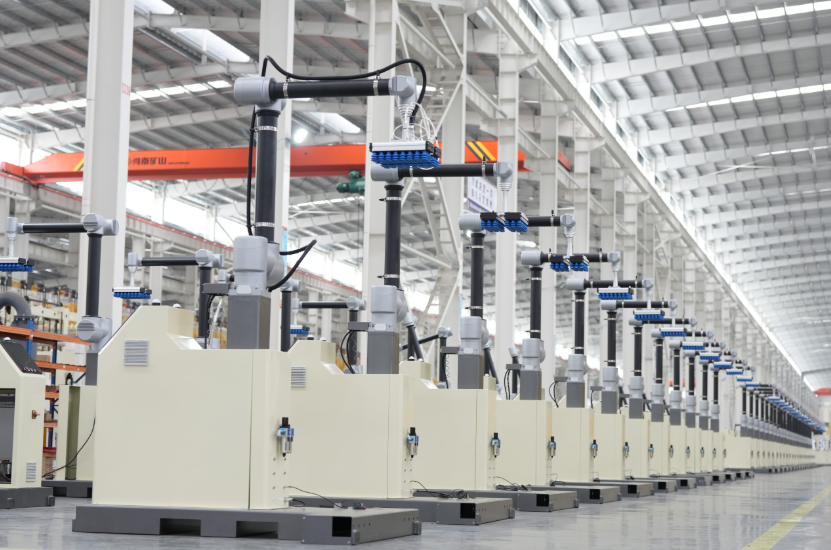
Robot Components
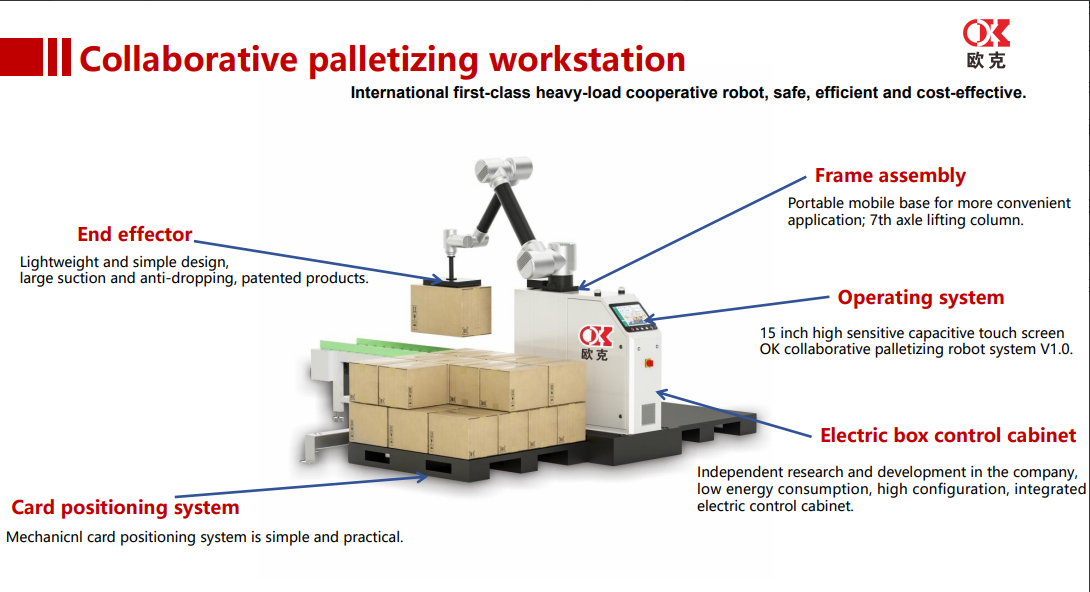
Customized palletizing robot solutions
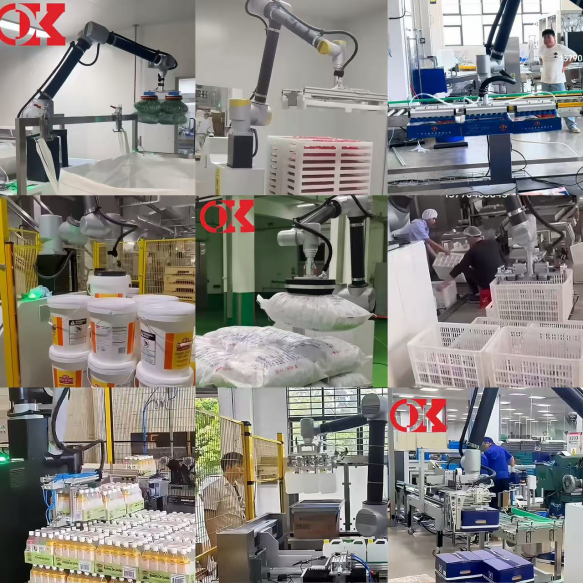
With its strong adaptability, palletizing robots have become a customized solution in various industries. For the manufacturing industry, it can bring multi-dimensional core value.
What industries can palletizing robots be used in
Palletizing robots can be used at the end of different production lines
In the food and beverage industry, it can meet the high beat palletizing requirements of bottled water and beer, and has aseptic protection design for baked goods;
In the field of chemical building materials, it can realize the anti-leakage grabbing of bagged cement and fertilizer, as well as the stacking of plates;
The electronic and electrical industry is equipped with anti-static gripping devices for PCB board palletizing, and can also provide buffer protection palletizing solutions for home appliance accessories;
In the logistics and storage link, it supports the mixed code stacking of e-commerce packages, and has low-temperature resistant models to adapt to the cold chain environment.
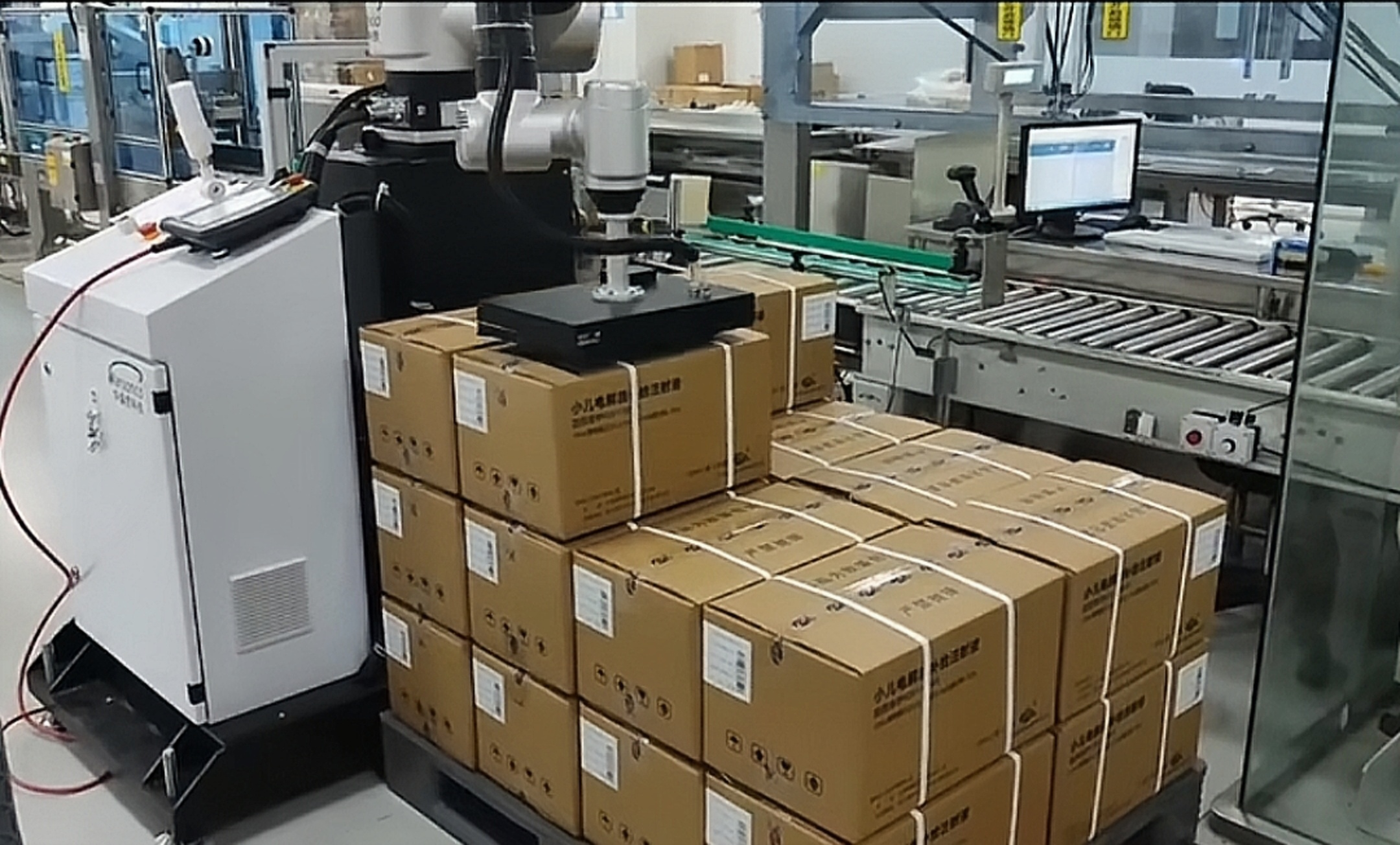
What problems can palletizing robots solve for manufacturing
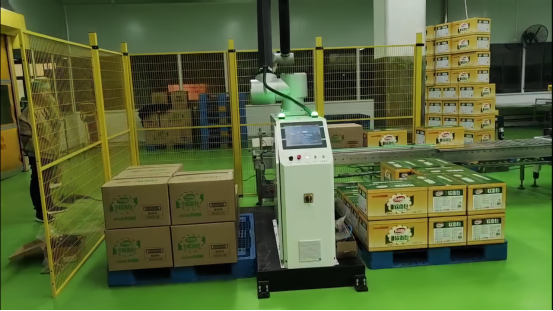
Palletizing robot solution
Palletizing robots can operate continuously for 24 hours with stable production rhythms, boosting line efficiency by 50%-150%. A single robot can replace 3-5 skilled workers. With an average annual labor cost of 80,000 yuan, each robot saves 240,000-400,000 yuan annually, and the ROI period is generally less than 8 月.
The robot carries heavy loads through mechanical structures, and with protective devices such as lidar, security fence and light curtain, the accident rate of handling can be reduced by more than 80%. The collision detection technology also enables human-machine collaboration without isolation, further improving safety.
The palletizing robot achieves ±0.04mm positioning accuracy with its 3D vision system, enabling precise material handling and stacking. This system optimizes space utilization to 95% while maintaining a material damage rate below 0.5%.
The robot can quickly switch materials (比如纸箱, 包, and irregular parts) by changing fixtures (vacuum cups, mechanical grippers, ETC。) and adjusting programs, and supports flexible switching of various stacking patterns such as field and plum blossom.
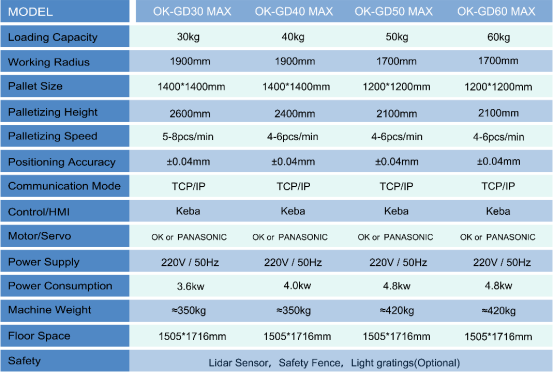
Key parameters and features of palletizing robot:
The base palletizing robot supports 20-60kg payload
working radius of 1700mm-1900mm.
It accommodates pallet sizes including 1400*1400mm, 1200*1200毫米, and other customized configurations.
The system achieves a palletizing height of 2100mm-2600mm
Operates speeds: at 6-12 units per minute, maintaining stable performance. the speed decreases proportionally with heavier loads.
Positioning accuracy: ±0.004mm.
Communication mode: TCP/IP, control system: Keba.
Motor/Actuator: OK or Panasonic.
Base area: 1050×1716mm, standardized spatial layout.
重量: 350KG-420KG.
Safety features: LiDAR, safety railings, optional grating, multiple safety measures. Operation process of palletizing robot.
Packing robot gripper; flexible fixture and adjustable structure
Our palletizing robot is flexible and can match any product.
Carton suction cup case:
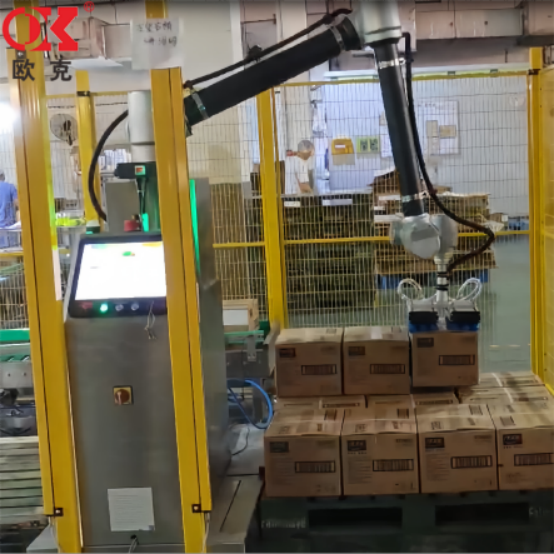
How to operate the palletizing robot
Basic operation: Call the preset program (select the pre-program for the corresponding material, which includes parameters such as grab path and pallet stacking plan) —–Confirm parameters (check pallet height, pallet specifications, stacking spacing, ETC。) —–Start operation—–Emergency stop
With 3D vision and the “Auto Recognition” feature enabled, the robot can scan material locations in real time without manual positioning, making it suitable for scenarios with slight material displacement
When multiple robots operate in coordination, select “Collaborative Mode” in the control cabinet to set task allocation rules (e.g., division by production line rhythm) and ensure no collision interference.
Why choose OK collaborative palletizing robot
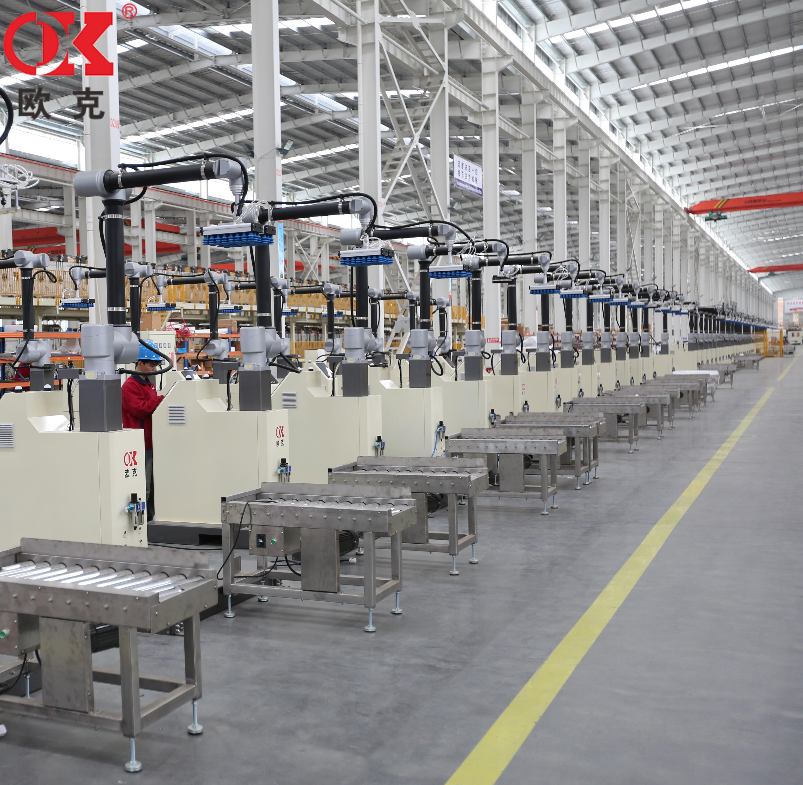
OK listed company China first-line brand
High-precision operation: Equipped with 3D visual recognition system and deep learning algorithm, the grasping accuracy in dynamic environment reaches ±0.04mm.
High flexibility adaptation: Intelligent switching of materials of multiple sizes is supported by motion control algorithm, which can scan object size in real time through vision and automatically plan the path, and can process two different products at the same time.
Longevity and stable performance: it can be used for 6-7 years, and imported brands can be used for 8 years.
High cost-effectiveness and quick return on investmentFull lifecycle service eliminates after-sales concerns
Customized solution design: provide free production line research and simulation test, and customize the solution according to the customer site and material characteristics.
Fast delivery and training: 100,000 square meters of factory, the shortest delivery cycle of 7 days, “online + offline” operation training, ordinary employees can quickly master the basic programming in 2 hours.
常见问题解答 (FAQ):
问: How does the palletizing robot handle objects of different sizes?
一个: The palletizing robot efficiently processes objects of varying sizes through a combination of “hardware flexibility and intelligent dynamic control”. The core logic follows the sequence: “first recognition, then adaptation, followed by execution”.
问:What’s the price of a palletizing robot?
一个: The payback period for using a palletizing robot is 6-12 月. OK Robotics is a direct manufacturer with no middlemen, offering competitive pricing.
问:As for after-sales maintenance, what is the quality assurance?
一个: The warranty period of palletizer is one year. After the warranty period, we will still provide remote guidance. After the warranty period, if the configuration is broken, we can sell it at cost.
The global palletizing robot market is undergoing a profound transformation. Driven by technological advancements and evolving market demands, palletizing robots have evolved from mere tools for labor substitution into indispensable core components within smart factory ecosystems. This article explores the latest developments and future trends in the palletizing robot industry.
Core Drivers: From Cost Control to Strategic Value
Market growth is no longer solely driven by labor cost considerations. The explosive growth of e-commerce logistics, increasing emphasis on workplace safety and ergonomics, and the urgent need to build Industry 4.0 digital factories collectively fuel the adoption of palletizing robots. Companies invest in palletizing robots to enhance supply chain resilience and enable data-driven decision-making, thereby securing long-term competitive advantages.
Four Major Trends in Technological Evolution
1.Deep Integration of AI and Vision Guidance
Traditional “blind palletizing” is rapidly being replaced by vision-guided systems. 2D/3D vision systems enable robots to accurately identify and locate randomly oriented cartons or bagged products. More importantly, Artificial Intelligence (AI) and Machine Learning (ML) algorithms are being deployed for defect detection (identifying damaged cases before palletizing), optimizing pallet patterns, and enabling predictive maintenance, significantly enhancing system intelligence and reliability.
2. The Rise of Collaborative Robots
Collaborative palletizing robots are becoming the ideal choice for small and medium-sized enterprises (SMEs) and flexible production environments. They can work safely alongside humans in shared spaces without the need for heavy safety cages required by traditional industrial robots, offering rapid and flexible deployment. With continuously improving payload capacities (now exceeding 25kg), cobots are expanding into more medium-to-low-speed palletizing applications.
3. Software and Digital Ecosystem as a Core Competitiveness
The industry’s competitive focus is shifting from hardware performance to software and digital services. Advanced Offline Programming (OLP) software allows for debugging and product changeovers in a virtual environment, minimizing production downtime. Furthermore, robots connected via IoT platforms enable remote monitoring, data analytics, and energy management, providing users with unprecedented operational insights and control.
4. Modularity and “Plug-and-Play” 设计
To shorten delivery cycles and reduce integration complexity, modularity and standardization have become key directions in product design. “Plug-and-play” palletizing cells, which integrate the robot, end-effector, and control system, significantly simplify installation and commissioning, making the deployment of automation solutions as straightforward as installing standard equipment.
Future Outlook
In the future, palletizing robots will be more deeply integrated into smart logistics systems, working seamlessly with Autonomous Mobile Robots (AMRs), smart forklifts, and Warehouse Management Systems (WMS). The ultimate goal is no longer to complete a task in isolation, but to function as an intelligent node within an entire flexible, adaptive, and highly efficient material handling system, dynamically responding to real-time demands and continuously creating value for businesses.
In today’s era of intelligent and digital manufacturing, vision inspection technology has become a critical enabler for ensuring product quality and enhancing production efficiency. Traditional reliance on manual visual inspection is not only inefficient and susceptible to subjective factors but also falls short in enabling continuous data traceability and analysis. Implementing an advanced vision inspection system facilitates fully automated quality monitoring throughout the production process, significantly reducing escape rates and false calls. Simultaneously, it enables real-time data acquisition and analysis of the production process, providing a scientific basis for quality improvement and process optimization.
With stable, reliable, and repeatable inspection results, enterprises can effectively increase the First Pass Yield, reduce material waste and lower production costs, and establish a systematic quality traceability framework. The OKBOLONG Vision Inspection System is built upon this very value proposition, combining cutting-edge vision technology with deep industry insights to deliver quality solutions that exceed customer expectations.
I. Deep Industry Expertise, Comprehensive Application Coverage
The OKBOLONG Vision Inspection System is not a generic solution; it is born from a profound understanding of specific industries. We possess unparalleled, extensive experience, particularly in the hygiene products sector, achieving comprehensive inspection coverage across product lines such as sanitary napkins, diapers, training pants, mattress pads, and nursing pads.
Core Inspection Capabilities Include:
II. Flexible Configuration, Dual-Brand Strategy Meets Diverse Needs
To meet the requirements of differently positioned customers, Okobolon offers two main product lines: world-renowned brand systems and our own proprietary brand systems, providing flexible choices.
III. Technology-Driven, Building a Solid System Foundation