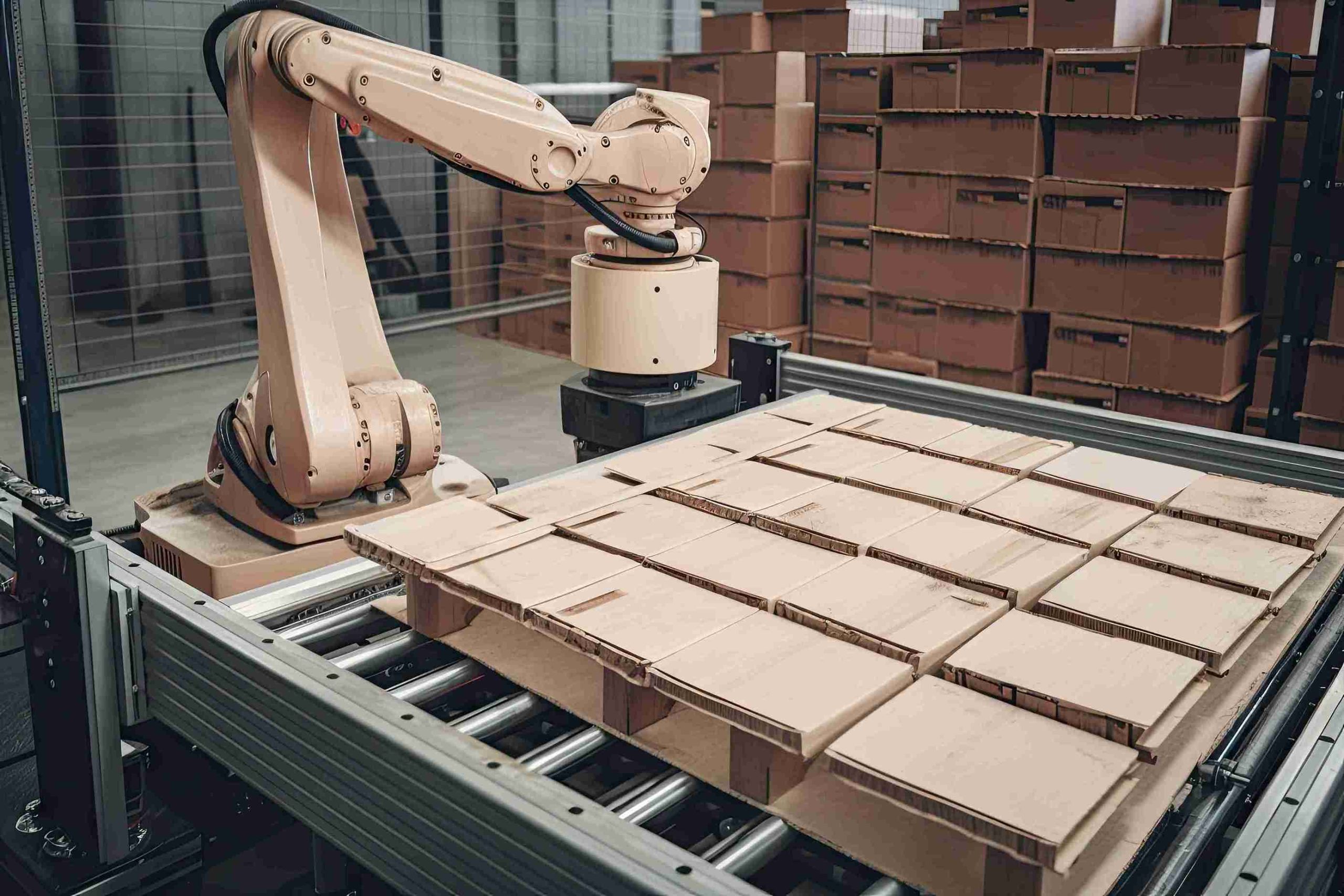
The global palletizing robot market is undergoing a profound transformation. Driven by technological advancements and evolving market demands, palletizing robots have evolved from mere tools for labor substitution into indispensable core components within smart factory ecosystems. This article explores the latest developments and future trends in the palletizing robot industry.
Core Drivers: From Cost Control to Strategic Value
Market growth is no longer solely driven by labor cost considerations. The explosive growth of e-commerce logistics, increasing emphasis on workplace safety and ergonomics, and the urgent need to build Industry 4.0 digital factories collectively fuel the adoption of palletizing robots. Companies invest in palletizing robots to enhance supply chain resilience and enable data-driven decision-making, thereby securing long-term competitive advantages.
Four Major Trends in Technological Evolution
1.Deep Integration of AI and Vision Guidance
Traditional “blind palletizing” is rapidly being replaced by vision-guided systems. 2D/3D vision systems enable robots to accurately identify and locate randomly oriented cartons or bagged products. More importantly, Artificial Intelligence (AI) and Machine Learning (ML) algorithms are being deployed for defect detection (identifying damaged cases before palletizing), optimizing pallet patterns, and enabling predictive maintenance, significantly enhancing system intelligence and reliability.
2. The Rise of Collaborative Robots
Collaborative palletizing robots are becoming the ideal choice for small and medium-sized enterprises (SMEs) and flexible production environments. They can work safely alongside humans in shared spaces without the need for heavy safety cages required by traditional industrial robots, offering rapid and flexible deployment. With continuously improving payload capacities (now exceeding 25kg), cobots are expanding into more medium-to-low-speed palletizing applications.
3. Software and Digital Ecosystem as a Core Competitiveness
The industry’s competitive focus is shifting from hardware performance to software and digital services. Advanced Offline Programming (OLP) software allows for debugging and product changeovers in a virtual environment, minimizing production downtime. Furthermore, robots connected via IoT platforms enable remote monitoring, data analytics, and energy management, providing users with unprecedented operational insights and control.
4. Modularity and “Plug-and-Play” 设计
To shorten delivery cycles and reduce integration complexity, modularity and standardization have become key directions in product design. “Plug-and-play” palletizing cells, which integrate the robot, end-effector, and control system, significantly simplify installation and commissioning, making the deployment of automation solutions as straightforward as installing standard equipment.
Future Outlook
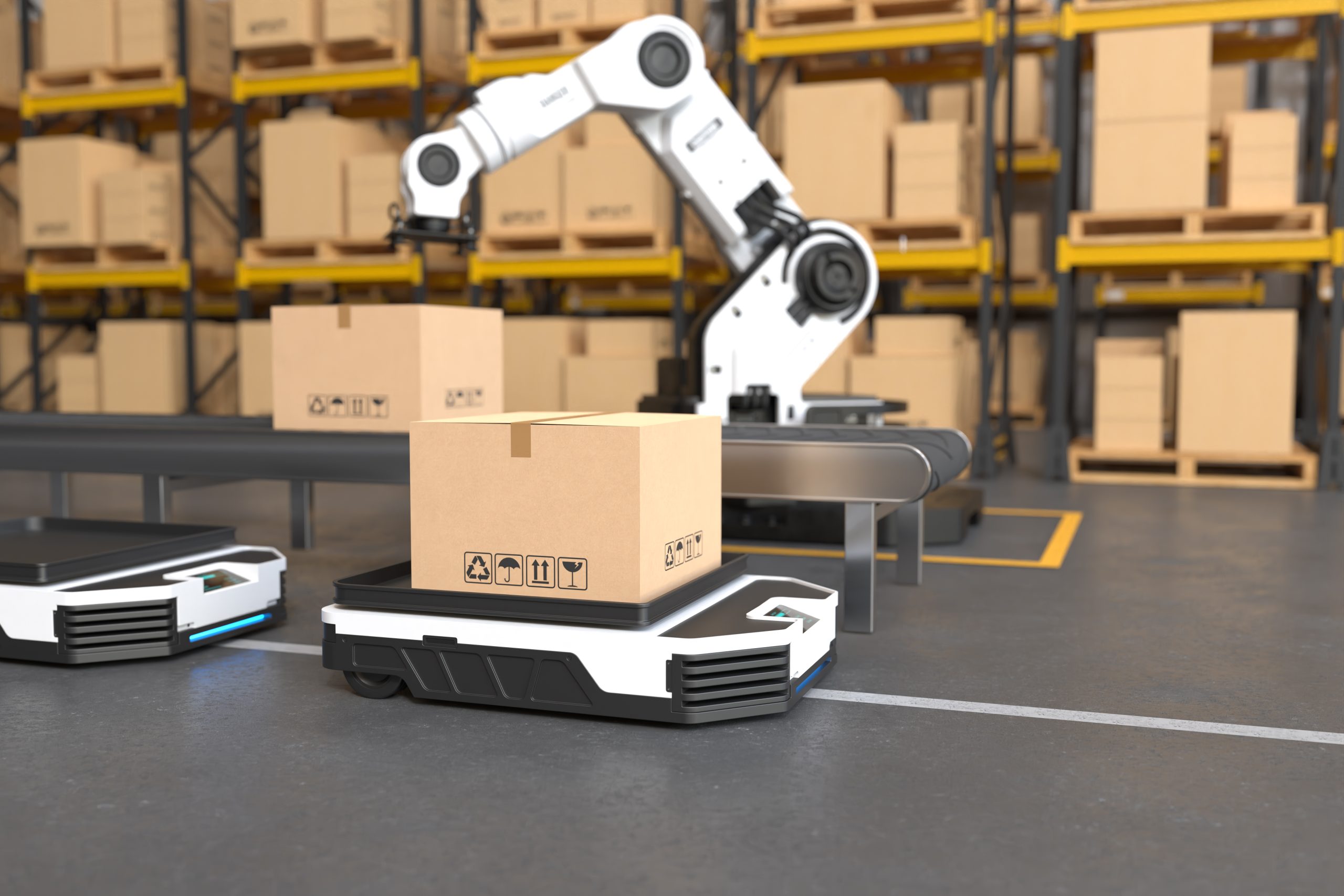
In the future, palletizing robots will be more deeply integrated into smart logistics systems, working seamlessly with Autonomous Mobile Robots (AMRs), smart forklifts, and Warehouse Management Systems (WMS). The ultimate goal is no longer to complete a task in isolation, but to function as an intelligent node within an entire flexible, adaptive, and highly efficient material handling system, dynamically responding to real-time demands and continuously creating value for businesses.