Global supply chains are changing faster than ever. Warehouses are under pressure to move faster, 降低成本, and handle more orders with fewer workers. This is where robotics, AI, and connected systems are stepping in to reshape how goods are stored, picked, packed, and shipped.
What used to be simple 仓库自动化 is now becoming a fully intelligent ecosystem. 在 2026, we are seeing a clear shift where machines are not just assisting humans but actively working alongside them with real-time decision-making powered by data.
So what exactly is driving this transformation, and which technologies are leading the way?
Let’s break it down through the most important trends shaping the future of logistics.
智能包装 & Logistics Automation and the Rise of Intelligent Warehouses
The modern warehouse is no longer just a storage space. It is becoming a connected digital system where every movement is tracked, analyzed, and optimized in real time. This is the foundation of Smart Packaging & Logistics Automation Tech Trends to Watch in 2026, where efficiency depends on how well machines and data work together.
Warehouse automation is now powered by IoT sensors that track inventory levels, environmental conditions, and equipment performance. At the same time, robotic process automation in logistics is reducing manual work in order processing, invoicing, and tracking updates. Together, these systems create a faster and more reliable supply chain.
Smart warehouses are also becoming more predictive. Instead of reacting to problems, companies are starting to prevent them before they happen.
Key benefits of intelligent logistics systems
The biggest advantage of this shift is visibility. Managers can now see exactly what is happening across the entire warehouse in real time. This leads to fewer errors, better planning, and lower operational costs. Another major benefit is speed. When systems communicate automatically, delays are reduced significantly, improving customer satisfaction.
So how do robots fit into this growing ecosystem?
Autonomous Mobile Robots
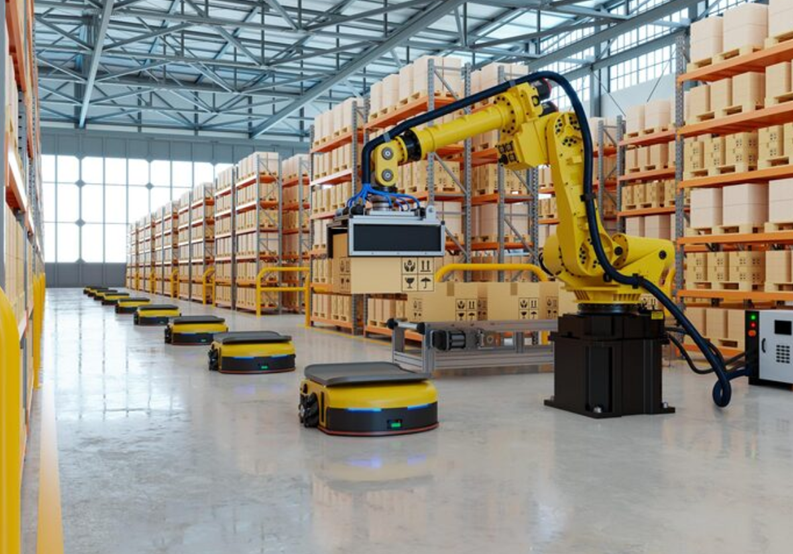
One of the most visible changes in modern logistics is the rise of autonomous mobile robots. These machines are designed to move goods across warehouses without fixed paths, unlike older automated guided vehicles. They can adapt to dynamic environments, 避开障碍物, and optimize their routes in real time.
In the context of Smart Packaging & Logistics Automation autonomous mobile robots are becoming essential for warehouse automation because they reduce the need for manual transportation and speed up order fulfillment.
例如, in a large e-commerce fulfilment centre, autonomous mobile robots can pick up storage racks, deliver them to human workers, and then move on to the next task without waiting for instructions. This creates a continuous flow of operations that significantly increases productivity.
Why autonomous mobile robots improve warehouse efficiency
The biggest improvement comes from flexibility. Unlike fixed conveyor systems, these robots can be scaled up or down depending on demand. This makes them ideal for businesses with seasonal spikes or unpredictable order volumes. They also reduce physical strain on workers, allowing humans to focus on higher-value tasks.
But what happens when hundreds of robots need to work together in the same space?
Swarm Robotics
Swarm robotics is one of the most exciting developments in modern warehouse automation. Instead of controlling each robot individually, swarm robotics allows groups of robots to coordinate their actions like a connected system.
In Smart Packaging & 物流自动化, swarm robotics represents the future of scalable warehouse systems. These robots communicate with each other and adjust their behavior based on real-time conditions inside the warehouse.
This approach is especially useful in large distribution centers where thousands of items move every hour. If one robot stops working, others can instantly adjust their routes, ensuring that operations continue without disruption.
How swarm robotics improves scalability and resilience
The key benefit is system resilience. Traditional systems often break down when one component fails. Swarm robotics solves this problem by distributing intelligence across many machines. It also makes it easier to expand operations, since adding more robots naturally increases system capacity without redesigning the entire workflow.
As robots become smarter physically, what about the invisible systems behind them?
IoT Sensors and Robotic Process
Behind every smart warehouse is a powerful layer of data. IoT sensors are responsible for collecting real-time information about inventory, temperature, movement, and machine health. This data feeds directly into warehouse automation systems, allowing managers to make informed decisions instantly.
Within Smart Packaging & 物流自动化, IoT sensors work closely with robotic process automation in logistics. While sensors handle physical data collection, RPA handles digital workflows such as order updates, shipping confirmations, and invoice generation.
For instance, when a product leaves a warehouse shelf, IoT sensors can instantly update inventory levels while RPA systems update the customer order status automatically. This reduces delays and eliminates human error.
The role of data in modern warehouse automation
Data is now the foundation of logistics efficiency. With better visibility, companies can predict demand, reduce waste, and improve delivery accuracy. IoT sensors also help detect equipment issues early, reducing downtime and maintenance costs.
So if data handles the invisible side of logistics, what about the physical quality of products and packaging?
AI Vision Systems
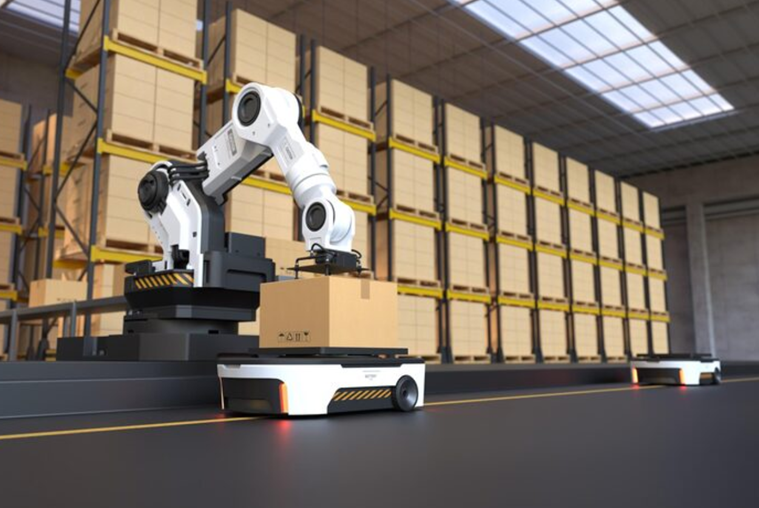
AI vision systems are transforming how warehouses inspect, sort, and package products. These systems use cameras and machine learning to detect defects, verify labels, and ensure correct packaging before items are shipped.
In Smart Packaging & 物流自动化, AI vision adds another layer of intelligence to warehouse
automation by reducing human error and increasing processing speed.
例如, in a packaging line, AI systems can instantly detect if a box is damaged or incorrectly labeled. The system can then automatically reroute the item for correction without slowing down the entire process.
Why AI vision systems improve accuracy and speed
The main advantage is consistency. Unlike human inspection, AI systems do not get tired or distracted. They can operate 24 hours a day with the same level of accuracy. This leads to fewer returns, higher customer satisfaction, and better brand reputation.
Now that warehouses are becoming smarter and more automated, how do companies plan and optimize these complex systems before building them?
Digital Twins
Digital twins are virtual models of real-world warehouse systems. They allow companies to simulate operations before physically implementing them. This helps identify inefficiencies, test robot routes, and improve overall design.
In Smart Packaging & 物流自动化, digital twins are becoming a critical tool for warehouse automation planning. They allow businesses to experiment with different layouts and robotic configurations without any real-world risk.
例如, a company can simulate peak season demand to see how autonomous mobile robots and IoT sensors will perform under pressure. This helps reduce costly mistakes during actual operations.
How digital twins support smarter decision making
The biggest advantage is foresight. Instead of reacting to problems, companies can predict them and adjust in advance. This leads to smoother operations and better long-term efficiency.
结论
Across all these trends, one thing is clear. The future of logistics is fully connected, intelligent, and highly automated. From autonomous mobile robots to swarm robotics, from IoT sensors to robotic process automation in logistics, every technology plays a role in building faster and smarter supply chains.
Warehouse automation is no longer just about replacing manual labor. It is about creating systems that think, adapt, and improve continuously. As we move deeper into 2026, companies that adopt these technologies early will gain a strong competitive advantage in speed, cost efficiency, and customer satisfaction.
At the center of this transformation are solutions like those developed by OK, helping manufacturers and logistics providers build smarter, more flexible automation systems powered by robotics and intelligent control.
If you are exploring how to upgrade your warehouse automation strategy or integrate autonomous mobile robots into your operations, OK can help you design systems that fit your exact needs. Reach out to their team to start building a more efficient and future-ready logistics operation today.
常见问题解答
What is smart packaging and logistics automation?
It refers to using robotics, AI, IoT sensors, and software systems to make warehouse and supply chain operations faster, more accurate, and more efficient.
How do autonomous mobile robots help warehouse automation?
They move goods independently across warehouses, reducing manual labor and improving speed, 灵活性, and order accuracy.
What role do IoT sensors play in logistics?
IoT sensors collect real-time data on inventory, equipment, and conditions, helping improve tracking, 维护, and decision-making.
What is robotic process automation in logistics?
It automates digital tasks like order updates, invoicing, and shipment tracking, reducing errors and saving time.
Why is swarm robotics important?
It allows multiple robots to work together intelligently, improving scalability, efficiency, and system resilience.