The world of logistics is changing faster than ever. Online shopping keeps growing. Customers expect next-day delivery. Warehouses are under pressure to sort more packages in less time, with fewer errors.
So how can companies keep up?
This is where machine vision becomes a game-changer.
From reading barcodes to guiding robotic arms, machine vision is helping logistics companies sort packages faster, more accurately, 并且更高效. But how exactly does it work, and why is it becoming so important? Let’s explore.
What Is Machine Vision and Why Does It Matter in Logistics Sorting?
Before we talk about benefits, we need to understand what machine vision really means.
Machine vision is a technology that allows computers and cameras to see, inspect, and make decisions based on images. In logistics sorting, it acts like a pair of highly intelligent eyes on the production line.
In simple terms, machine vision systems use cameras, lighting, and software to capture images of parcels. Then the system analyzes those images to identify labels, measure package sizes, detect damage, and guide sorting equipment.
How Machine Vision Works on a Sorting Line
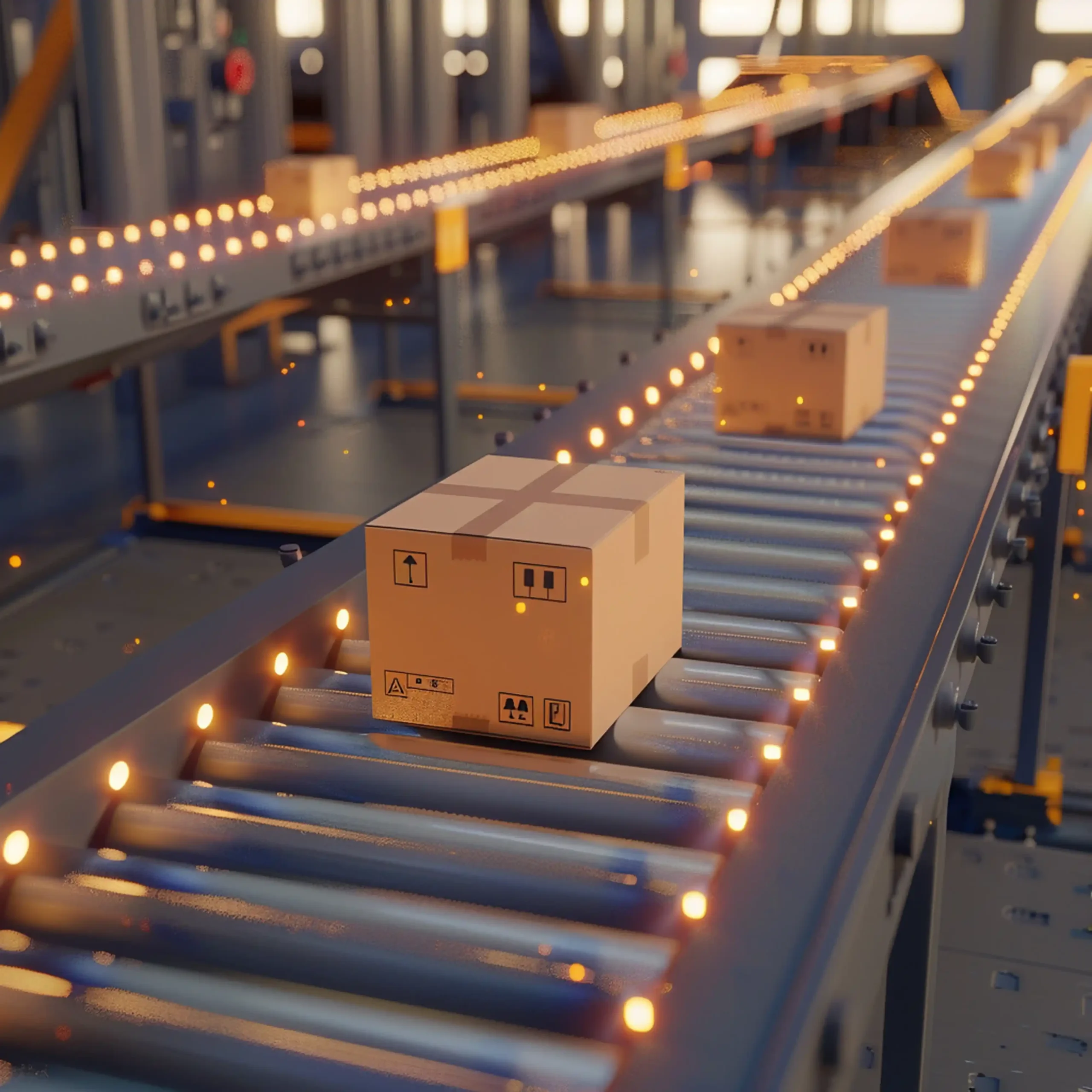
Imagine a parcel moving along a conveyor belt. As it passes under a camera, the machine vision system takes a picture in milliseconds. The software immediately checks:
- Is there a barcode?
- Can it read the shipping label?
- What are the parcel’s dimensions?
- Is the package damaged?
- Where should it go next?
Within seconds, the system sends instructions to a diverter or a robotic arm. The parcel is sorted without human touch.
Now think about this: what happens when thousands of parcels move every hour? Human eyes get tired. Machine vision does not.
Why Machine Vision Is Becoming Essential in Modern Warehouses
Warehouses today look very different from those ten years ago. E-commerce has changed everything. There are more parcel types, more packaging materials, and higher customer expectations.
So why is machine vision becoming essential?
第一的, parcel variety is increasing. Packages come in boxes, polybags, envelopes, and irregular shapes. Manual sorting struggles with this diversity. Machine vision adapts quickly.
第二, speed is critical. Customers expect fast shipping. Sorting delays can lead to unhappy buyers and lost revenue. Machine vision allows continuous, high-speed inspection without slowing down the line.
第三, accuracy matters more than ever. A single mis-sorted package can cause delivery delays, return costs, and damage to a company’s reputation. Machine vision significantly reduces sorting errors.
But speed and accuracy are not the only reasons. Let’s look deeper.
Handling Labor Challenges
Labor shortages are a real issue in many regions. Sorting work is repetitive and physically demanding. By introducing machine vision, companies reduce dependence on manual inspection and improve workplace safety.
Supporting Data-Driven Decisions
Every time a machine vision system scans a parcel, it collects data. That data can reveal bottlenecks, label problems, or packaging trends. 随着时间的推移, this information helps managers improve operations.
With all these benefits, it becomes clear why more warehouses are investing in machine vision solutions.
But how exactly does it improve daily operations?
How Machine Vision Improves Speed, Accuracy, and Efficiency
It is easy to say that machine vision improves performance. But what does that really mean for logistics sorting?
Let’s break it down.
Faster Barcode and Label Reading
High-speed cameras can capture and decode barcodes in milliseconds. Even if a label is slightly wrinkled or placed at an angle, advanced machine vision algorithms can still read it.
This reduces no-read errors and minimizes manual rechecking.
Better Parcel Identification and Classification
Machine vision can identify different types of parcels automatically. 例如, it can distinguish between cartons and soft packages. This allows the system to route parcels to the correct handling lane.
Is the parcel fragile? Oversized? Irregularly shaped? The system can decide instantly.
Accurate Dimensioning and Measurement
By combining 2D and 3D imaging, machine vision systems can measure the length, 宽度, and height of each parcel. Accurate measurements help companies optimize storage space and reduce shipping cost mistakes.
Reduced Error Rates
Human operators may miss damaged packaging or misread labels after long shifts. Machine vision maintains consistent accuracy all day.
When accuracy improves, customer satisfaction improves. When efficiency improves, costs decrease. Isn’t that what every logistics manager wants?
Key Components of a High-Performance Machine Vision System
Now that we understand the benefits, what makes a strong machine vision setup?
A successful system is not just about a camera. It includes several important components working together.
第一的, high-quality cameras capture clear images at high speed. 第二, proper lighting ensures that labels and surfaces are visible without glare or shadows.
After image capture, the software processes the data. It decodes barcodes, performs text recognition, and applies intelligent algorithms for classification and decision making.
Integration is also critical. A machine vision system must connect smoothly with warehouse control systems, conveyor controls, and robotic equipment. Without proper integration, even the best technology cannot deliver results.
So how does this connect to robotics? That is where automation reaches the next level.
How Machine Vision Works with Robotic Sorting Systems
Machine vision becomes even more powerful when combined with robotic automation.
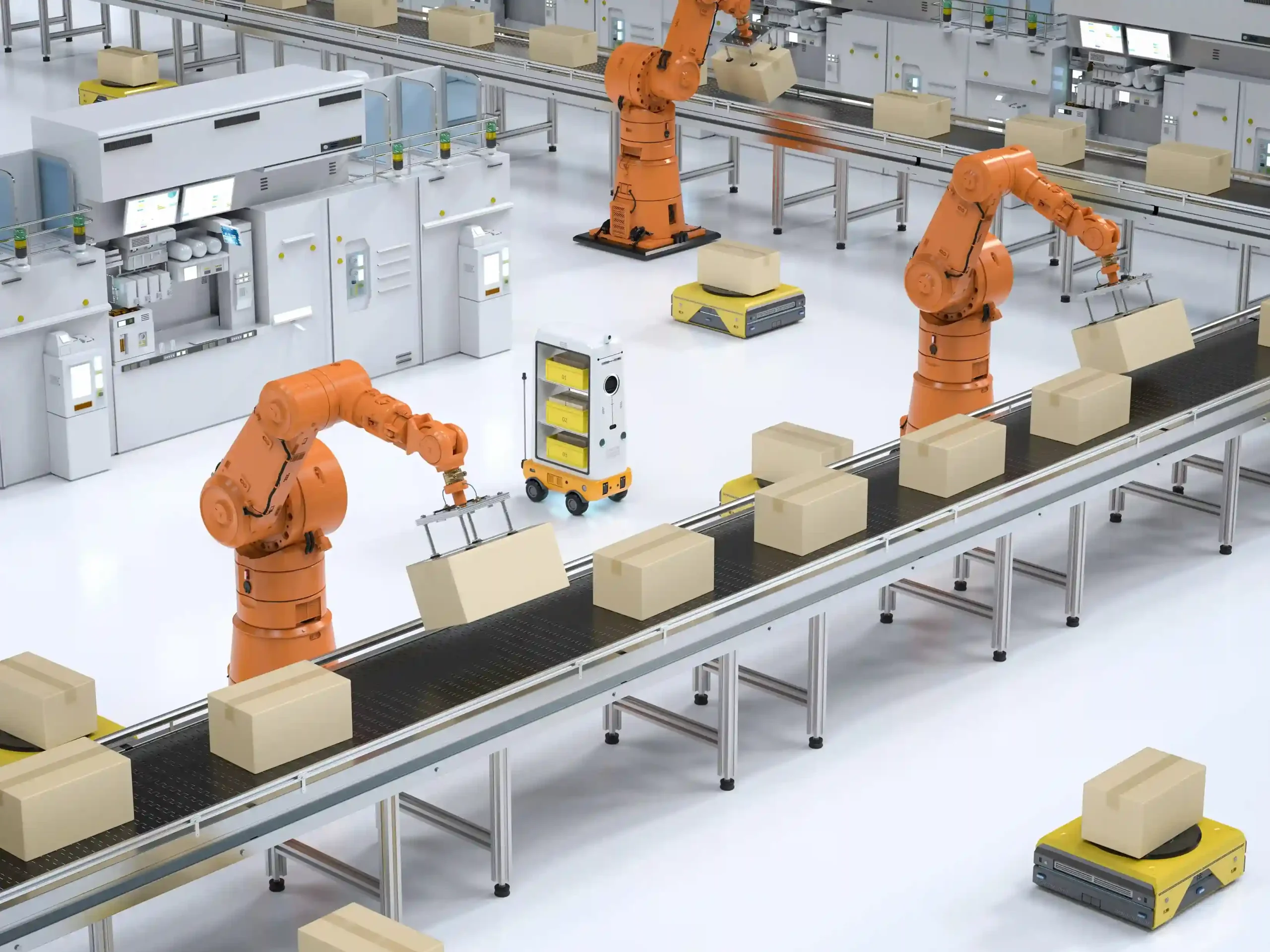
Picture a robotic arm positioned next to a conveyor. As parcels arrive, the machine vision system identifies
their position, orientation, and category. It then sends coordinates to the robot.
Within seconds, the robot picks up the parcel and places it in the correct bin.
Improving Robotic Accuracy
Without machine vision, a robot would not know where to pick. With vision guidance, it can adjust to different parcel sizes and shapes.
This flexibility is especially important in e-commerce, where parcel variety is unpredictable.
Handling Irregular and Mixed Parcels
Traditional automation works best with uniform items. However, logistics sorting deals with constant variation. Machine vision allows robotic systems to adapt in real time.
This combination creates a smart sorting cell that is fast, 准确的, and scalable.
And this leads to an important question. If you are investing in automation, who should you partner with?
Why Choose OK for Machine Vision Powered Logistics Automation
Choosing the right automation partner is just as important as choosing the right technology.
好的, we understand that machine vision is not a standalone solution. It must work seamlessly with robotic systems, 输送机, and warehouse software.
Our collaborative robots are designed for flexible integration with advanced machine vision solutions. Whether you are handling small parcels or mixed packages, our systems can adapt to your operational needs.
We focus on complete solutions, not just equipment. From system design and installation to support and optimization, our team works closely with clients to ensure long-term performance.
Scalability is another key advantage. You can start with one automated sorting cell and expand as your business grows.
In today’s competitive logistics environment, flexibility and reliability matter. 确定, you gain both.
The Future of Machine Vision in Smart Logistics
Looking ahead, machine vision will play an even bigger role in smart warehouses.
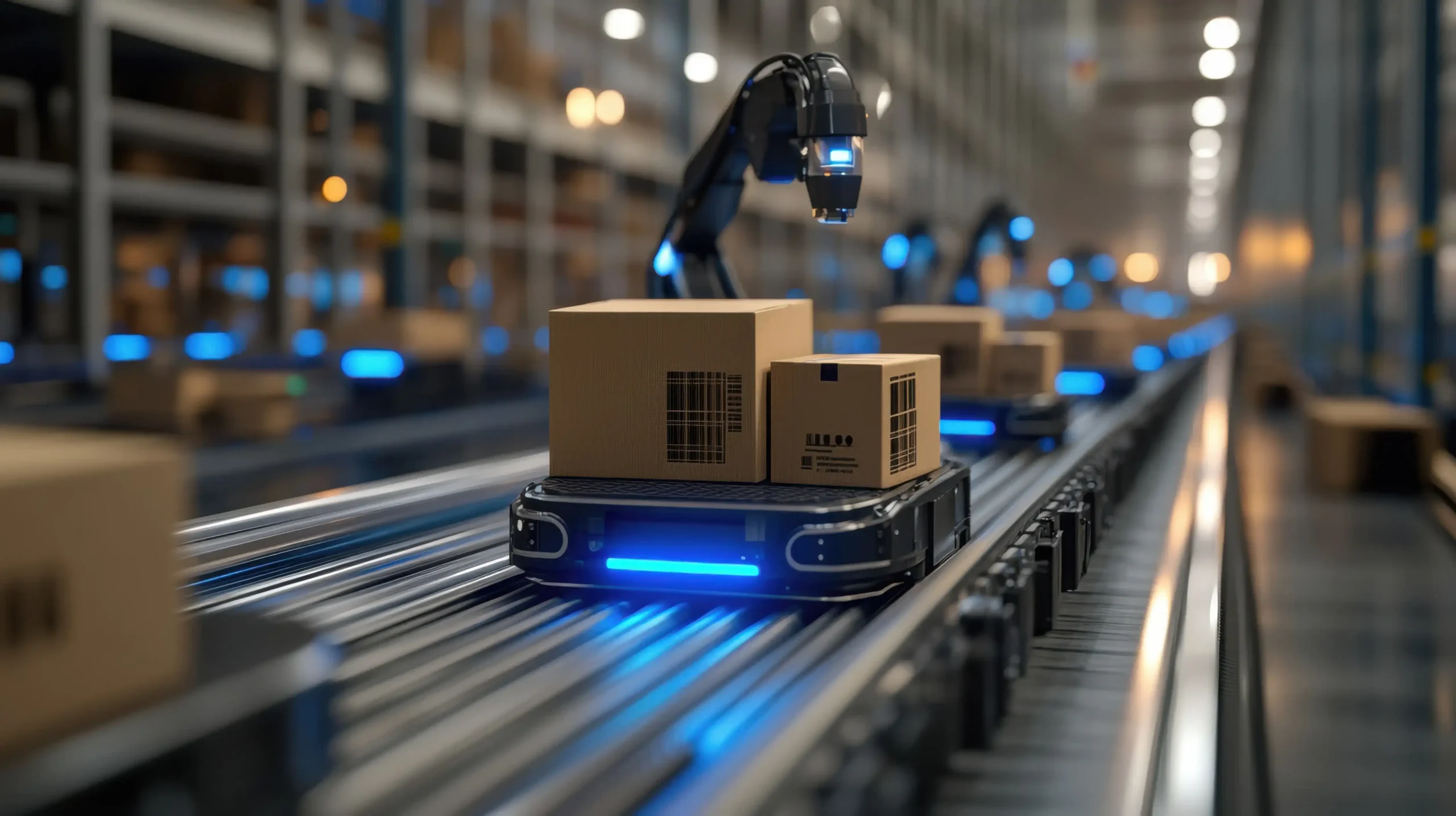
Artificial intelligence is making vision systems smarter. They can learn from new parcel types and improve over time. Real-time analytics will help managers predict issues before they become problems.
As automation continues to expand, the connection between machine vision and robotics will become stronger. Warehouses will operate with greater speed, 准确性, and transparency.
So where does your operation stand today? Are you ready to take the next step toward smarter logistics sorting?
结论
Machine vision is transforming logistics sorting from a labor-intensive process into a data-driven, highly efficient operation. It improves accuracy, increases speed, reduces costs, and supports scalable growth.
When combined with robotic automation, machine vision creates intelligent sorting systems capable of handling the complexity of modern supply chains.
If you are exploring ways to improve your logistics operations, 现在是采取行动的时候了. Contact OK to learn how our machine vision-enabled robotic solutions can help you build a faster, smarter, and more competitive warehouse. We would be happy to discuss your goals and design a solution that fits your needs.
常见问题解答
Even after learning the basics, you may still have questions about how machine vision works in real warehouse environments. Here are some common questions we hear from logistics managers and automation teams.
What types of packages can machine vision handle?
Machine vision systems can handle cartons, polybags, envelopes, and even irregular shaped parcels. With proper lighting and camera setup, the system can identify different materials and surfaces accurately.
Can machine vision read damaged or unclear labels?
是的, advanced machine vision software uses smart decoding and text recognition to read labels that are slightly wrinkled, tilted, or partially obscured. However, extremely damaged labels may still require manual review.
Is machine vision difficult to integrate into existing warehouses?
Not necessarily. A well-designed machine vision solution can connect with existing conveyors, warehouse control systems, and robotic arms. The key is proper planning and system integration.
How does machine vision improve return on investment?
Machine vision reduces sorting errors, lowers labor costs, increases throughput, and improves shipping accuracy. 随着时间的推移, these benefits can significantly improve operational efficiency and reduce unnecessary expenses.
If you have more questions, our team at OK is ready to help you explore the right solution for your logistics operation.