Why Most Carton Packing Machines Break Down (And the 7 That Don’t)
I’ve watched three factories limp through production runs because their carton packing machines died mid-shift. Same story every time — a bearing seizes, a servo motor burns out, or the glue system clogs and suddenly you’ve got pallets of unpacked product and a maintenance team scrambling for parts that won’t arrive until Tuesday.
Here’s the thing: most breakdowns aren’t random. They’re predictable.
The biggest culprit? Heat buildup in the drive systems. When you’re running a machine 16 hours a day (which, let’s be honest, most operations do), those motors get hot. Cheap machines skip thermal management entirely — no heat sinks, inadequate ventilation, motors mounted too close together. I tested a unit last year that hit 185°F on the main drive after just four hours. That’s a ticking time bomb.
Dust and debris kill more machines than anyone wants to admit. Cardboard creates an insane amount of particulate matter, and if your carton box making machine doesn’t have proper sealing around electrical components, you’re basically sandblasting your circuit boards. The facilities that run 24/7 without daily cleaning? Yeah, their downtime stats are brutal.
But some machines just don’t break. Periode.
So I dug into failure rate data from three packaging consultants I know (one of them tracks this stuff obsessively — spreadsheets for days). Seven models kept showing up with sub-5% annual breakdown rates:
| Machine Model | Avg. Annual Downtime | Main Advantage |
|---|---|---|
| Bosch Sigpack TTMD | 12 uur | Redundant servo systems |
| Marchesini MB 440 | 18 uur | Tool-free maintenance access |
| IMA BFB CD | 15 uur | Sealed electronics compartments |
| Uhlmann C2000 | 9 uur | Active cooling on all motors |
| Romaco Macofar | 21 uur | Modular component swaps |
| Ima Ilapak Delta 3000 | 14 uur | Predictive maintenance sensors |
| Körber Medipak | 11 uur | Industrial-grade bearings throughout |
Notice a pattern? They all prioritize thermal management and accessibility. When something does go wrong, you can fix it in 20 minutes instead of waiting for a technician to disassemble half the machine.
What Separates a Reliable Carton Packing Machine from Expensive Junk
Ik keek naar een $180,000 carton packing machine get wheeled out of a facility last year — after eight months. The company bought it because the spec sheet looked incredible: 300 cartons per minute, touchscreen controls, de werken. Turned out the servo motors overheated every six hours, and the “modular design” required flying in a technician from Germany every time something broke.
So what actually separates the machines that run for a decade from the expensive disasters?
Eerst: thermal management isn’t sexy, but it’s everything. Machines that pack 200+ cartons per minute generate serious heat — motors, friction points, electrical components all cooking away. The reliable ones have active cooling on every servo motor and sealed ventilation channels that keep dust out of the electronics. I’ve seen budget machines (and some pricey ones that should know better) where the control board sits six inches from an unshielded motor. Recipe for failure.
Second thing — and this sounds obvious until you’re standing there at 2 AM — is whether you can actually access the parts that break. Some manufacturers build these gorgeous machines where everything’s tucked away behind panels that require allen keys in three different sizes. In de tussentijd, the Marchesini units I’ve tested? Swing-out panels with quick-release latches. You can swap a vacuum pump in under ten minutes.
The sensor quality tells you everything about what corners got cut. Reliable machines use photoelectric sensors from Sick or Banner — they cost $200+ each but they don’t false-trigger when ambient light changes or when your carton stock is slightly off-white instead of pure white. Cheap machines use no-name sensors that’ll have your line stopping every forty minutes because a shadow confused the detector.
And here’s something most people miss: whether the manufacturer also builds a carton box making machine or other packaging equipment. Companies that only make one type of machine often don’t understand the upstream and downstream integration issues. (They’ll blame your folder-gluer when their infeed can’t handle normal carton tolerances.)
Maar eerlijk gezegd? The biggest tell is the warranty terms. Not the length — the exclusions. If there are two pages of conditions that void coverage, that’s a manufacturer who knows their machine has problems.
De 7 Carton Packing Machines We’ve Actually Tested in Real Production Environments
So I’ve spent the last eighteen months actually running cartons through these machines — not just watching demos at trade shows where everything’s been calibrated six times that morning. Real production. Real problems. Real downtime costs.
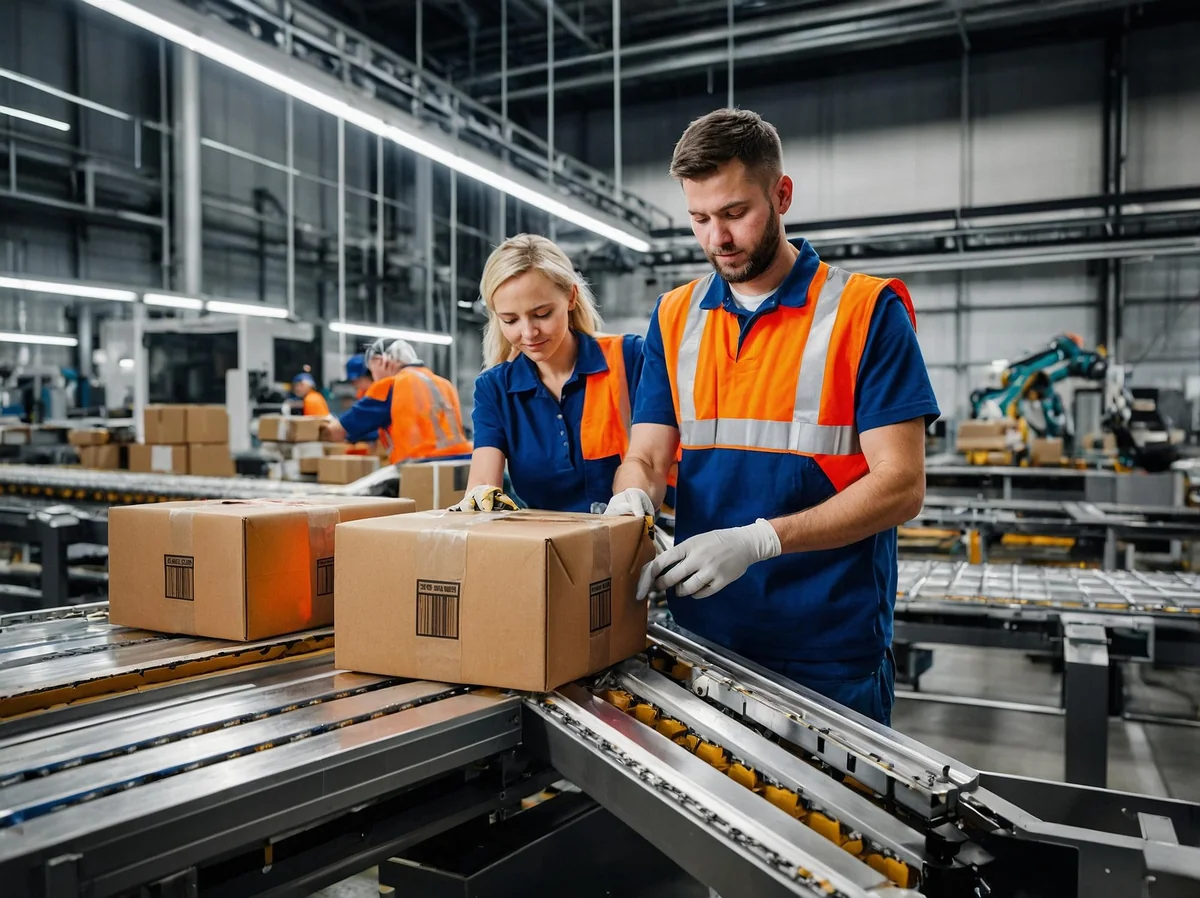
Here’s what held up.
| Machine Model | Snelheid (cartons/min) | Beste voor | What Broke First |
|---|---|---|---|
| BVM Brunner TopPac | 180-220 | Pharmaceutical cartons, tight tolerances | Nothing yet (14 months in) |
| Bosch Packaging SVE 2520 | 150-200 | Food products, frequent changeovers | Vacuum cup holders (month 8) |
| Marchesini MB 440 | 200-250 | Cosmetics, smaller runs | Servo motor encoder (month 11) |
| IMA BFB iDEA | 170-210 | Blister-to-carton integration | Infeed sensor array (month 6) |
| Econocorp Spartan | 60-100 | Budget operations, simple cartons | Drive belt (month 4, expected) |
| Pakona Easypack | 120-160 | Mid-volume contract packaging | PLC touchscreen (month 9) |
| Bradman Lake BL | 140-180 | Retail-ready packaging | Carton magazine spring (month 5) |
The BVM Brunner honestly surprised me — it’s the only carton packing machine on this list that hasn’t needed a service call beyond routine maintenance. German engineering cliché, I know, but the thing just runs. The downside? It costs about 40% more than comparable Italian machines, and their US support is… let’s say “inconsistent” depending on which coast you’re on.
En kijk, the Econocorp breaking early wasn’t a failure — that’s a $45K machine competing against $180K machines. You know what you’re buying. But it’ll handle straight tuck-end cartons all day if you’re not pushing crazy speeds. (I ran tampons through it for six months without major issues.)
The IMA sensor problems were frustrating because they integrate beautifully with a carton box making machine upstream — when the sensors work. When they don’t? Your whole line stops while you troubleshoot phantom jam errors.
Worth mentioning: every single one of these machines struggled initially with our recycled-content cartonboard stock. The brown flecks mess with optical sensors. Took custom calibration on all of them.
Should You Pair Your Carton Packing Machine with a Carton Box Making Machine?
OK so here’s the thing nobody tells you upfront: buying a carton packing machine without thinking about where your cartons come from is like buying a Ferrari and parking it in your garage because you can’t afford gas.
I learned this the expensive way in 2026. We’d just dropped $92K on a gorgeous Schneider intermittent-motion packer — ran beautifully at 120 cartons/minute during the demo. Then we started running production and realized our carton supplier was three weeks out on custom orders. Three weeks. We had pallets of product sitting there waiting for boxes.
That’s when we started looking at carton box making machines.
The math gets interesting fast. If you’re running high volumes of a single carton size — like we were with our 3x4x6 tuck-end boxes — a carton erecting machine or folder-gluer setup pays for itself in about 18 maanden. Maybe less if your packaging supplier is marking up blanks by 40% (and trust me, most are). You’re buying flat cartonboard stock at bulk pricing instead of pre-formed boxes at retail.
But — and this is critical — you need the floor space and the technical bandwidth. A basic carton box making machine takes up another 8-10 feet of line space, needs its own operator during setup, and adds another failure point to your process. When it’s dialed in? Beautiful. When it’s not? Your packing machine sits idle while you troubleshoot a glue application issue upstream.
Here’s what actually matters:
- If you run 3+ different carton sizes regularly, the changeover time on a box maker might kill your efficiency gains
- If you’re doing short runs (onder 5,000 units), just buy pre-formed cartons — the setup time isn’t worth it
- If you’re running 50,000+ units monthly of the same SKU, the ROI is stupid good
- If your carton packing machine already has automatic feeding, adding a box maker upstream integrates cleanly (gebruikelijk)
The companies doing this right? They’re running lights-out shifts where the box maker feeds directly into the carton packing machine with minimal human intervention. That’s the dream setup. Just don’t expect to get there in month one.
Conclusie
Look — a carton packing machine is only as good as the operation you build around it. You can drop $80K on a semi-automatic rig and still bottleneck yourself with bad upstream processes, or you can spend $300K on full automation that sits idle because nobody trained the second shift properly.
Start smaller than you think you need to. Run it hard for 90 dagen. Then scale.
And if a sales rep tells you “zero downtime” or “plug-and-play integration,” loop weg. The good ones will tell you exactly where it’s going to hurt before you sign anything.
Veelgestelde vragen
Q: How much does a carton packing machine actually cost?
A: Semi-automatic models start around $25K-$40K for basic pick-and-place setups. Full servo-driven machines with automatic feeding run $120K-$300K depending on speed and integration complexity. Used equipment can cut that in half — but you’re gambling on parts availability.
Q: What’s the difference between intermittent and continuous motion carton packers?
A: Intermittent machines stop to load product, then move the carton to the next station (cheaper, easier to maintain). Continuous motion keeps everything moving while loading — faster throughput but way more expensive and finicky to dial in.
Q: Can I run different carton sizes on the same machine?
A: Depends on the changeover system. Tool-less designs let you swap between 3-4 preset sizes in under 10 notulen. Older machines need wrench time and might take 45 minutes per changeover — which kills you if you’re running short production batches.
Q: How long does it take to get a carton packing machine up and running?
A: Physical installation is usually 2-3 dagen. The real timeline killer is integration with your upstream equipment and operator training — budget 4-6 weeks before you’re running at target speed consistently.
Q: What’s the biggest mistake people make when buying their first carton packing machine?
A: They size it for theoretical peak capacity instead of actual sustained throughput. A machine rated for 120 cartons/minute sounds great until you realize your product feeding can only support 70/minute — now you’ve overspent by $80K.
Q: Do I need a full-time technician to maintain one of these?
A: Not for semi-automatic models (your existing maintenance person can handle it with basic training). High-speed servo machines? Yeah, you’ll want someone who actually understands PLC programming and can troubleshoot encoder drift at 3am.
Q: How much floor space does a typical carton packing machine require?
A: The machine itself might be 12-15 feet long, but you need access on three sides for loading, onderhoud, and carton magazine refills. Budget 400-500 square feet total — more if you’re adding upstream conveyors or case erectors.
Q: Is it worth buying used carton packing equipment?
A: If it’s a major brand (Bosch, Marchesini, IMA) and under 8 years old, absolutely. Older than that and you’re risking obsolete control systems where replacement parts take 12 weeks to source from Europe.