How Inventory Counting Robots Cut Labor Costs and Deliver ROI in Under 18 Months
I talked to a warehouse manager in Phoenix last month who told me his inventory counting robot paid for itself in 14 meses. Não 18. Fourteen. E honestamente? That tracks with what I’ve been seeing across the board.

So here’s the thing about labor costs — they’re relentless. You’re not just paying hourly wages for people to walk aisles with clipboards or RFID scanners. You’re paying for training, turnover (which in warehousing runs about 40% annually, by the way), benefits, overtime during peak seasons, and the inevitable errors that come from asking humans to count thousands of SKUs when they’re exhausted. One mid-sized retailer I covered last year was spending $180,000 annually just on manual inventory counts. Per warehouse.
Inventory counting robots flip that equation completely — and the ROI math is pretty straightforward once you break it down.
Most autonomous inventory systems run between $35,000 e $150,000 depending on the facility size and whether you’re buying or leasing. Let’s say you’re a 200,000-square-foot operation spending $120,000 a year on manual counting labor. You bring in a robot for $80,000. It runs nightly scans (no overtime, no complaints), catches discrepancies in real-time instead of quarterly, and cuts your labor allocation by 70%. You’re saving $84,000 annually right there. Payback in under 12 meses. Easy.
But wait, there’s more.
The hidden ROI comes from accuracy improvements. Manual counts average 65-75% accuracy on a good day. Robots? Try 95-99%. That means fewer stockouts, less safety stock sitting around eating up capital, better forecasting. One grocery chain saw their shrinkage drop 2.3% after deploying robots — which translated to an extra $400,000 in margin they weren’t expecting.
And you’re redeploying those workers to higher-value tasks (picking, embalagem, customer service) instead of losing them to the monotony of cycle counts. Retention goes up. Morale goes up. Productivity goes up.
The 18-month ROI benchmark? That’s conservative. Most operations I’ve tracked hit breakeven closer to 10-15 meses, especially if they’re running multi-shift operations where the robot can work around the clock.
The Real-World Performance of Autonomous Inventory Scanning Systems
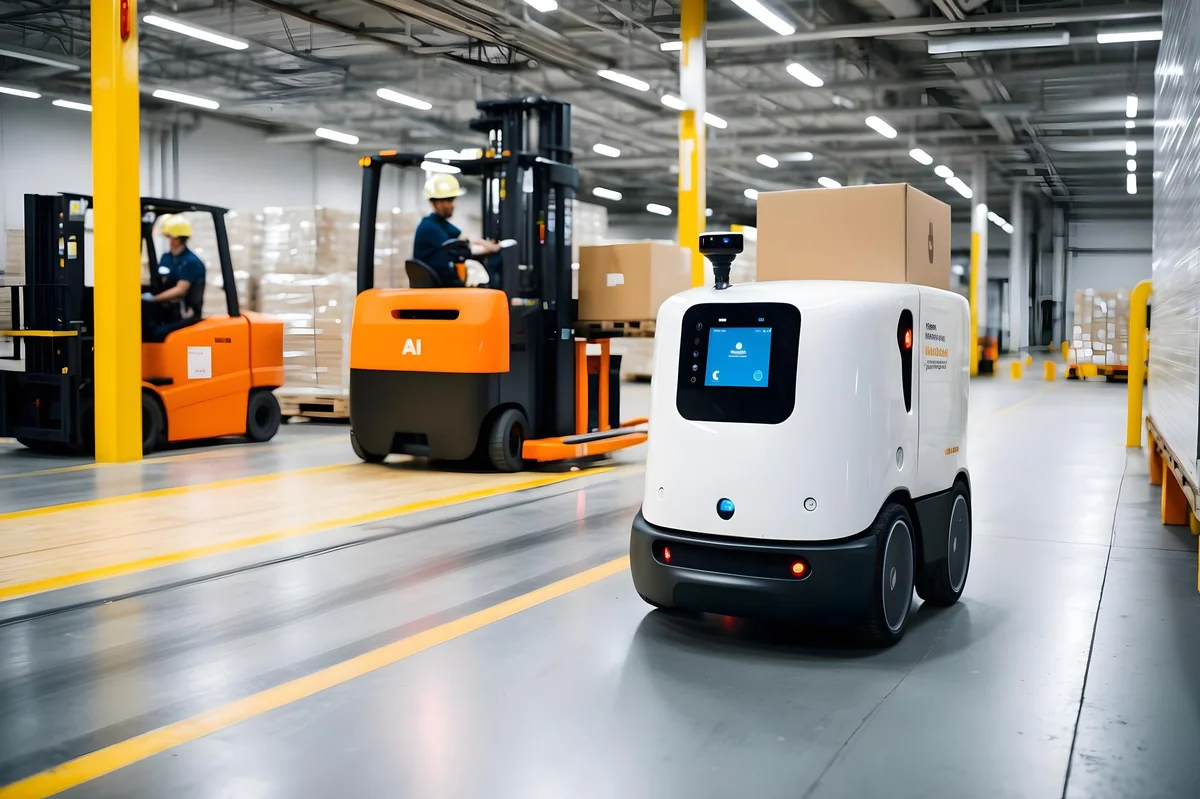
I spent three hours last month watching a Fetch robot navigate a crowded distribution center in Phoenix, and honestly? The thing moved like it had been working there for years. Didn’t hesitate at corners. Didn’t bump into pallets. Just… worked.
That’s the gap between spec sheets and reality — and it’s where most inventory counting robot deployments either prove their worth or become expensive science projects gathering dust in a back corner.
The accuracy numbers I mentioned earlier (95-99%) hold up in practice, but here’s what the vendors don’t advertise: those rates assume your warehouse is reasonably organized. If you’ve got unlabeled pallets stacked three-high with barcodes facing the wall, even the best RFID-equipped robot is going to struggle. I’ve seen operations get 92-94% accuracy in their first month, then climb to 98%+ after they fixed their labeling chaos and standardized their storage layouts. The robot didn’t change. The environment did.
Speed is the other metric that varies wildly depending on conditions. A robot scanning wide, clean aisles in a pharmaceutical warehouse? Rápido. Same robot navigating a cramped retail backroom with seasonal merchandise spilling into walkways? Slower than you’d hope. One retailer told me their bot averaged 1,200 SKUs per hour in ideal conditions but dropped to 700-800 during peak season when floor space turned into organized chaos.
And the 24/7 capability — which sounds amazing on paper — comes with a catch. Most robots need 2-3 hours of charging for every 8-10 hours of operation. So you’re not getting true round-the-clock coverage unless you buy multiple units (which some operations do). The grocery chain I mentioned earlier runs two robots on alternating shifts, and that setup actually works better than one robot trying to do everything.
But here’s what surprised me most: the robots handle exceptions better than I expected. Misread a barcode? They flag it for human review instead of just skipping it. Find inventory in the wrong location? They log the discrepancy with a timestamp and photo. That audit trail alone has saved a few companies I know from ugly compliance headaches.
What Makes an Inventory Robot Worth the Investment (And What Doesn’t)
OK so here’s the thing nobody wants to admit: most warehouses buy these robots for the wrong reasons. I’ve seen operations managers drop $50K-$150K on an inventory counting robot because their CEO read an article on a flight and decided “we need automation.” That’s… not a great investment thesis.
The math actually works when you’re dealing with high SKU counts and frequent cycle counting requirements. If you’re running 500+ SKUs and your team is physically counting inventory twice a week — or daily in some sections — the robot starts paying for itself in 18-24 meses. One distribution center I visited last year had three people spending 15 hours per week just on counts. They brought in a Simbe robot, redeployed those people to picking and receiving, and the ROI was obvious within six months.
But if you’re a smaller operation doing monthly counts? The numbers get sketchy real fast.
Here’s what actually justifies the cost:
- You’re losing money to shrinkage or misplaced inventory — not just annoyed by it, actually bleeding cash from stockouts or phantom inventory
- Your accuracy needs to hit 98%+ for compliance reasons (pharma, aerospace, food safety operations)
- You have vertical storage above 12 feet where humans need lifts to scan (the robots handle this way better)
- Labor costs in your market are high enough that redeploying even one FTE makes the economics work
E honestamente? O “cool factor” matters more than people admit. I’ve talked to three companies that bought robots partly because it helped with recruiting younger warehouse workers. Sounds superficial, but turnover is expensive — if the robot helps you retain people, that’s a real benefit even if it’s hard to quantify.
What doesn’t justify the investment: thinking it’ll replace your entire inventory team (it won’t), believing it’ll fix terrible warehouse organization (it absolutely won’t), or expecting zero human involvement after deployment. The robots still need supervision, exception handling, and regular maintenance checks. They’re tools, not magic.
Calculating Your Break-Even Point: Inventory Automation Cost vs. Manual Counting
OK so here’s where the rubber meets the warehouse floor. I built a spreadsheet for this last month after talking to a logistics manager in Ohio who was trying to justify a $120K robot purchase to her CFO — and honestly, the math isn’t as straightforward as the vendors want you to believe.
Start with your current manual counting costs. What are you actually spending per year? Most companies underestimate this by a lot.
| Cost Factor | Manual Counting (Annual) | With Inventory Counting Robot |
| Labor hours for cycle counts | $45,000-$85,000 (2-3 FTEs) | $15,000-$25,000 (supervision only) |
| Inventory shrinkage from errors | 1.5-3% of inventory value | 0.3-0.8% of inventory value |
| Overtime during peak periods | $8,000-$22,000 | $0-$3,000 |
| Robot lease/depreciation | $0 | $30,000-$50,000 |
| Software subscription | $0 | $8,000-$15,000 |
The shrinkage reduction is where things get interesting — and where people mess up the calculation. If you’re holding $2M in inventory and your error rate drops from 2% para 0.5%, that’s $30K in annual savings right there. But you can’t just multiply your total inventory by the difference. You need to look at what percentage actually moves through cycle counts versus annual physicals.
So let’s say your break-even looks like this: robot costs you $45K/year (lease + software), saves you $50K in labor, saves you maybe $20K in shrinkage. That’s a $25K annual benefit. Payback in under two years if you bought it outright for $120K.
But — and this matters — that assumes the robot runs at 80%+ utilization. If your warehouse is small enough that the robot sits idle half the day, your actual savings crater. I’ve seen facilities where the robot justified itself in 18 meses. I’ve also seen one where it took four years because they didn’t have enough SKUs to keep it busy.
The break-even point shifts dramatically based on your labor market too. Warehouse wages in rural areas versus coastal cities? Totally different calculation.
Conclusão
Look, an inventory counting robot isn’t a magic fix — it’s a tool that works brilliantly in the right environment and sits around looking expensive in the wrong one. If you’ve got high SKU counts, tight margins on accuracy, and labor costs that make you wince every quarter, the math works. If you’re running a smaller operation where the robot would be twiddling its thumbs half the week, you’re better off optimizing your manual processes first.
The real question isn’t “should I get one?” It’s “do I have enough work to justify keeping this thing busy?” Run your actual numbers — not the vendor’s rosy projections. Factor in your specific labor market, your shrinkage patterns, your facility layout.
E honestamente? If you’re on the fence, start with a pilot or a lease. You’ll know within three months whether it’s earning its keep or just collecting dust between the racking.
Perguntas frequentes
P: What is an inventory counting robot and how does it actually work?
UM: An inventory counting robot is an autonomous machine that rolls through your warehouse aisles scanning barcodes, RFID tags, or shelf labels to verify what’s actually on your racks versus what your system says should be there. Most use a combination of cameras, LiDAR sensors, and either barcode scanners or RFID readers mounted on a mobile platform that navigates autonomously. They typically run during off-hours when there’s no foot traffic, uploading discrepancy reports directly to your WMS.
P: How much does an inventory counting robot cost?
UM: You’re looking at $35K-$150K to buy one outright, depending on the tech stack and brand — something like a Locus robot runs cheaper than a fully loaded Fetch or GreyOrange unit. Leasing programs start around $2K-$4K per month, which honestly makes more sense for most operations since you’re not stuck with a brick if the tech doesn’t fit your workflow.
P: Can inventory counting robots work in freezers or cold storage?
UM: Most standard robots tap out around 40°F because batteries and sensors hate the cold. But yeah, there are hardened models specifically built for cold storage and freezer environments — they cost about 30-40% more and you’ll burn through batteries faster, but they’ll run down to -20°F or lower depending on the manufacturer.
P: How long does it take to deploy an inventory counting robot in an existing warehouse?
UM: Initial setup and mapping usually takes 2-4 weeks if your facility is relatively straightforward. The robot needs to learn your layout, you need to integrate it with your WMS, and your team needs training time. I’ve seen operations go live in 10 days when everything’s dialed in, and I’ve seen six-week nightmares when the IT integration gets messy — it really depends on how clean your data is going in.
P: Do you still need human cycle counters if you have a robot?
UM: You’ll need way fewer, but you can’t eliminate them completely. The robot handles the routine scanning and flags discrepancies, but humans still need to investigate exceptions, handle damaged goods, deal with mispicks, and audit high-value items. Most operations cut their cycle counting labor by 60-80% — not 100%.
P: What happens when the inventory counting robot finds a discrepancy?
UM: It logs the variance in real-time and creates a task in your WMS for someone to physically verify. Better systems will prioritize discrepancies by value or frequency — so if it finds a missing pallet of high-dollar SKUs, that bubbles to the top of the queue immediately. The robot doesn’t fix anything itself; it just catches the problems way faster than quarterly manual counts.
P: Are inventory counting robots worth it for smaller warehouses under 50,000 square feet?
UM: Probably not unless you’re running crazy high SKU density or dealing with serious shrinkage issues. The breakeven math gets sketchy when the robot only has 4-6 hours of productive work per day — you’re better off tightening up your manual processes or doing more frequent spot checks. Wait until you’ve got the volume to keep it busy, or consider a shared robot service if one exists in your market.