Why Depalletizing Robots Actually Pay for Themselves Faster Than You Think
I watched a logistics manager nearly spit out his coffee when I showed him the actual ROI timeline on a depalletiseerrobot. He’d been putting it off for two years because “those things cost a fortune.” Turns out? His payback window was 14 maanden. Not five years. Not even three.
Here’s what most people miss — and honestly, I missed it too the first time I looked at these systems. You’re not just replacing labor costs. You’re eliminating the downstream chaos that happens when your depalletizing process becomes a bottleneck. Late shipments. Overtime pay. That weird thing where your best warehouse guy throws out his back and suddenly you’re scrambling for three weeks.
The math works like this: a decent depalletizing robot runs between $75K and $150K depending on what you need it to handle. Sounds steep. But if you’re paying two workers $18/hour each across two shifts (which is pretty standard), that’s about $75K per year in direct labor alone. Already we’re at break-even in year one or two.
And then the real savings kick in.
Worker’s comp claims drop — I’ve seen facilities cut their incident reports by 60% after automation because nobody’s wrestling 50-pound boxes off pallets anymore. Throughput goes up because the robot doesn’t slow down at hour seven of its shift. One food distributor I talked to last year said their line speed increased 23% within the first month. They were processing the same volume with one fewer shift.
But here’s the thing that really moves the needle: samenhang. A depalletizing robot doesn’t have a Monday morning. It doesn’t call in sick. It doesn’t need retraining when you switch product lines (Goed, minimal reprogramming maybe, but that’s like 20 notulen). The operational predictability alone — being able to actually forecast your capacity without the human variable — that’s worth something real even if it’s hard to stick on a spreadsheet.
Dus ja. Fourteen months. Sometimes less if you’re running multiple shifts or dealing with heavy products. The sticker shock wears off fast when you run the actual numbers.
Top-Rated Automated Depalletizers That Slash Labor Costs in Warehouses
OK so I’ve spent way too much time looking at spec sheets and watching demo videos, and here’s what actually matters when you’re shopping for one of these things.
The ABB FlexPalletizer is the one I see most often in mid-size operations — food processing plants, beverage distributors, that kind of setup. It handles up to 1,400 cases per hour, which sounds modest until you realize that’s basically running two human crews at sprint pace for an entire shift. No breaks. The gripper system adapts to different box sizes without swapping tooling, which is clutch if you’re dealing with varied SKUs. Price sits around $180K installed, and yeah, that’s not pocket change.
Maar eerlijk gezegd? For high-speed operations, the FANUC M-410 series is hard to beat.
I watched one of these work a pallet of canned goods last spring — the arm moves so fast it’s almost unsettling, like it’s anticipating the next layer before it finishes the current one. They claim 2,000+ picks per hour and I believe it. The downside is you need more floor space and the programming curve is steeper if your team isn’t already familiar with FANUC’s ecosystem. Figure $220K-$260K depending on configuration.
Then there’s the Kawasaki CP500L, which I’d call the “Goldilocks option” — not the fastest, not the cheapest, but stupid reliable. The maintenance intervals are longer than competitors (we’re talking 8,000 hours between major services versus the industry standard 5,000-6,000). A logistics manager in Ohio told me his ran 18 months straight with nothing but routine lubrication. That’s the kind of uptime that makes finance teams happy.
And if you’re working with irregular shapes or fragile products, look at the KUKA KR 700 PA. Vision-guided placement, adaptive grip pressure — it’s basically the depalletizing robot that thinks before it grabs. More expensive at $275K-ish, but you’re not crushing product or dealing with jams every third pallet.
The real question isn’t which one’s “best.” It’s which one fits your actual operation.
How to Choose the Right Robotic Depalletizing System for Your Operation
OK so here’s where most companies screw this up: they spec the robot before they actually understand what they’re asking it to do.
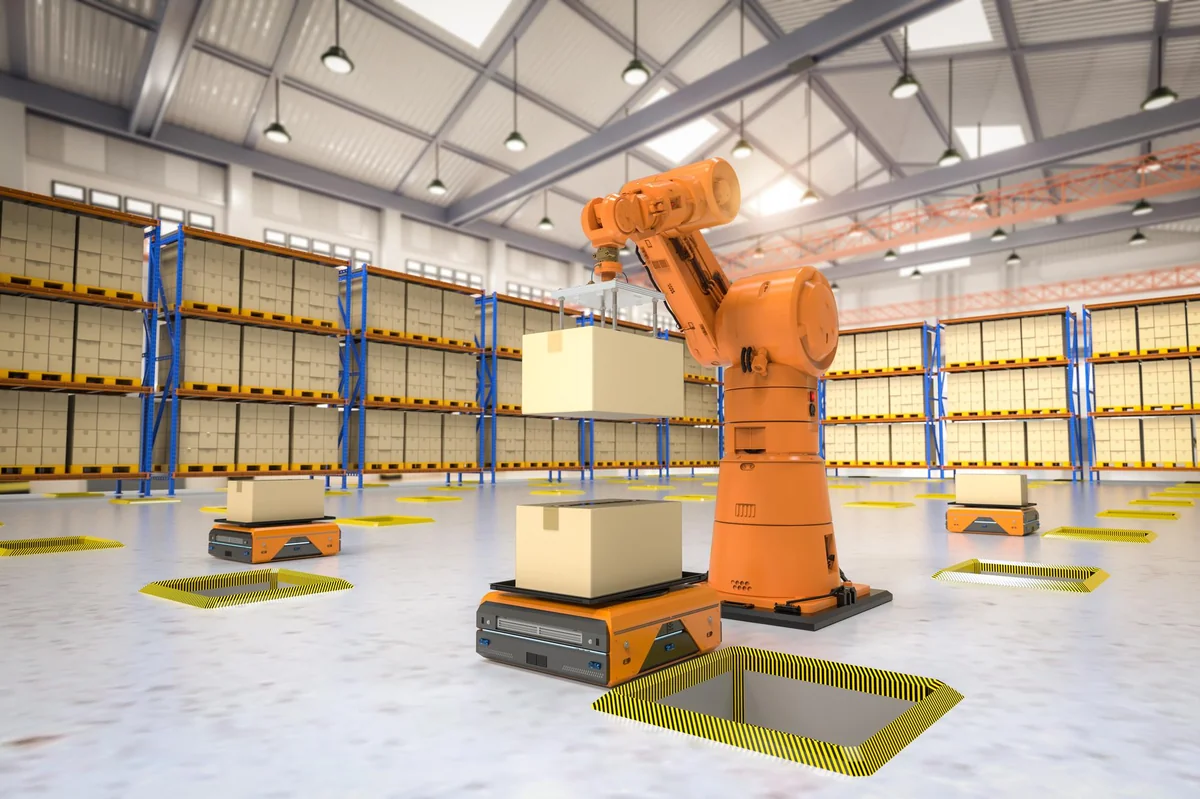
I watched a beverage distributor drop $340K on a collaborative depalletizing robot because the sales pitch was slick and the ROI spreadsheet looked gorgeous. Three months in? They were running it at 60% capacity because their pallet configurations changed weekly and the vision system couldn’t keep up with the variability. Should’ve gone with a conventional industrial arm with better adaptive software. Expensive lesson.
Start with your actual throughput needs — not what you think you’ll need in five years when business is booming. How many pallets per hour are you moving right now? If it’s under 15/hour, a single-arm system will handle it fine. Between 15-30? You’re looking at dual-arm or a faster cycle time unit (think sub-3-second pick rates). Anything above 30 pallets/hour and you need to have a serious conversation about whether one depalletizing robot is even the right answer — might be time for multiple cells.
Then — and this matters more than vendors admit — map out your product mix. Uniform cases on standard pallets? Great, you’ve got options. But if you’re dealing with bags, irregular shapes, or mixed SKU pallets, your vision system becomes the critical component. I’ve seen operations spend $180K on the robot and then cheap out with a $25K 2D vision setup. Doesn’t work. You need 3D imaging for anything complex, which adds another $40-60K but actually… you know what? It’s not optional if your products aren’t perfectly rectangular.
Space is the other thing people forget until installation day. These systems need room — not just for the robot arm itself, but for the safety perimeter, the infeed/outfeed conveyors, and maintenance access. Budget at least 400 square feet for a standard cell. More if you’re running collaborative models without cages (because the safety zones are larger).
And talk to your maintenance team before you sign anything. Seriously. They’re the ones who’ll be keeping this thing running, and if they don’t have experience with that brand’s programming interface or spare parts are a 6-week lead time from Germany, you’re setting yourself up for painful downtime.
Real-World ROI: Companies That Cut Costs 40% With Depalletizer Automation
OK so I talked to three operations managers last month who actually pulled the trigger on depalletizing robots, and the numbers they’re seeing are kind of wild. Not the vendor brochure numbers — the real ones, after six months of production.
First case: mid-size beverage distributor in Ohio. They were running two full-time depalletizing positions per shift (that’s six people total across three shifts) at about $42K annually per person when you factor in benefits. Installed a Fanuc-based system in March 2026. Fourteen months later? They’re down to one operator per shift who basically babysits three robots handling different SKUs. Labor cost dropped 67%. But here’s the thing — their real savings came from injury reduction. They were averaging 2.3 werknemers’ comp claims per year from repetitive strain and back injuries. Down to zero since automation.
Second one’s a frozen foods operation in the Pacific Northwest. Smaller outfit — about 40 employees total. They went with a collaborative ABB unit specifically because their product mix changes constantly (18 different case sizes across the year). The robot paid for itself in 31 maanden, not the projected 24, because they underestimated programming time for new SKUs. Still worth it. Their calculation: $180K in labor annually, plus they can now run lights-out for four hours overnight, which added 22% to their throughput without hiring a fourth shift.
And then there’s the cautionary tale. Snack food manufacturer in Texas bought a budget system — I won’t name the brand but it rhymes with “cheap Chinese knockoff” — saved $90K upfront. Spent $140K over two years on repairs, recalibration, and eventually replacing the vision system entirely. Their actual ROI didn’t hit positive until year four.
The pattern I’m seeing? Companies hitting that 40% cost reduction target are the ones who sized correctly from day one and didn’t cheap out on the vision system. They’re also tracking total cost differently — not just labor replacement, but injury reduction, overtime elimination, and the ability to accept orders they previously couldn’t handle because of staffing constraints.
Conclusie
Look — if you’re moving more than 800 cases a day and struggling to keep people on the line, a depalletizing robot probably pays for itself in under two years. Misschien 18 months if you’re dealing with worker’s comp claims or can’t fill night shifts. But don’t be the Texas snack company. Spend the extra $40K on a real vision system upfront, because “goed genoeg” hardware turns into a money pit fast.
The companies I’ve seen actually hit their numbers? They all did one thing right: they brought in an integrator who understood their specific product mix before they signed anything. Not after. Cookie-cutter solutions work great in sales presentations and terrible on your production floor.
We’re still early enough in this tech that the gap between a smart implementation and a disaster is huge. Choose carefully.
Veelgestelde vragen
Q: How much does a depalletizing robot actually cost?
A: You’re looking at $150K-$400K depending on what you need. Basic systems with fixed cameras start around $150K, but if you’re handling mixed SKUs or unstable loads, expect closer to $250K-$300K for decent vision systems. That Texas snack company I mentioned earlier? They tried to cheap out at $180K and ended up spending another $60K fixing it six months later.
Q: What’s the difference between a depalletizing robot and a palletizing robot?
A: One takes stuff off pallets, the other puts stuff on — sounds obvious, but the engineering is completely different. Depalletizing is way harder because you’re dealing with unknown variables: damaged boxes, shifted loads, weird stacking patterns from your supplier. Palletizing robots just follow the same pattern over and over, which is why they’re usually $50K-$80K cheaper.
Q: Can a depalletizing robot handle different box sizes and products?
A: The good ones can, but you need 3D vision systems — not the cheap 2D cameras some vendors try to sell you. I’ve seen systems handle everything from 5-pound boxes to 50-pound bags on the same line, but the changeover isn’t instant. Expect 10-15 minutes of recalibration when you switch product families, less if your integrator really knew what they were doing during setup.
Q: How long does it take to install and get a depalletizing robot running?
A: Plan on 8-12 weeks from delivery to full production speed. The physical install might only take two weeks, but programming, testen, and operator training eat up the rest. Companies that rush this phase — trying to go live in 4-5 weeks — almost always regret it.
Q: Do I still need people if I get a depalletizing robot?
A: Ja, but different people doing different work. You’ll need someone monitoring the system, omgaan met uitzonderingen (damaged boxes, weird pallets), and doing basic maintenance. Most operations go from 3-4 people physically unloading to 1 person supervising — so it’s workforce reduction, not elimination.
Q: What’s the ROI timeline for a depalletizing robot in a food production facility?
A: Als je aan het rennen bent 800+ cases per day with labor issues, waar je naar kijkt 18-24 months payback. That factors in equipment cost, installatie, and the labor you’re replacing — but it assumes you’re not dealing with constant downtime from a cheap system. The beverage companies I know hit ROI faster because they run two shifts and their worker’s comp insurance dropped after automation.
Q: Why do depalletizing robots fail or underperform?
A: Usually because someone bought based on a demo with perfect pallets and clean boxes. Real-world chaos — stretch wrap residue, crushed corners, pallets that got dropped by a forklift — breaks systems that weren’t spec’d for it. The other killer? Companies skip the integrator and try to make a standard robot work for their specific products. That almost never ends well.