Planning Your Automated Material Handling System from Scratch
I watched a warehouse manager once spend six months installing conveyors in the wrong configuration. Cost them about $340,000 to fix. Could’ve been avoided with two weeks of actual planning.
So here’s the thing about automated material handling equipment — you can’t just drop it into your facility and hope it works. Start with your current workflow, not the shiny tech catalogs. Walk your floor. Time how long it takes to move product from receiving to storage to shipping. Write down where people are waiting around doing nothing because materials haven’t arrived yet.
Your throughput requirements matter more than you think. If you’re moving 500 units per hour today but planning for 1,200 next year, size your system for 1,500. Trust me on this — undersizing is expensive to fix later, and you’ll hit that growth faster than your projections say you will.
Then map your physical constraints. Ceiling height, floor load capacity, existing structural columns that can’t move. I’ve seen companies fall in love with overhead conveyor systems only to discover their roof trusses can’t handle the weight (this happened at a facility in Ohio last year, and it wasn’t pretty).
Here’s what you actually need to document before talking to vendors:
- Current and projected daily volume — be specific, not optimistic
- Product dimensions and weights, including your weird outliers
- Available floor space and any areas that are absolutely off-limits
- Integration points with your existing WMS or ERP system
- Budget that includes installation, training, and at least 15% contingency
And look, I know everyone wants to automate everything immediately. But phase it. Start with your biggest bottleneck — usually it’s either receiving or order picking — and prove the concept there before you rip out your entire operation.
The facilities that succeed with automated material handling equipment are the ones that spent boring weeks with spreadsheets and floor plans before they spent a single dollar on hardware. Not glamorous. Absolutely necessary.
Setting Up Conveyors, Sorters, and Robotic Arms — The Physical Installation
OK so you’ve signed the contracts and the trucks are showing up next Tuesday. This is where theory meets concrete floor — literally — and where most projects either click into place or turn into a three-month nightmare of alignment issues and vendor finger-pointing.
Prima cosa: your floor better be level. I’m talking laser-level, not “looks pretty flat to me” level. Conveyors are unforgiving about this. A quarter-inch variance over twenty feet will cause products to drift to one side, jam at transitions, or just fall off entirely. We had a client who insisted their floor was fine until packages started doing a slow-motion slide into the safety fence. Cost them two weeks and $18,000 to grind and re-pour sections.
The actual installation sequence matters more than you’d think:
- Anchor points and power drops go in first — don’t let anyone tell you they can retrofit these later
- Main conveyor runs next, working from receiving toward shipping (follow the product flow)
- Sorters get installed at their branch points, then individually calibrated
- Robotic arms go in last because they need everything else positioned before you can program their reach envelopes
And here’s something nobody mentions in the glossy brochures: you need way more space around each piece of equipment than the spec sheet suggests. That “42-inch footprint” sorter? You actually need 60+ inches to access the maintenance panels and swap out worn components. I’ve seen operations where they crammed everything together to save floor space, then had to shut down entire lines just to change a belt.
The robotic arms are particularly fussy. Each one needs teaching — yeah, that’s the actual term — where you manually guide it through pickup and placement points while it records the coordinates. Budget a full day per arm for this, plus another half-day when you inevitably realize your first attempt didn’t account for pallet height variations.
Most integrators will want 4-6 weeks for a mid-size installation. Don’t let them rush it. A conveyor system installed too quickly is a conveyor system that’ll be down for maintenance constantly.
Integrating Warehouse Management Software with Your Automated Equipment
OK so here’s where most operations completely faceplant: they drop $400K on a gorgeous AS/RS system, get it running beautifully, and then realize their warehouse management software has absolutely no idea how to talk to it.
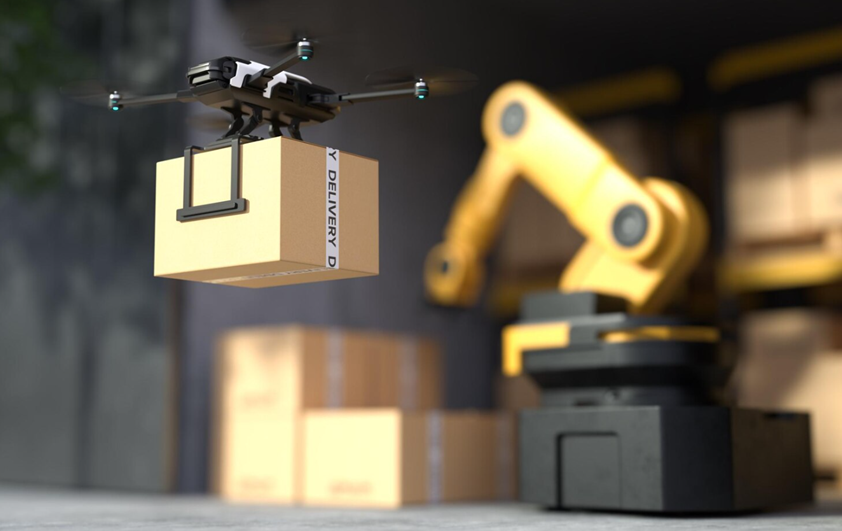
Your WMS is basically the brain that tells all this automated material handling equipment what to do and when. Without proper integration, you’re just running expensive robots on manual mode — which defeats the entire point. I watched a distribution center in Ohio spend six weeks post-installation trying to get their legacy WMS to communicate with new AGVs. Six weeks of $80K robots sitting idle because nobody checked API compatibility upfront.
Most modern equipment speaks either OPC-UA or REST APIs these days. Your WMS needs to support whichever protocol your hardware vendor uses, or you’ll need middleware sitting between them (adds cost, adds latency, adds another thing that can break). The critical data flows both ways: WMS tells the conveyor “send pallet B-447 to dock 12”, conveyor tells WMS “pallet B-447 arrived at dock 12 at 14:23:07”. Seems simple. Rarely is.
Real-time inventory visibility is non-negotiable here. When an automated shuttle moves a case from bulk storage to picking, your WMS needs to update that location instantly — not in the next batch sync that runs every 15 minutes. I’ve seen picking errors spike 300% in facilities where there’s even a 5-minute lag between physical movement and system updates.
E onestamente? Test the failure modes before go-live. What happens when the WMS loses connection to a sortation system mid-shift? Does everything halt, or does the sorter have enough local intelligence to keep running on its last known instructions? (You want the second option, by the way.) Most vendors will demo the happy path all day long but get real cagey when you ask about network dropout scenarios.
Budget for professional integration services unless your IT team has done this before. Which they probably haven’t. This isn’t plug-and-play territory.
Testing and Calibrating Your Material Handling Automation for Peak Performance
So you’ve installed everything, the integrations are live, and your conveyors are humming. Congrats. Now comes the part most people rush through — which is exactly why 60% of automation projects underperform in year one.
Real talk: testing isn’t just “run a few pallets through and see what happens.” I watched a 3PL in Ohio do exactly that in 2026 — they went live on a Monday with what they called “adequate testing” over the weekend. By Wednesday they were manually sorting 40% of their volume because nobody had stress-tested the sortation logic under peak conditions. The automated material handling equipment worked fine. The assumptions about how product would flow? Total disaster.
Here’s what actual testing looks like — and I mean the kind that prevents those 2 AM panic calls:
- Run at least 72 continuous hours at 110% of your projected peak volume. Not during business hours when you can pause to fix stuff. Straight through.
- Test your exception handling with deliberately problematic items: damaged barcodes, overweight pallets, oddly-shaped cartons that’ll jam a sorter. See what breaks.
- Simulate power failures, network drops, and emergency stops. Then time how long recovery actually takes (it’s always longer than the vendor promised).
- Load your worst-case SKU mix — the stuff with similar dimensions that confuses vision systems, or the products that always seem to nest together on conveyors.
Calibration is where you’ll spend way more time than you budgeted. Those sensors that detect carton presence? They drift. Weight scales need rezero-ing more often than anyone admits. And vision systems — oh man — they need recalibration every time your lighting changes, which happens more than you think when you’re running multi-shift operations.
I keep a calibration log for every piece of equipment with sensors or measurement capability. Sounds tedious, but it’s saved me twice when throughput started dropping and nobody could figure out why. Turned out a weight-check station had drifted 2% over six weeks, rejecting perfectly good cartons. Small drift, massive impact.
And look — budget 15-20% more time for testing than your vendor recommends. They’re optimists by profession. You need to be a realist.
Conclusione
So here’s what I tell people who ask me about automated material handling equipment: it’s not plug-and-play, and anyone who sells it that way is lying to you. Budget more time for integration than your vendor quotes. Plan for calibration drift. Test with your actual worst-case products, not the easy stuff.
The systems work — I’ve seen facilities cut labor costs by 40% and triple throughput — but only when you respect the complexity. Treat it like a long-term relationship, not a one-night stand with a piece of machinery.
E onestamente? Start smaller than you think you need to. Prove it works in one zone before you automate your entire operation. You can always scale up. You can’t easily scale back when you’ve already spent seven figures.
Domande frequenti
Q: What’s the typical ROI timeline for automated material handling equipment?
UN: Most facilities see ROI between 18-36 mesi, but I’ve watched companies hit breakeven in 14 months when labor costs were high and throughput demands were brutal. The real variable is integration time — if you lose three months troubleshooting, you’re pushing that payback window out. Budget conservatively and you won’t be disappointed.
Q: Can small warehouses under 50,000 square feet justify automation?
UN: Assolutamente, but you need to be strategic about it. Skip the full-scale AS/RS systems and look at collaborative robots or automated guided vehicles for specific pain points. I visited a 35,000 sq ft facility running two AMRs that paid for themselves in 22 months just handling cross-dock transfers.
Q: How much does automated material handling equipment actually cost to maintain annually?
UN: Plan on 8-12% of your initial capital spend per year for maintenance contracts, parts, and calibration. A $500K system will run you $40K-$60K annually — and that’s assuming nothing catastrophic breaks. The vendors who quote you 5% are either lying or they’re not including labor for your in-house maintenance team.
Q: What happens when automated material handling equipment breaks down during peak season?
UN: This is why you negotiate response times in your service contract before you buy. Good vendors offer 4-hour on-site response for critical failures. Bad ones show up in 48 hours and shrug. Always — and I mean always — keep manual backup processes documented and your team trained on them, because automation will fail at the worst possible moment.
Q: Do I need to hire specialized staff to operate automated systems?
UN: You need at least one person who understands PLC programming and sensor calibration, period. Most facilities promote from within and send someone to vendor training (usually 3-5 days). Your existing warehouse staff can handle day-to-day operations after a week or two, but troubleshooting sensor drift or network issues requires actual technical knowledge.
Q: How do you integrate automated material handling equipment with legacy WMS software?
UN: Middleware is your friend here — platforms like Körber or Manhattan have API layers that translate between your 15-year-old WMS and modern automation. Expect to spend $50K-$150K on integration work depending on how weird your existing setup is. Some vendors will tell you it’s “seamless.” It’s never seamless.
Q: Is voice picking better than going full automation for order fulfillment?
UN: Depends entirely on your SKU velocity and error tolerance. Voice picking costs maybe $2K per user and works great for high-mix, lower-volume operations. Full automation makes sense when you’re moving thousands of identical units daily. I’ve seen plenty of facilities run both — voice for the weird stuff, automated material handling equipment for the predictable high-runners.