Why Automated Forklifts Make Sense for Mid-Size Warehouse Operations
I spent three hours last month watching a crew at a 75,000-square-foot distribution center in Ohio manually shuttle pallets between receiving and storage. The waste was staggering — not just in time, but in the sheer mental overhead of coordinating who goes where, when, and with what load. Y honestamente? That’s the story at most mid-size operations.
Here’s the thing about automated forklifts in facilities between 50,000 y 200,000 pies cuadrados: they solve problems you didn’t realize you had. Labor shortages? Sure, everyone knows that one. But the real wins show up in places like consistent putaway speeds (no more “fast guy on Monday, slow guy on Friday” variance), elimination of those 2 a.m. shift-change bottlenecks, and — this surprised me — dramatic drops in product damage because the machines don’t get tired or distracted.
The ROI math actually works now.
Five years ago, you needed to move 200+ pallets daily to justify the upfront cost. Today? Systems from companies like Seegrid and Toyota start paying for themselves at around 80-100 pallets per day, assuming you’re running two shifts. I’ve seen facilities break even in 18-24 meses, which is wild considering most warehouse managers I know won’t touch anything with a payback period over three years.
But let’s be real about what “makes sense” actually means. You need decent floor conditions — these aren’t monster trucks, they work best on smooth concrete. Your racking needs to be reasonably standardized (if every bay is a unique snowflake, you’re going to spend a fortune on custom programming). And you probably want at least 60% of your moves to follow predictable patterns, because that’s where automation shines.
The sweet spot? Operations doing repetitive horizontal transport — moving goods from receiving to storage, from storage to staging, that kind of thing. Not complex picking. Not constant reconfiguration. Just the boring, high-volume stuff that burns out human operators and creates scheduling headaches.
How to Choose the Right Automated Forklift System for Your Facility Size
I made this mistake at a 75,000 sq ft distribution center in 2026 — we spec’d a system built for a facility three times our size. Overkill doesn’t even begin to describe it. So let’s talk about actually matching the tech to your space, because the vendors sure as hell won’t tell you when you’re buying too much.
Under 50,000 pies cuadrados? Honestamente, you’re probably looking at a single-zone setup with maybe 2-4 automated forklifts max. Any more than that and they start getting in each other’s way — imagine a bunch of Roombas trying to navigate your living room at the same time. The fleet management software matters way more here than the number of units. You want something that can choreograph tight spaces without constant traffic jams.
Mid-size facilities (50,000 a 150,000 sq ft) are where things get interesting. This is the range where you can actually justify zone-based systems — receiving has its own units, storage has its own, staging area gets dedicated machines. But here’s the thing: you need clear pathways between zones, ideally 12 feet wide minimum. I’ve seen operations try to cram automated forklifts into 8-foot aisles and… sí. Doesn’t end well.
The big boys — anything over 150,000 square feet — can go wild with full fleet deployments. We’re talking 10+ units, multi-zone coordination, the whole nine yards. But even then, you’ve got a choice to make:
- Centralized control — one brain running everything, better for standardized operations
- Distributed intelligence — each automated forklift makes its own decisions within parameters (more flexible, way more expensive to program initially)
- Hybrid approach — zones run semi-independently but coordinate at handoff points
y mira, ceiling height matters more than people think. You need at least 16 feet of clearance for most automated reach trucks, sometimes 20+ depending on your racking height. Don’t assume your existing infrastructure works — actually measure it.
La verdadera pregunta no es “how many can I fit” but “how many repetitive routes do I actually have.” Start there. Count your predictable moves. Then size accordingly.
Automated Forklift Cost Analysis: ROI Expectations for Mid-Market Warehouses
I sat through a CFO presentation last month where the finance guy kept saying “justify the capex.” OK so let’s actually do that — because the numbers on automated forklifts aren’t as scary as they sound, but they’re also not a slam dunk for every warehouse.
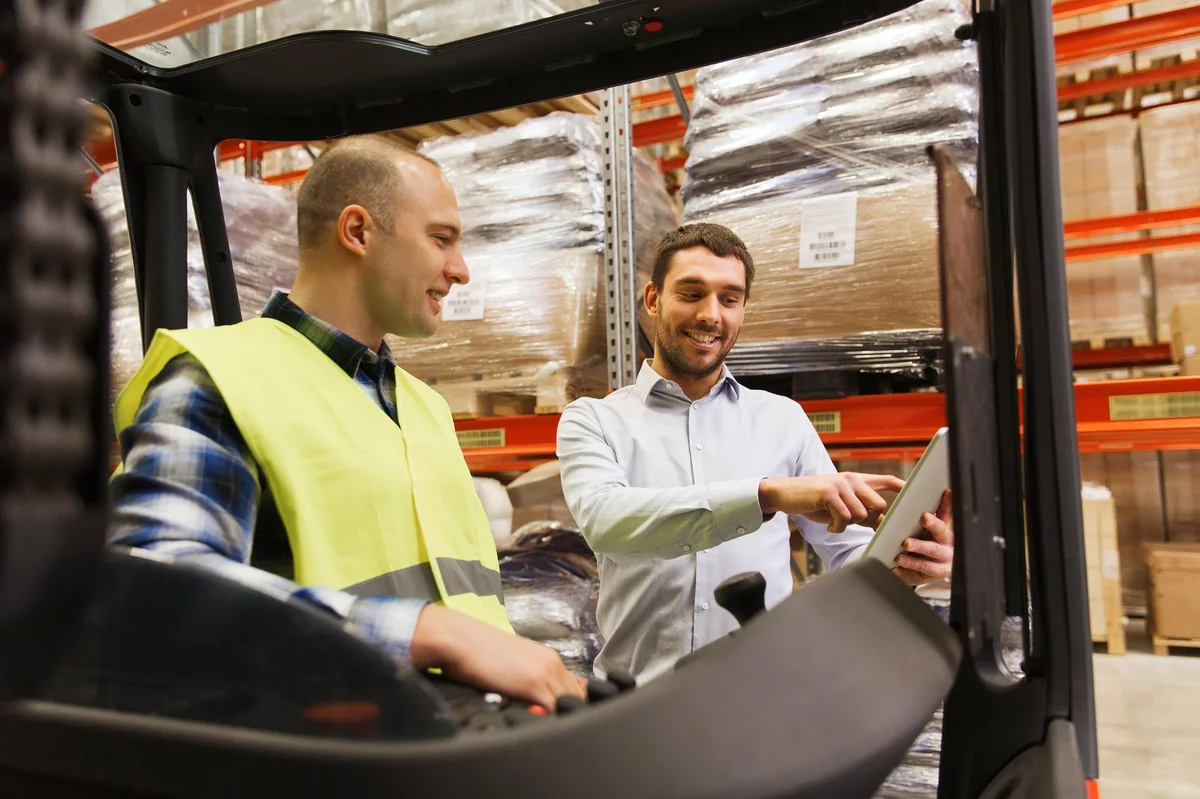
Here’s what you’re looking at for a mid-market operation (let’s say 150,000-400,000 pies cuadrados):
| Cost Component | Typical Range | Notas |
|---|---|---|
| Per-unit hardware | $75K-$180K | Counterbalance units run cheaper; reach trucks cost more |
| Infrastructure (nav/charging) | $40K-$120K | One-time, amortize across fleet |
| Software/integration | $30K-$90K annually | Ongoing licenses, not one-and-done |
| Installation/training | $25K-$60K | Front-loaded expense |
So a three-unit deployment might run you $300K-$650K all-in for year one. Not pocket change.
But — and this matters — you’re replacing labor that costs $45K-$65K per operator annually when you factor in benefits, workers’ comp, turnover costs (recruiting is brutal right now). An automated forklift runs two shifts minimum, sometimes three if you stagger charging right.
The math I’ve seen work: if you’re running consistent two-shift operations with high-repetition routes, you hit payback in 24-36 meses. Sometimes faster if your turnover is insane. One distribution center I visited in Ohio replaced four operators with two automated units and broke even in 28 months — their turnover was 140% annually before automation, which is just hemorrhaging money on recruiting.
Where it gets dicey is single-shift operations or highly variable workflows. You’re essentially paying for a second shift you’re not using, and the ROI stretches to 4-5 años. Still positive, just… slower.
Y honestamente? Factor in 10-15% of hardware cost annually for maintenance and software updates. These things aren’t maintenance-free, despite what the sales deck implies.
Integration Requirements: What Your Warehouse Needs Before Going Automated
OK so here’s the thing nobody tells you until you’re already on a demo call: your warehouse probably isn’t ready. I’ve watched three implementations get delayed 4-6 months because the facility team assumed their concrete was “good enough” or that their WiFi could handle it. Nope.
Floor quality matters way more than you’d think. Automated forklifts use laser navigation and inertial sensors — they’re reading the ground constantly — and if you’ve got cracks wider than 6mm or joints that are settling unevenly, you’re going to get positioning errors. One site I visited in Michigan had to grind and seal 40,000 square feet before their automated forklift fleet could run reliably. Cost them $85K they hadn’t budgeted.
Network infrastructure is the other big one. These units need constant communication with your warehouse management system, and they’re streaming sensor data in real-time. You need:
- Redundant WiFi coverage with zero dead zones — I mean literally zero, no “mostly covered”
- Dedicated bandwidth for automation traffic (at least 10 Mbps per unit, some vendors want 25)
- Backup connectivity because if your network drops, your entire material flow stops
- Low latency under 50ms for real-time path adjustments
Y honestamente? Your WMS needs to be API-friendly. If you’re running legacy software from 2008 that can’t talk to external systems without custom middleware — which costs $30-80K to develop, by the way — you’re looking at a software upgrade before you can even think about automation.
The physical space needs standardization too. Automated units hate variability. Your rack heights need to be consistent within 2 inches, your aisle widths need to stay constant, and you can’t have random obstacles that move around (mirándote, facilities teams who park maintenance carts wherever). One distribution center had to relocate their charging stations and repaint floor markings because their original layout had too many exceptions.
But here’s what surprised me: lighting matters. Some vision-based systems struggle with extreme contrast or shadows from skylights. Not a dealbreaker, just… another thing to audit before you commit.
Conclusión
So look — the automated forklift itself is only half the equation. Maybe even less than half. The real work happens before the unit ever shows up: fixing your WMS, standardizing your racks, dealing with that weird lighting issue you didn’t know you had. I’ve watched companies spend six months on prep work for a system that took three weeks to install.
If your facility still has “character” — uneven aisles, racks at seven different heights, software held together with duct tape and prayers — pause. Get your house in order first. The robots will wait.
And when you’re ready? Empiece más pequeño de lo que cree que necesita. One zone. One shift. Prove it works, then scale. That’s how the successful rollouts actually happen.
Preguntas frecuentes
q: How much does an automated forklift actually cost?
A: You’re looking at $75K-$250K per unit depending on lift capacity and navigation tech — LiDAR systems cost more than magnetic tape guidance. But here’s the thing nobody mentions upfront: infrastructure prep often adds another $50K-$100K per deployment zone. Budget for the whole ecosystem, not just the machine.
q: Can automated forklifts work alongside human operators?
A: They can, but it requires proper traffic management systems and clear floor markings. Most facilities run them in dedicated zones or on separate shifts to avoid the awkward dance of robots stopping every time a person walks nearby. The mixed-fleet approach works best when you have distinct high-volume lanes the automated forklift can own completely.
q: What’s the realistic payback period for automation?
A: Most companies hit ROI somewhere between 18-36 months if they’re running two or three shifts. Single-shift operations? You’re probably looking at 4-5 años, which is why a lot of smaller warehouses still stick with humans. The math only works when you’re maximizing utilization — an idle robot is just expensive sculpture.
q: Do I need to completely redesign my warehouse layout?
A: Not completely, but you’ll likely need to standardize things. Automated forklifts hate variability — different rack heights, narrow turns, random obstacles. I’ve seen facilities spend three months just widening aisles and fixing uneven concrete before the first unit arrived. If your current layout has “character,” expect some renovation work.
q: How often do automated forklifts break down compared to traditional ones?
A: Mechanically? They’re actually pretty reliable — fewer breakdowns than human-operated units because they don’t get abused. The failures are usually software glitches or sensor issues (a dirty camera lens can shut down a whole shift). Plan for quarterly sensor calibration and keep spare parts on-site, especially for the navigation components.
q: What happens when the Wi-Fi goes down?
A: Most modern systems have some level of autonomous operation — they’ll finish their current task and then park themselves safely. pero si, extended outages basically stop everything. This is why network redundancy isn’t optional, it’s part of the core infrastructure. Some companies run dedicated 5G networks just for their automated fleet.
q: Can an automated forklift handle non-standard pallets or weird loads?
A: Honestamente? Not well. They’re built for consistency — standard 48×40 pallets, predictable weights, uniform packaging. Throw a damaged pallet or an off-center load at one and it’ll either reject it or call for human help. If more than 15-20% of your loads are irregular, automation gets frustrating fast.