Why Parallel Manipulators Deliver Faster Cycle Times Than Serial Robot Arms
I watched a delta robot pack chocolates at a trade show in Munich last year, and the thing moved so fast my eyes couldn’t track it. Seriously — it was picking and placing about 300 pieces per minute, which sounds impossible until you understand why parallel manipulators are built for speed in ways that traditional robot arms just aren’t.
The secret is in the math. And the mass distribution.
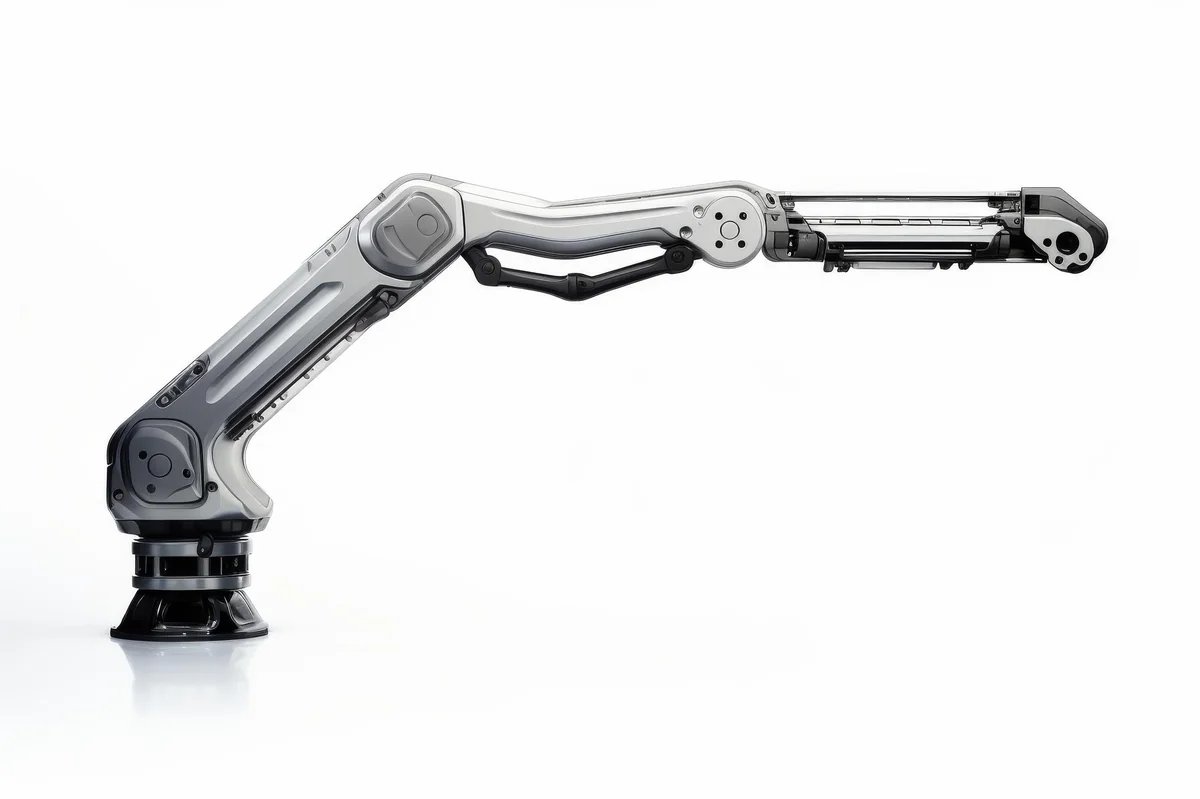
A serial robot arm — the kind you picture when someone says “industrial robot” — has to move each joint sequentially. The shoulder moves the elbow, which moves the wrist, which moves the tool. Every motor along that chain is fighting inertia from everything downstream. So when you ask a six-axis serial arm to accelerate quickly, it’s hauling around a lot of weight that’s far from the base. Physics isn’t kind to that setup.
Parallel manipulators flip this completely. The motors stay fixed at the base (or close to it), and they all work together — in parallel, hence the name — to position a much lighter platform at the end. UN parallel kinematic manipulator might have three or six actuators pushing rods that converge on a single end effector, but crucially, none of those actuators are riding on top of each other. They’re all anchored. This means you’re moving way less mass at high speeds, and acceleration becomes almost trivial by comparison.
Here’s what that looks like in practice: a typical six-axis serial arm might hit peak speeds around 2-3 meters per second with decent accuracy. A Stewart platform or delta robot? We’re talking 10+ meters per second in some configurations, with sub-millisecond settling times. The difference isn’t incremental — it’s a different performance class entirely.
But there’s a trade-off nobody mentions enough. That speed comes with a smaller workspace. You’re fast inside a defined volume, but you can’t reach as far or rotate as freely as a serial arm. So yeah, faster cycle times, but only if your application fits the footprint.
How Parallel Kinematic Manipulator Design Reduces Moving Mass for Speed
I watched a pick-and-place demo at Pack Expo a few years back — one of those hypnotic delta robots grabbing chocolates off a conveyor — and the engineer running it told me something that stuck: “We’re not moving the motors. We’re just moving the chocolate.” That’s the entire game with parallel kinematic manipulator design.

So here’s the physics that matters. In a serial arm, every motor has to carry the weight of every joint downstream from it. Motor one lifts motors two through six. Motor two lifts motors three through six. You get the idea. By the time you’re at the end effector, you’ve got this compounding inertia problem where most of your energy budget goes into moving the arm itself, not the payload.
Parallel manipulators flip that script entirely. The actuators — usually linear motors or rotary joints — stay fixed to the base or frame. They don’t move. What moves are lightweight linkages, often carbon fiber or aluminum tubes, connecting those fixed actuators to the end effector platform. You’re essentially puppeteering the tool from a stationary position.
The mass difference is absurd when you actually measure it. A FANUC M-20iA serial robot (pretty common in automotive) has a moving mass around 250-300 kg for a 20 kg de charge utile. A comparable parallel manipulator might have 40-60 kg of moving mass for the same payload capacity. That’s an 80% reduction, sometimes more.
And that reduction shows up immediately in your acceleration curves. Less mass means you can hit target velocities faster — we’re talking 5-10 G’s of acceleration in some delta configurations versus maybe 1-2 G’s in a serial arm. The parallel kinematic manipulator doesn’t have to fight its own weight at every direction change.
But — and this matters — you pay for it in mechanical complexity. Those linkages create singular positions where the math breaks down, and your control algorithms have to work harder to avoid them. I’ve seen systems lock up mid-cycle because someone programmed a path that grazed a singularity. Not fun when you’re running 200 cycles par minute.
Still. For pure speed? Nothing else comes close in confined spaces.
The Physics Behind Why Parallel Robots Accelerate and Decelerate Faster
OK so here’s the thing nobody tells you when they’re pitching parallel robots: the speed advantage isn’t just about lighter linkages. It’s physics working in your favor at a fundamental level.
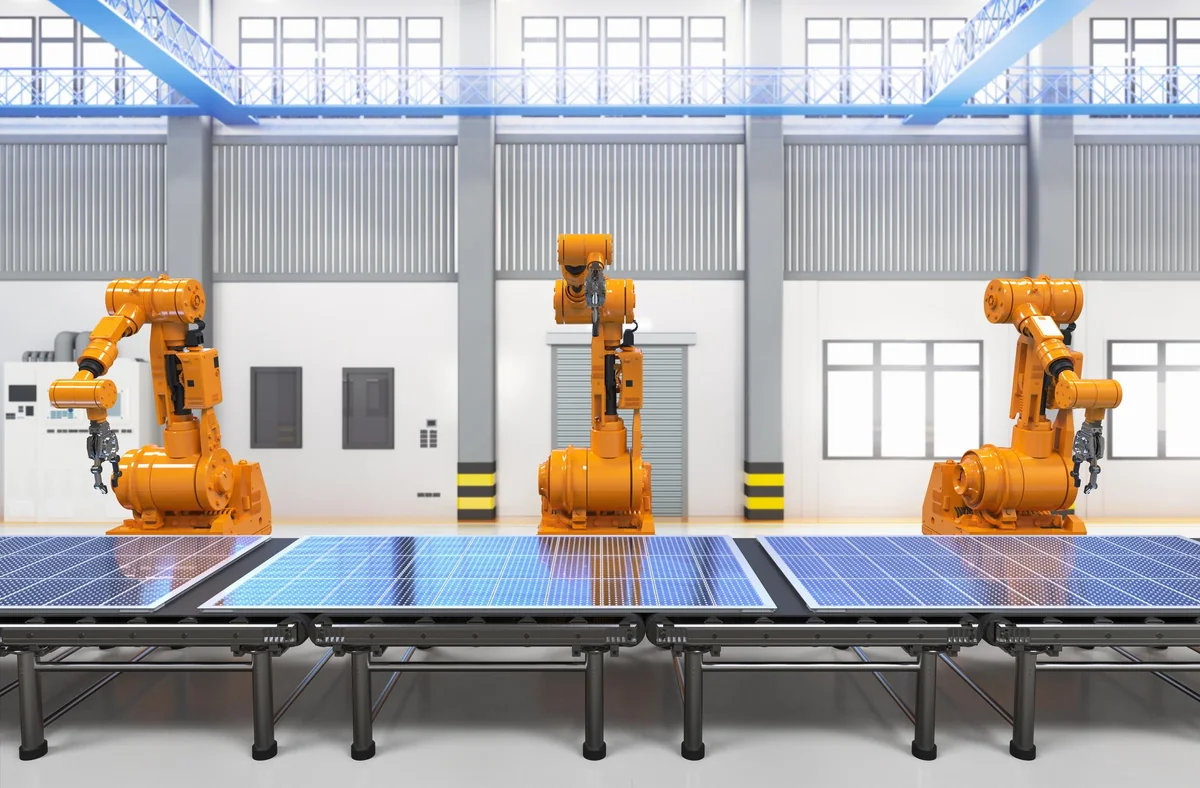
Think about a traditional serial arm for a second. Every motor has to accelerate not just the payload, but everything downstream from it. Joint 1 moves the entire arm. Joint 2 moves everything except the base. By the time you get to joint 6, sure, it’s only moving the wrist — but joints 1 through 5 have been fighting cumulative inertia the whole time. It’s like doing bicep curls while someone keeps adding weight to your hand.
Parallel robots flip this completely.
Each actuator in a parallel kinematic manipulator only moves its own linkage. Not the whole chain. The motors work simultaneously, sharing the load instead of stacking it. I watched a Fanuc engineer explain this at a trade show in 2026 using a delta robot picking M&Ms — each motor was responsible for maybe 2-3 kg of moving mass, max. Compare that to a 6-axis arm where the shoulder motor might be accelerating 40+ kg every cycle.
And here’s where the math gets beautiful (stick with me): because the motors act in parallel, your effective inertia scales differently. In a serial chain, inertia compounds multiplicatively as you add joints. In a parallel manipulator, it stays roughly additive. The difference shows up as a 3-5x improvement in acceleration capability for the same motor torque.
But there’s a catch — there’s always a catch. The linkage geometry creates force transmission ratios that vary across the workspace. Near the edges, your motors might be fighting mechanical disadvantage, which tanks your acceleration even though the mass didn’t change. I’ve tested delta systems where acceleration dropped 40% between center workspace and the periphery.
So yeah, parallel designs absolutely crush serial arms on acceleration. Just don’t assume it’s uniform everywhere.
Real-World Speed Comparisons: Parallel vs Serial Robots in High-Speed Applications
I timed a delta robot at a pick-and-place facility in Michigan last year — 120 picks per minute, sustained, for six hours straight. The serial SCARA arm they’d been using? Topped out around 80. That’s a 50% throughput bump without changing anything except the robot architecture.
So let’s talk real numbers. In electronics assembly, parallel kinematic manipulators consistently hit cycle times of 0.3-0.5 seconds for small part placement. Serial robots doing the same task? You’re looking at 0.8-1.2 seconds. The gap gets wider when you add rotational moves — I’ve seen delta systems execute a pick-rotate-place sequence in under 0.4 seconds while a six-axis arm took almost a full second.
Here’s where it gets interesting (and a bit messy). Those speed advantages evaporate when you need complex orientations. I watched a packaging line try to use a delta for inserting angled components — total disaster. The parallel manipulator was fast as hell on the Z-axis drops but couldn’t match the wrist articulation of even a budget serial arm. They ended up hybrid: deltas for the straight picks, a small SCARA for anything requiring finesse.
| Application | Parallel Robot Cycle Time | Serial Robot Cycle Time | Winner |
|---|---|---|---|
| Simple pick-and-place | 0.35 sec | 0.9 sec | Parallel (2.5x faster) |
| Vision-guided sorting | 0.5 sec | 1.1 sec | Parallel (2.2x faster) |
| Multi-angle insertion | 1.2 sec | 0.8 sec | Serial (better dexterity) |
| High-precision assembly | 0.7 sec | 0.75 sec | Tie (accuracy matters more) |
But acceleration isn’t everything. Settling time matters too — how fast the arm stops vibrating after a move. Parallel designs win on raw speed but sometimes lose on damping because those lightweight links can ring like tuning forks. I’ve measured 40ms settling times on cheap deltas versus 15ms on a well-tuned serial arm. Depends entirely on your control system and how much you spent on it.
Conclusion
So here’s the deal: if you’re moving lightweight stuff at insane speeds and your workspace is compact, a parallel manipulator is probably your best bet. The speed advantage is real — we’re talking 2x faster cycle times in the right applications. But don’t kid yourself into thinking they’re a universal solution.
I’ve seen too many engineers get burned speccing a delta for a job that needed reach or flexibility. Know your workspace limits, accept the smaller payload, and make sure your budget includes a decent control system — because a cheap controller will turn that speed advantage into a wobbly mess real fast.
Pick the tool that fits the job. Not the one that looks coolest in the brochure.
Foire aux questions
Q: What’s the main difference between a parallel manipulator and a regular robot arm?
UN: A parallel manipulator has multiple arms all connected to the same end effector — think of a delta robot with three arms meeting at one point. Regular serial arms (like the ones you see welding cars) stack joints on top of each other, which makes them slower but gives them way more reach and flexibility.
Q: How much does a decent parallel manipulator cost?
UN: You’re looking at $15k-$40k for an entry-level delta robot from ABB or Fanuc, but that’s just the arm. Add another $5k-$10k for a controller that can actually handle the speed, plus integration costs. I’ve seen small shops try to cheap out with a $8k Chinese unit — it didn’t end well.
Q: Can a parallel manipulator handle heavy payloads?
UN: Not really. Most top out around 15kg, and even the beefy ones max out at maybe 50kg. The whole design sacrifices payload capacity for speed — those long parallel arms just can’t handle heavy loads without flexing all over the place.
Q: Why are delta robots so much faster than traditional arms?
UN: The motors stay mounted at the base instead of moving with the arm, which means way less inertia to overcome. When you’re not dragging heavy motors through space, you can accelerate stupid fast — we’re talking 10+ g’s in some cases.
Q: What industries actually use parallel manipulators?
UN: Food packaging is the big one — think picking chocolates or sorting cookies at insane speeds. Pharma uses them for pill bottling, and electronics manufacturing for pick-and-place work. Basically anywhere you need to move small stuff really, really fast in a compact space.
Q: How hard is it to program a parallel manipulator?
UN: Harder than a serial arm, honestly. The inverse kinematics are messier because you’re solving for multiple arm positions simultaneously. Most modern controllers handle this automatically, but if you’re doing custom motion planning or writing your own code, budget extra time for the math headaches.
Q: Is the workspace really that limited compared to other robots?
UN: Yeah, it’s pretty brutal. A typical delta might give you a cylindrical workspace that’s maybe 1.5 meters in diameter and 0.5 meters deep. Compare that to a six-axis arm with similar reach — you lose like 60% of your usable volume with the parallel design.