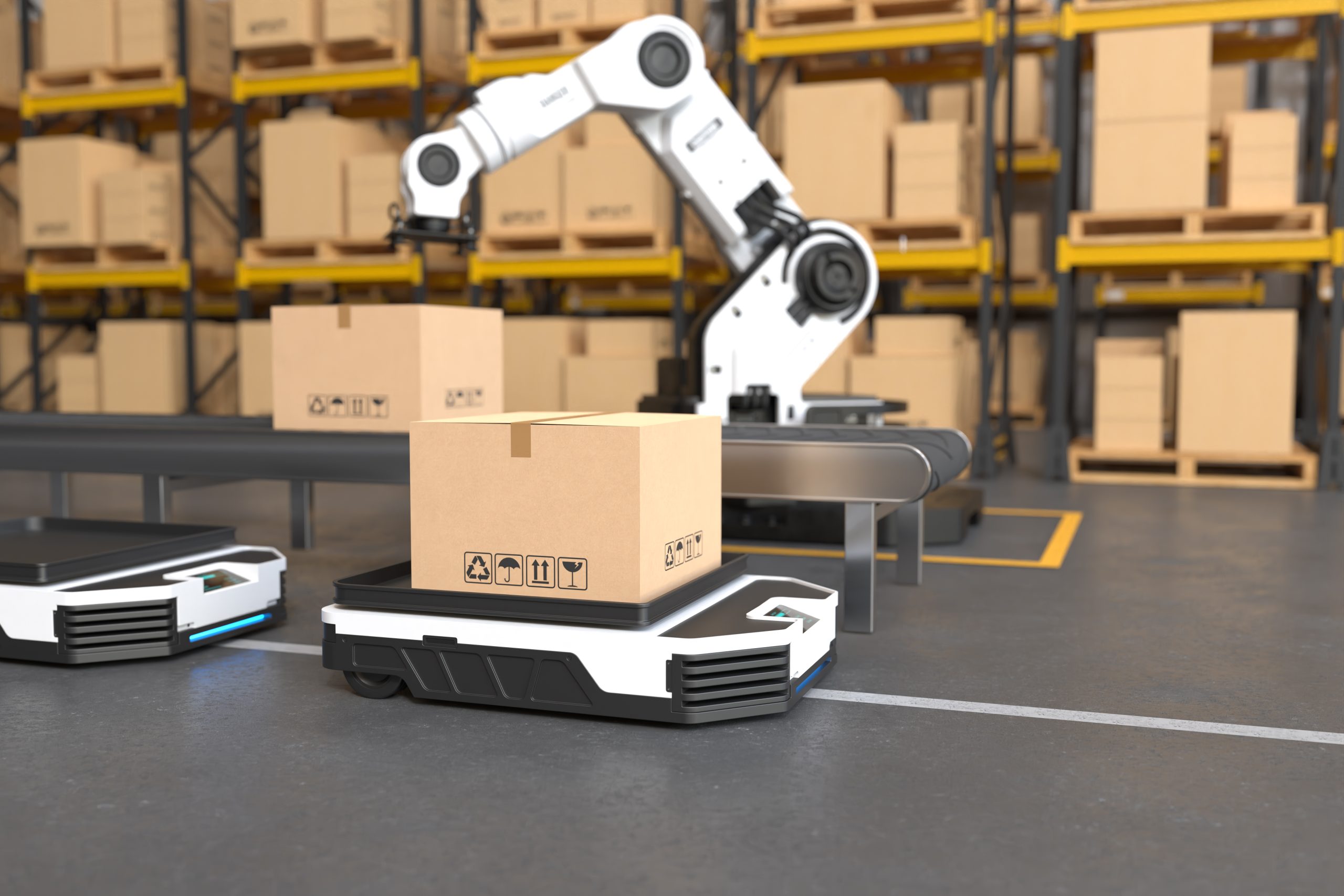
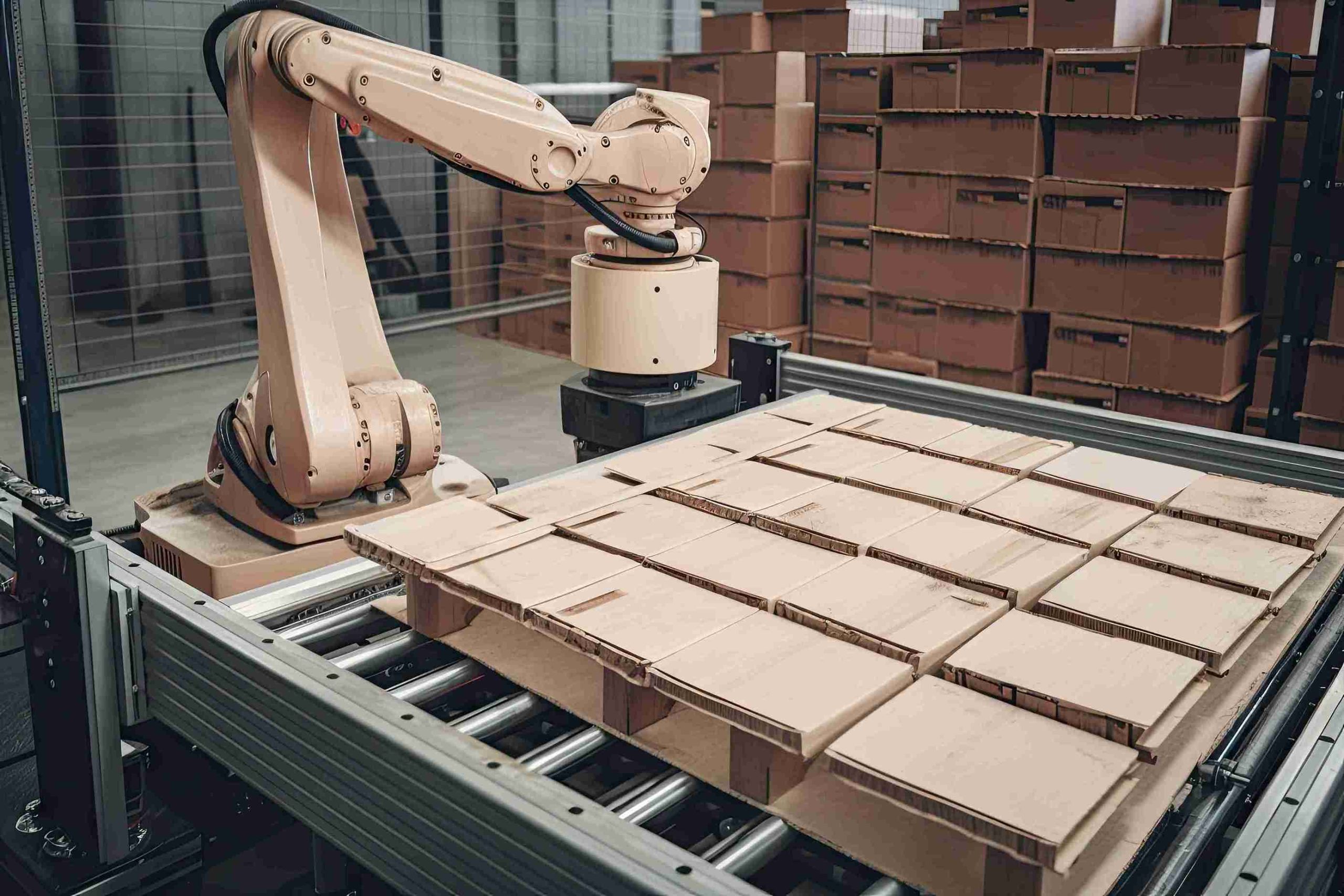
Ever wondered how the boxes you ordered online can be packed and shipped so fast? Behind warehouse and factory doors, robots are increasingly doing much of the heavy lifting-literally. Among such machines making big impacts are palletizing robots. The robots turn up in several industries, changing how products are stacked, stored, and sent out.
Palletizing refers to the process of putting products or boxes onto a pallet for easy movement. Companies have used traditional machinery in doing this for quite a long period of time, and sometimes even had the work done by human labor. But now, something better has come into place: collaborative palletizing robots.
Why would these new robots gain increasing popularity? What do they offer that is better than the older systems? It is in this article that we look deeper into what makes the palletizing robot unique and why it has become preferred in the modern industry to replace the traditional ways of palletizing.
Let’s start by understanding what these robots are and how they actually work.
What are palletizing robots, и как они работают?
Palletizers are a class of robots designed to move and stack boxes, сумки, или контейнеры на поддонах. Unlike older systems, however, collaborative palletizing robots are designed to operate safely around people. That means they can operate right next to human workers without safety fences or cages.
These robots use special sensors and smart technology to “see” their surroundings. If a person approaches too closely, the robot slows down or stops. Some use cameras and AI to adjust their actions in real time. This makes them even safer and more flexible than traditional systems.
You don’t need to be a robotics expert to work with one. Many palletizing robots have an easy-to-use touchscreen, drag-and-drop software, or even no-code programming tools. For companies seeking to train staff fast, that’s huge.
Now that we understand how these robots work, let’s discuss why the old systems no longer suffice.
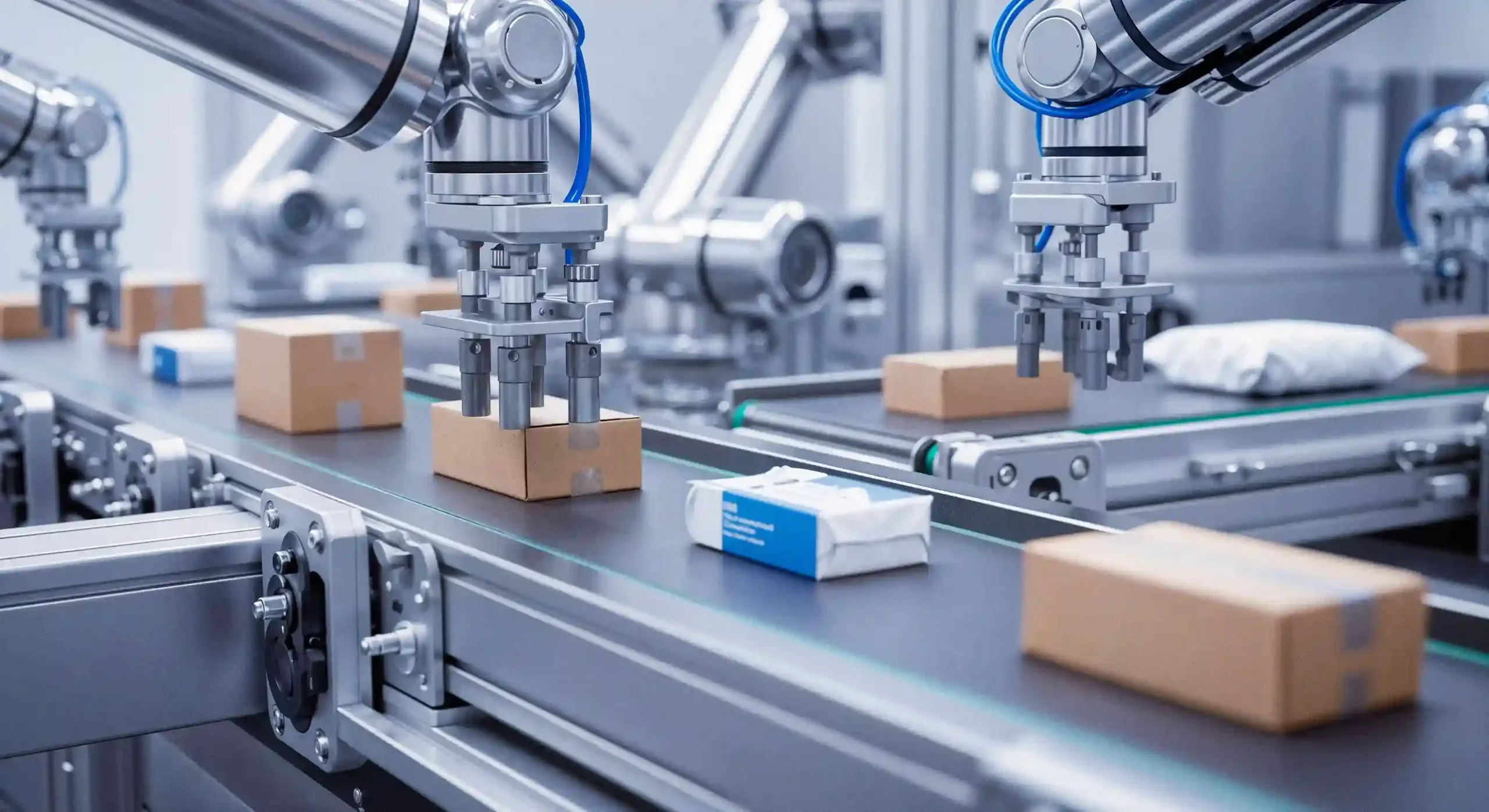
Why Traditional Palletizing Systems Are Falling Behind
While older palletizing machines have served for many years, they bring their own set of problems that make them more difficult to work with now.
Most of the traditional systems are big and bulky; for safety reasons, they have to be kept far away from people. This means that they take up a lot of space and are usually set up with protective barriers or cages. They are also difficult to adjust in case of a variation in the size of a box, or if a company has to handle different products on the same line.
Limitations of Traditional Systems
- Rigid setups: Traditional palletizers are built for one job. If the product or pallet pattern changes, often the system has to be reprogrammed, or pieces need to be rebuilt.
- High cost: these machines are very expensive to install and maintain. Any breakdown eventually brings the whole production line to a standstill.
- Safety barriers: Most of these systems require cages to be installed to ensure worker safety; this reduces their flexibility to easily set them into tight locations.
With industries becoming increasingly competitive, these limitations make traditional systems less able to match the demand. Due to this fact, many companies today are shifting to more modern solutions.
What makes palletizing robots such a better choice? Let’s explore their biggest advantages.
]Why Palletizing Robots Are Gaining Popularity
Companies of all kinds face new challenges: labor shortages, increasing costs, and a need for faster delivery. Palletizing robots help solve these problems in a way that’s smart, безопасный, and affordable.
Unlike traditional systems, these robots can be flexible: they can be moved from one part of a factory to another and reprogrammed to handle different tasks or products, saving time and money.
Let’s break down the top reasons why palletising robots are becoming the go-to choice.
Flexibility and Easy Programming
Palletizing robots can also be reprogrammed easily for new box sizes, шаблоны поддонов, or a different stacking method. Most of them now come with either drag-and-drop interfaces or teach-by-demonstration features that allow practically any person to train a robot in a few simple steps.
For companies that have many types of products or whose packaging changes quite frequently, this kind of flexibility is a big plus.
Smaller Footprint and Safer Workspaces
Since collaborative palletizing robots are safe to use around people, they do not need large cages or fences.
That saves floor space and makes them easier to fit into tight production lines.
Their inbuilt sensors help avoid accidents, making the workplace a safe place for all.
Lower Costs and Faster ROI
Even though the primary investment in palletizing robots might seem big, it typically pays for itself in a year or two by saving labor costs, preventing injuries, and reducing production delays.
Роботы-паллетизаторы, с другой стороны, promise a better return on investment compared to conventional machines, which are expensive to maintain and hard to upgrade.
But where, exactly, are these robots being used? Let’s take a closer look.
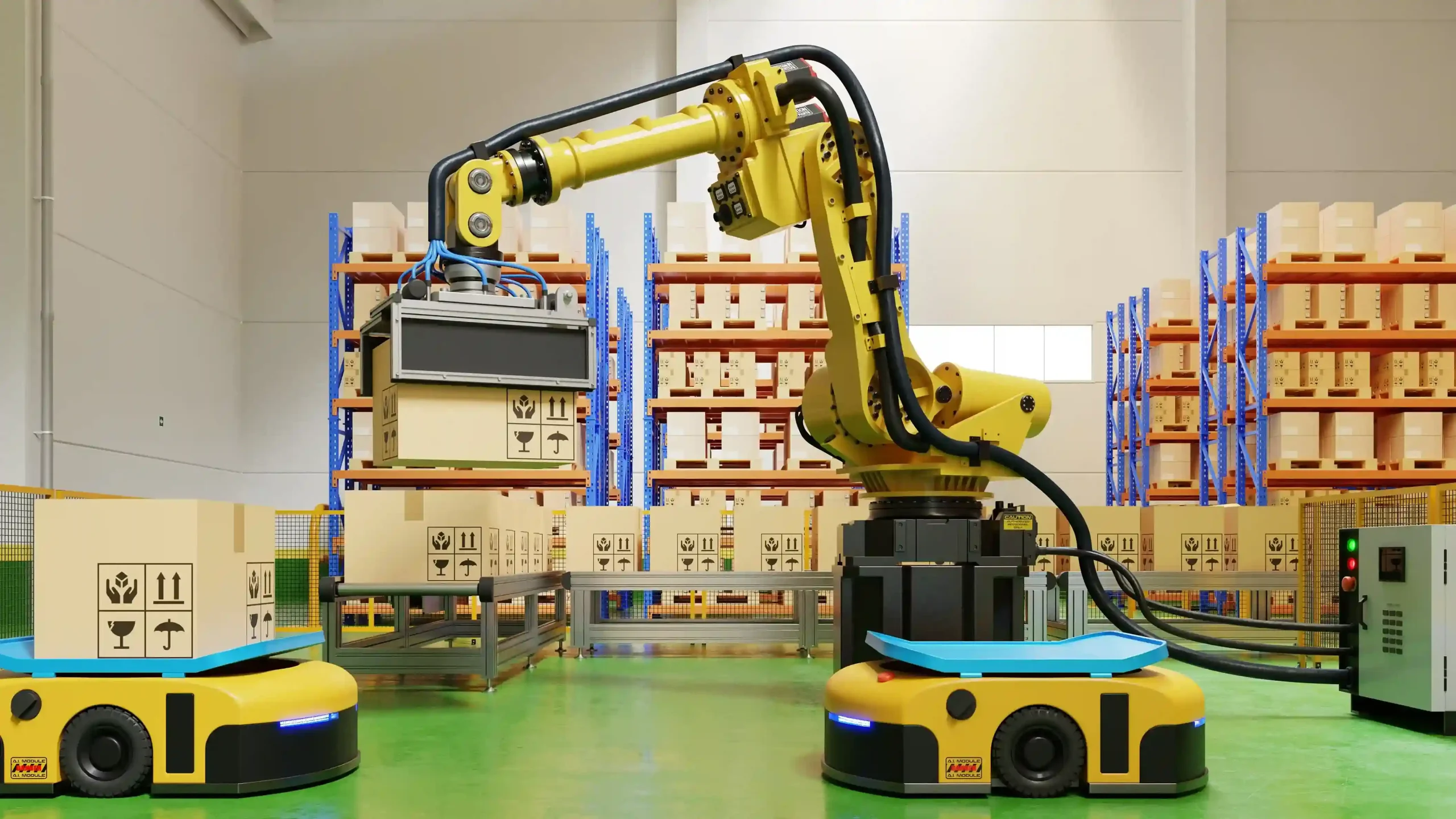
Which industries are using palletizing robots today?
You might be surprised by how varied the different industries that use palletizing robots are, whether it be a food factory or an online retailer; anywhere goods need to move efficiently and safely, these machines will turn up.
Businesses desire speed and reliability, few errors, and lower costs. Palletizing robots are helping make that a reality.
The following are some of the key industries where these robots are making a difference.
Logistics and Warehousing
Goods move into and out of a warehouse constantly. In cases like this, palletizing robots speed up the process of packing items and reduce human error. They work for all twenty-four hours of the day, extending operations with fewer personnel.
Food and Beverage
Food and drink products come in a wide range of shapes and sizes-from bottled water to snack boxes. Palletizing robots can handle them all, adapting quickly to changes in packaging.
In addition, they are easy to clean, and their use fulfills the hygiene requirements imposed in the food industry.
Pharmaceuticals and E-commerce
The two big key words in the pharmaceutical world are safety and precision. Palletizing robots ensure that medicines are packed securely in their rightful order. E-commerce companies, too, love them, especially during busy seasons when orders increase in leaps and bounds.
Now that we know in which places they’re used, let’s take a look at how they really contribute to improved ground operations.
How Palletizing Robots Improve Efficiency and Operations
Adding palletizing robots is not just about automation; it’s an overall betterment to a production line. These indeed are very speedy, accurate, and dependable robots.
Now, let’s look at some real benefits they bring to the table.
Improve Throughput and Accuracy
Depending on the setup, palletizing robots can do up to 8 to 12 boxes per minute. That is way faster than manual labor and more consistent, too. They don’t get tired or distracted; hence, there are fewer packing errors.
This leads to quicker delivery times and happier customers.
Reducing Worker Injuries and Downtime
Manual palletizing involves heavy lifting and repetitive motion, both factors that can eventually bring about injury. Robots do the heavy work, thus helping to keep workers safer and healthier.
Besides, they never have sick days off; they work during weekends and holidays, at night, without breaks.
Running 24/7 without Fatigue
Whether it’s high volumes of orders or keeping up with demand, the palletizing robot is able to help. They’re designed for continuous operation and are programmable to run for uninterrupted hours, even on off-hours.
This level of dependability is a big plus in today’s fast-moving supply chain.
All these benefits aside, a big question remains: is this where the future of palletizing robots lies?
Заключение
The short answer is yes. They’re not just here to stay, but palletizing robots are fast becoming the norm. As organizations look for smarter, safer, and more cost-effective ways to move products, these robots are leading the way.
They are easy to install, simple to operate, and flexible enough to handle whatever the modern factory throws at them. Be it food, medicine, логистика, or e-commerce, your company will remain competitive and productive with the aid of palletizing robots.
If you are thinking about upgrading your current palletizing setup, now is an excellent time to look into your options. И ОК, we build collaborative palletizing robots ready to work alongside your team safely, reliably, and affordably.
Got questions? Let’s talk. We’d love to learn about your needs and show you how our palletizing robots can fit right into your production line. Contact us today and see what a difference the right automation can make.
Frequently Asked Questions
1. What is a palletizing robot?
A palletizing robot is an automated machine designed to stack boxes or products onto the top of pallets and can operate safely around and alongside humans in both warehouse and production line situations.
2. How is a palletizing robot different from traditional palletizers?
Palletizing robots now have more flexibility, use less space, and do not require safety cages. They are easier to program and accommodate changes in product types.
3. What industries use palletizing robots?
They are used in logistics, food and beverage, pharmaceutical, and e-commerce industries for end-of-line automation.
4. Are palletizing robots safe to use near people?
Да, collaborative models with sensors and smart controls enable these robots to work around humans without any harm.