How Palletizing Robots Handle Heavy, Irregular, and Mixed Loads

Factories today face a tough question. How do you move heavier products faster when shapes, sizes, and packaging keep changing? This is where palletizing robots step in. They are no longer simple machines that stack boxes in neat rows. Modern palletizing robots are smart, stable, and flexible enough to deal with real world production challenges.

So how do palletizing robots handle heavy loads, odd shapes, and mixed products without slowing down or making mistakes? Let us walk through it step by step.

Why Palletizing Robots Face Challenges With Heavy, Irregular, and Mixed Loads

Before we explain the solutions, it helps to understand the problem. Heavy, irregular, and mixed loads push palletizing robots to their limits. Each type of load creates a different challenge, and many production lines deal with all three at the same time.

Heavy products put stress on the robot arm and joints. Irregular products make gripping and stacking harder. Mixed loads force the robot to think and adjust instead of repeating one simple motion. So how do palletizing robots handle all of this without losing speed or accuracy?

The answer starts with smart mechanical design and continues with control systems, tooling, and software working together.

How Palletizing Robots Stay Stable When Handling Heavy Loads

Heavy products change everything. A robot that can lift fast but not smoothly will shake the load and risk dropping it. That is why palletizing robots built for heavy loads focus on control, not just strength.

These robots use strong arms, rigid frames, and powerful motors. But strength alone is not enough. What really matters is how the robot moves.

The motion of palletizing robots is planned to stay smooth at every step. Acceleration and slowing down happen gently. This keeps the product stable and protects the robot from wear over time.

Why payload ratings matter more than you think

Payload numbers look impressive on paper, but smart buyers know that palletizing robots work best below their maximum rating. Running with a safety margin improves accuracy and extends service life. It also builds trust with buyers who expect long term performance.

How smooth motion protects heavy loads

Heavy items create momentum. If the robot stops too fast, the load shifts. Palletizing robots use controlled paths and soft stops to reduce shock. This keeps stacks straight and pallets safe for transport.

Once heavy loads are under control, the next question becomes even more interesting. What happens when products are not shaped like neat boxes?
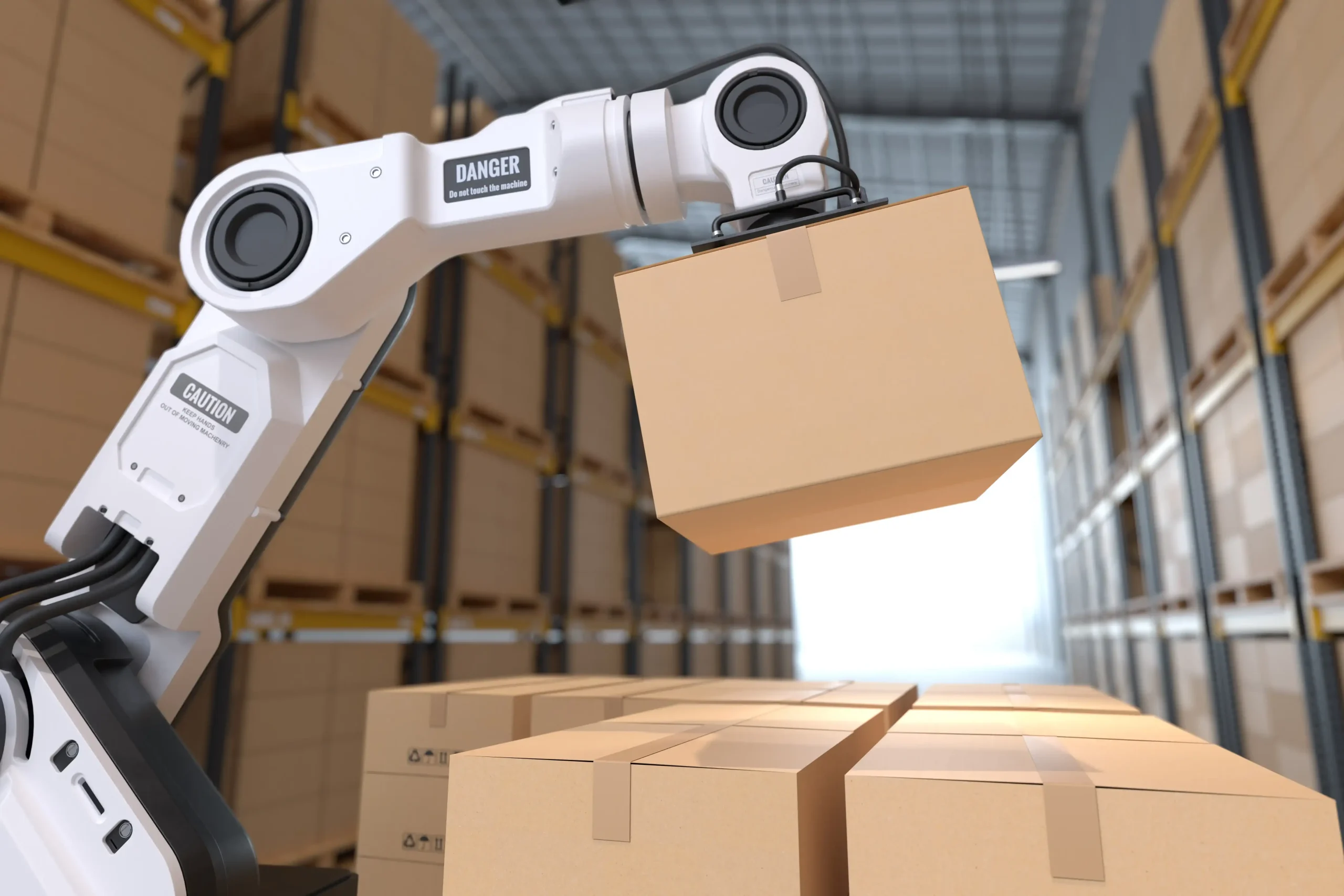
Palletizing Robots

How Palletizing Robots Grip Irregular Shapes Without Errors

Irregular products are common in real factories. Bags, wrapped bundles, uneven cartons, and flexible packaging all behave differently. Palletizing robots must adapt or fail.

The key here is the tool at the end of the robot arm. This is where gripping happens.

Before we go deeper, it is important to note that palletizing robots do not rely on one single gripping method. The choice depends on the product.

The role of end of arm tooling in palletizing robots

End of arm tools are designed around the product, not the other way around. Some products need vacuum. Others need clamps. Some need a mix of both. Palletizing robots can switch tools or use custom designs to handle difficult shapes.

Handling bags and flexible packaging

Bags change shape when lifted. Palletizing robots adjust gripping force to avoid squeezing too hard. This keeps bags intact and stacks even. Smart force control helps prevent leaks and product waste.

Keeping stacks stable with uneven products

Irregular shapes can create gaps. Palletizing robots compensate by adjusting placement based on the layer below. This keeps the pallet balanced from bottom to top.

Now that we can grip almost anything, another challenge appears. What if every pallet needs to look different?

How Palletizing Robots Manage Mixed Loads on One Pallet

Mixed loads are becoming more common. One pallet may carry different sizes, weights, or products for a single customer. Manual stacking struggles here, but palletizing robots handle this with logic and planning.

These robots do not just stack. They calculate.

Palletizing robots use recipes that define how each product should be placed. When a new product arrives, the robot switches recipes instead of stopping the line.

Smart stacking rules for mixed products

Heavy items go first. Lighter items go on top. Fragile products get protected layers. Palletizing robots follow these rules consistently, even during long production runs.

Fast changeovers without long downtime

In mixed production lines, speed matters. Palletizing robots can switch patterns through a simple interface. This reduces downtime and keeps output steady.

Why mixed loads demand better software

Without smart software, palletizing robots would be limited. Modern systems manage order, balance, and pattern changes smoothly. This makes them ideal for factories serving many customers.

Mixed loads bring us to another question. How do palletizing robots know exactly where each product is?

The Sensors and Vision Systems Inside Palletizing Robots

No matter how strong a robot is, it still needs eyes. Sensors and vision systems help palletizing robots deal with real world variation.

Products do not always arrive in perfect positions. Vision helps the robot adjust instead of stopping.

How two-dimensional vision helps positioning

Two-dimensional vision systems detect where a product is and how it is rotated. Palletizing robots use this data to pick accurately even when products shift on the conveyor.

How three dimensional vision handles height and shape changes

Three dimensional vision adds depth. It helps palletizing robots see height differences and uneven surfaces. This is especially useful for irregular and flexible products.

Preventing errors before they happen

Sensors also confirm successful picks. If a product slips or is missing, the robot knows right away. This prevents bad stacks and damaged pallets.

With all this technology in place, buyers still ask an important question. Can they trust palletizing robots from China?
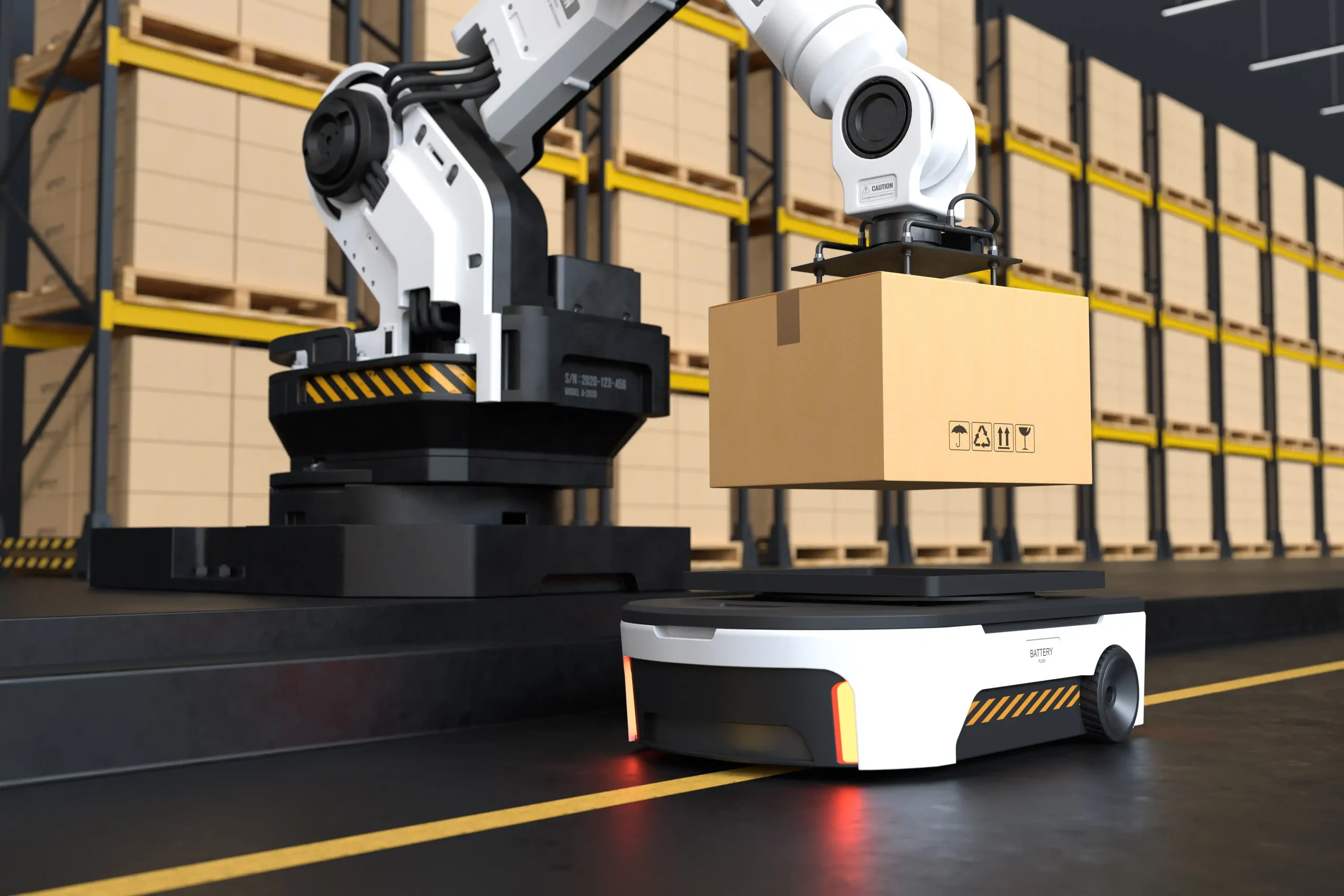
Palletizing Robots

What International Buyers Should Look For in Palletizing Robots From China

Trust is earned through transparency and performance. Buyers want to know how palletizing robots are built, tested, and supported.

A reliable supplier explains their design choices clearly. They show how components are selected and why testing matters.

Component quality and consistency

Good palletizing robots use proven motors, drives, and controllers. Consistent parts mean easier maintenance and longer service life.

Testing with real products and real loads

Factory testing is critical. Palletizing robots should be tested using actual customer products. Long run tests show stability and reliability.

Support that does not disappear after delivery

Clear manuals, remote support, and spare parts access all matter. International buyers need confidence that help is available when needed.

Understanding these factors leads to one final step. How do you choose the right palletizing robot for your own line?

A Practical Checklist for Choosing Palletizing Robots

Choosing palletizing robots is not just about speed. It is about matching the robot to your product and future plans.

Start with product details. Weight, size, and packaging type define the foundation.

Measuring products correctly

Accurate data helps avoid oversizing or undersizing. Palletizing robots perform best when selected with real measurements.

Planning for growth and change

Production rarely stays the same. Smart buyers choose palletizing robots that can handle future products without major changes.

Thinking beyond the robot itself

Pallets, slip sheets, and line layout all affect performance. A complete solution works better than isolated equipment.

So where does all this leave us?

Conclusione

Heavy, irregular, and mixed loads are no longer barriers to automation. Palletizing robots are designed to handle real factory conditions with strength, control, and intelligence. They lift heavy products smoothly, grip odd shapes carefully, and manage mixed pallets with confidence.

For manufacturers and distributors around the world, the right palletizing robots can improve safety, increase output, and reduce long term costs. When engineered properly, they become a reliable partner on the production floor.

If you are exploring palletizing robots for your application and want practical guidance based on real industrial experience, reach out to OK. Our team is ready to help you find a solution that fits your products, your line, and your future plans.

FAQs

What types of products can palletizing robots handle?

Palletizing robots can handle boxes, borse, cartons, shrink-wrapped bundles, and mixed products. With the right gripper and setup, they work well with both rigid and flexible packaging.

Can palletizing robots lift very heavy loads?

Yes. Many palletizing robots are designed for heavy industrial loads. Smooth motion control and strong mechanical design help them lift safely and consistently.

How do palletizing robots deal with irregular shapes?

They use custom end-of-arm tools and sensors to grip products securely. Vision systems help adjust for uneven shapes and positions.

Are palletizing robots suitable for mixed-load pallets?

Assolutamente. Palletizing robots use software recipes to stack different products on one pallet while keeping it stable.

Are palletizing robots from China reliable?

When built with quality components, proper testing, and good support, palletizing robots from China can be reliable and cost-effective for global buyers.
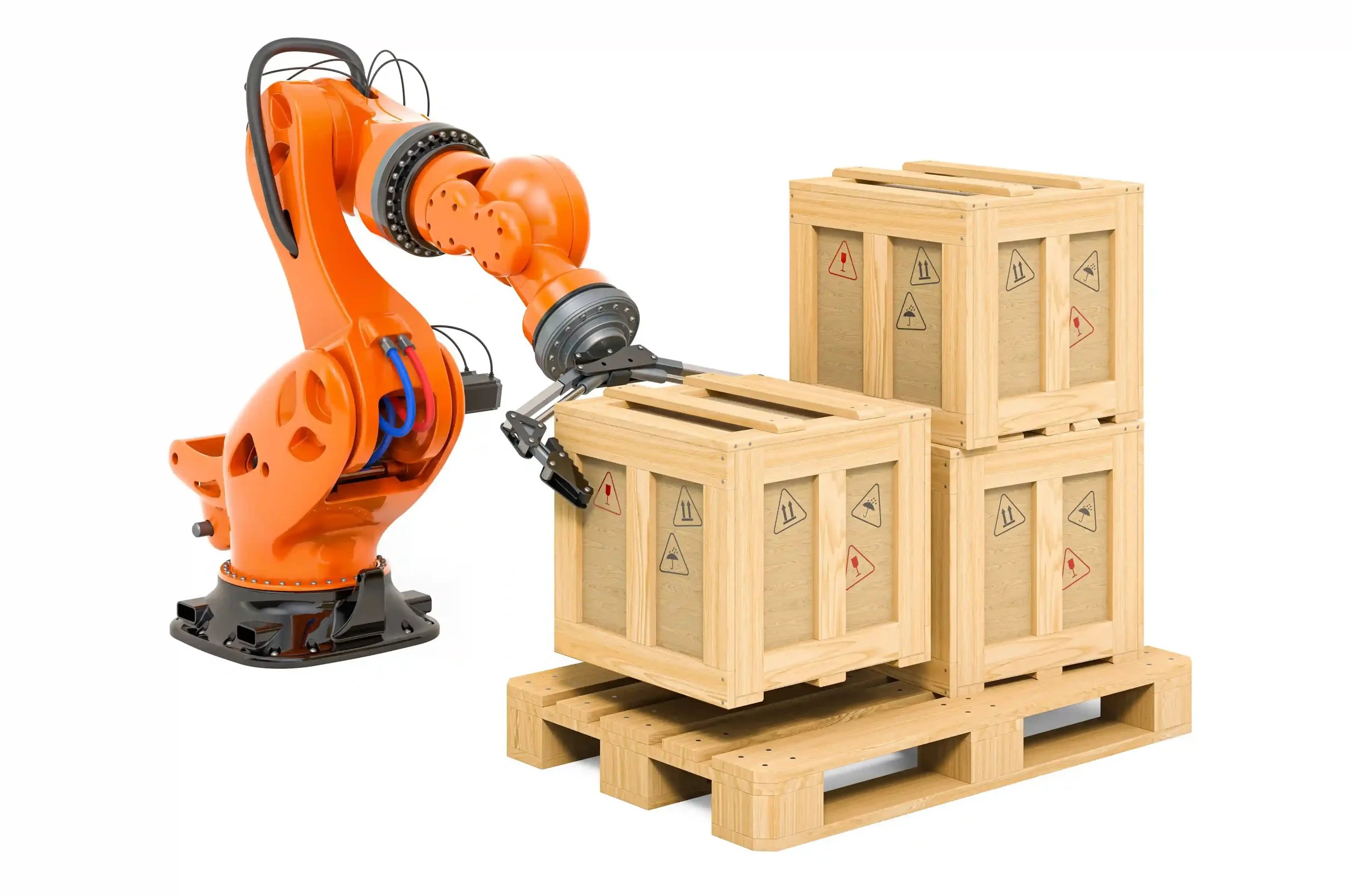
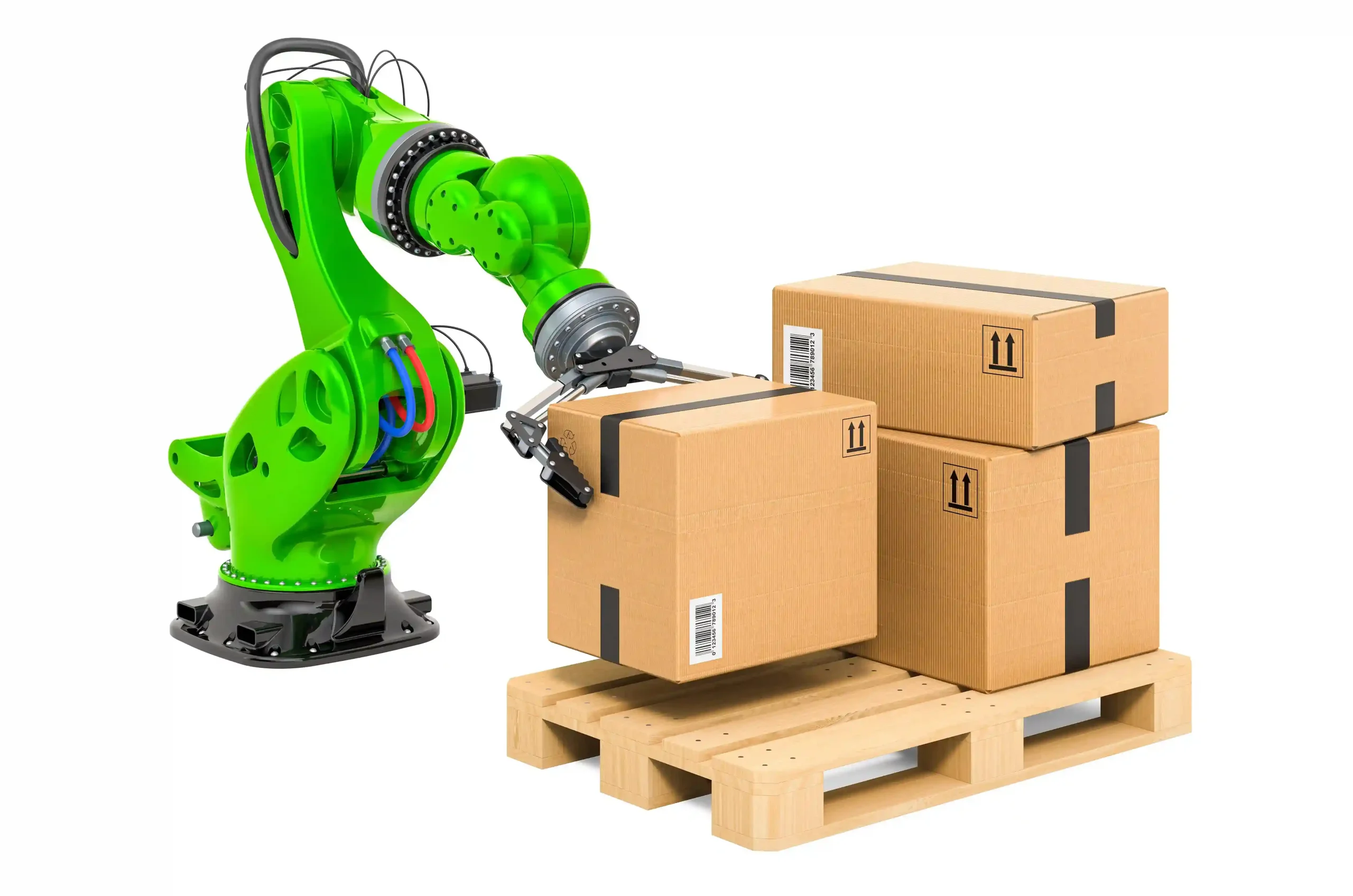
How to Choose the Right Palletizing Robot for Your Factory? Key Parameter Analysis

In today’s fast-moving world of manufacturing, many factory owners are searching for smart ways to get more done with less. One of the smartest tools in modern production lines is the palletizing robot. These machines are built to take over the hard work of stacking boxes, borse, and items onto pallets — a task that used to take teams of workers hours to finish.

But with so many different robots out there, how do you know which one is right for your factory? It all comes down to understanding the design, purpose, and features of each palletizing robot, and knowing how to match that with your production needs.

Let’s break it down and help you find the best solution.

What Is a Palletizing Robot and Why Do You Need One?

A palletizing robot is a machine designed to lift and stack products onto a pallet. These robots help factories speed up packaging, reduce labor costs, and improve workplace safety. They are especially useful in places where heavy lifting or repetitive stacking is part of the daily routine.

In the past, people had to handle all this work by hand. It was slow, tiring, and risky. Today, thanks to new robot technology, factories can use machines to do the same job faster, safer, and more accurately.

Palletizing robots are now a common part of industries like food and drink, logistics, elettronica, and chemicals. Whether your factory is large or small, using one of these robots can make your workflow smoother and more reliable.

So now that we know what a palletizing robot is, let’s look at the types available and how they work.

Types of Palletizing Robots: Which One Fits Your Workflow?

Not all palletizing robots are the same. In fact, there are several different types, and each one is built for a specific kind of task. Picking the right type is the first big step in choosing the best palletizing robot for your factory.

Here are the main types to consider:

Articulated Robots

These robots have arms with multiple joints. They are flexible and can reach in many directions, making them great for tasks that involve a lot of movement. Articulated robots are often used in large factories with high production rates.

SCARA Robots

SCARA stands for Selective Compliance Articulated Robot Arm. These are fast and accurate but work best when the movement is mostly in one direction. They are good for placing small, light items quickly.

Cartesian Robots

Also called gantry robots, these move in straight lines across X, Y, and Z axes. They are simple but strong. They work well in systems where space is not limited.

Collaborative Robots (Cobots)

Cobots are designed to work safely alongside humans. They are smaller, slower, and easier to use. These are perfect for smaller factories or places where space and safety are top concerns.

Now that you know the types, how do you actually choose the right one? That’s where key parameters come into play.

Robot di pallettizzazione

Key Parameters to Consider When Choosing a Palletizing Robot

Buying a palletizing robot is a big investment. You want to make sure it fits your production needs. To do that, you need to look at a few important features.

Let’s walk through them.

Payload and Reach

The payload is how much weight the robot can lift. The reach is how far the robot arm can extend. You need to pick a robot that can lift your products and reach the pallet from where it picks up the item.

A robot that can’t reach all corners of a pallet or struggles to lift your heaviest box won’t be helpful on your line.

Speed and Cycle Time

Speed refers to how fast the robot moves, while cycle time means how long it takes to complete one full task, like picking up a box and placing it on the pallet.

If your production line is fast, your robot needs to keep up. Make sure the robot’s speed matches your output goals.

End-of-Arm Tooling (Grippers)

The robot arm needs a tool to grab and hold items. This is called end-of-arm tooling or a gripper.

Grippers come in different styles: vacuum, clamp, magnetic, and more. Your product type will decide which one works best. Soft items need gentle grips, while solid boxes can use stronger tools.

Footprint and Space Requirements

Every factory has different space limitations. Some palletizing robots are compact and can fit into tight spaces. Others need more room to move.

Before choosing, measure your space and think about how the robot will fit into your existing workflow.

Ease of Integration and Programming

A good palletizing robot should be easy to set up and control. Many modern robots come with simple touch screens and visual programming tools.

Make sure your team can handle the robot without needing expert coders or engineers.

Safety Features and Compliance

Safety matters, especially if humans will work near the robot. Look for features like collision detection, force control, and automatic stop functions.

Collaborative robots often meet higher safety standards, making them a smart choice for mixed environments.

Total Cost and Return on Investment

It’s not just about the price tag. Think about the total cost, including setup, maintenance, and energy use. Then compare that to how much time and money the robot will save you.

A good palletizing robot pays for itself over time by improving efficiency and reducing labor costs.

Now that we’ve covered the features, let’s explore the real-world benefits you can expect.

Robot di pallettizzazione

How a Palletizing Robot Arm Boosts Efficiency and Safety

Using a palletizing robot arm does more than just replace manual labor. It helps your entire operation run better.

Boosts Speed and Output

Robots don’t get tired or take breaks. They can keep working all day and night, making your output more consistent and reliable.

Improves Safety

Heavy lifting and repetitive tasks often lead to injuries. By handing these jobs over to a robot, you create a safer workspace for your team.

Enhances Product Quality

Robots stack products with precision. This reduces damage during packaging and shipping. A neat and stable pallet also means easier transport and storage.

Reduces Human Error

No more uneven stacks or missed pallets. A robot follows the same pattern every time, reducing mistakes.

With so many benefits, it’s easy to see why more factories are turning to palletizing robots. But how do you decide which one is truly the best for your needs?

What’s the Best Palletizing Robot for Your Factory?

The best robot is the one that matches your products, your floor space, and your budget. Start by looking at what your factory produces, how fast it moves, and what kind of stacking you need.

If you run a smaller factory or are just starting to automate, a collaborative palletizing robot might be the ideal choice. They’re easier to install, take up less space, and are safer around people.

On the other hand, if you run a high-volume plant and need fast stacking of heavy items, an industrial robot with high speed and payload might be the better fit.

At OK, we specialize in palletizing robots that are smart, safe, and simple to use. Whether you need a compact cobot for tight spaces or a heavy-duty robot for demanding lines, we’ve got a solution that fits.

Why Choose OKCOBOT for Your Palletizing Robot Needs?

Our factory, located at the headquarters base of Ouke Technology in Xiushui, Provincia dello Jiangxi, covers 260 acres. With 98,000 square meters of modern, clean workshops, we have the capacity to produce 1,000 sets of high-end paper post-processing lines annually.

Our 5G+AI-powered visual quality inspection system is cloud-connected, delivering a 99.7% yield rate and reducing delivery cycles by 25%. With more than 500 million yuan invested in full-process equipmentincluding cutting, welding, milling, and heat treatment systems we bring serious manufacturing strength to every project.

Here’s how we help you get the most from your palletizing robot investment:

Soluzioni personalizzate

We tailor palletizing robots, case-opening robots, and inspection systems to your material type (cartons, borse, barrels) and production needsensuring exact alignment with your factory setup.

Garanzia di qualità hardcore

Our equipment is tested thousands of times to ensure stability and a low failure rate. A one-year (or longer) warranty gives you peace of mind post-installation.

Servizio a processo completo

We support you from start to finishfrom early consultations and site visits to setup, training, and ongoing maintenance. Your success is our priority.

Proven Industry Experience

Con oltre 1,000 client relationships, we understand the production challenges you face and know how to solve them with real-world automation strategies.

Exceptional ROI and Fast Payback

Our customers often reduce labor costs by more than 30% and improve efficiency by over 50%. Most recover their full investment within 12 to 18 mesi.

So, if you’re wondering who to trust for your next palletizing robot, OKCOBOT brings the performance, reliability, and support your factory deserves.

Conclusione

Finding the perfect palletizing robot is all about knowing your needs and matching them to the right features. From robot type to payload, from safety to space, every detail matters.

Now that you’ve seen what’s out there and how it works, you’re ready to make a confident decision.

Still not sure where to begin? Don’t worry. That’s what we’re here for.

Contact us today at OK to get expert help in finding the right palletizing robot for your factory. We’re real people, ready to help you choose a solution that makes your work faster, safer, and easier.

Domande frequenti

Q1: What is a palletizing robot?

A palletizing robot is a machine that stacks boxes or products onto pallets. It helps factories work faster, safer, and more efficiently.

Q2: How do I choose the right palletizing robot?

Look at factors like payload, speed, reach, footprint, and ease of use. Your factory’s size and product type also matter.

Q3: Are palletizing robots hard to program?

No, many modern palletizing robots are user-friendly and come with simple software. Some can be programmed without any coding.

Q4: Can palletizing robots work with people?

Yes, collaborative palletizing robots (cobots) are designed to safely work near humans without extra safety cages.

Q5: How much does a palletizing robot cost?

Prices vary, but you should also consider savings in labor, time, and fewer workplace injuries when thinking about cost.

How to Identify the Best Palletizing Robot for Your Industry Needs

In this rapidly changing world of manufacturing and distribution, business offers no relief from the demand to move more goods, meet higher quality standards, and reduce costs simultaneously. Manual palletizing, with an employee physically stacking cases, borse, or boxes by hand, cannot keep up. It takes too long, gets monotonous, and results in possible injuries. Robot di pallettizzazione fill the bill.

But with all the vendors and models out there, how do you get one that actually works with your business? It’s not about getting the biggest or most high-end model. It has everything to do with getting the ideal palletizing robot that works with your business requirements.

We will step through what the machines do, what you should look at while purchasing one, and how you can ensure your investment produces returns.

What Is the Best Palletizing Robot and Why It Matters

A palletizing robot is a robotic device that can lift and carry products and stack them neatly and firmly onto pallets. Rather than depending upon manpower and endurance, the robot has a programmed arm and a special device known as an end-of-arm tool. Your end-of-arm tool may grasp a case, bag, or pail, depending upon your product.

Why does this matter? Imagine a food company shipping out thousands of cartons per day. Without automation, workers are required to bend, lift, and twist hour after hour. Worker fatigue results in mistakes being incurred and stacks falling over. A top-of-the-line palletizing robot eliminates this problem with faster, safer, and more repetitive work.

As markets evolve and orders continue to increase, robots are no longer a nice-to-have. Robots are a necessity for business outfits that desire a competitive edge.

Robot di pallettizzazione

Key Factors for Choosing the Best Palletizing Robot

Everyone has heard that palletizing robots are a necessity. How do you determine what system you are supposed to implement with your production line? Well, first of all, the best you can do is evaluate a couple of fundamental issues.

Product type and packaging come first. A robot with a capacity of lifting lightweight cartons cannot lift heavy 50-kilogram bags with high efficiency. And shrink-wrapped bundles cannot use the same grippers as Open boxes.

Next are payload and reach. All robots are rated with a lifting capacity and arm length. If your pallets are tall or you want one robot per pair of pallet stations, you need a higher reach and greater lifting capacity.

Another aspect is throughput and speed. Se la tua linea produce 20 units per minute, you need a robot with matching or higher throughput. Certain robots are able to grip more than one case at a time while tripling throughput.

Footprint and configuration are also relevant. Does a system demand a fair amount of floorspace to serve a high-density requirement or a slender footprint with a low-density requirement?

Last of all, look at software, safety, and integration. User-friendly software enables your personnel to make pallet patterns rapidly. Safety features safeguard your labor. And integration works with your robot and your conveyors, wrappers, and warehouse systems.

How Software Shapes the Best Palletizing Robot

Software is often overlooked, yet it can make or break the success of your palletizing system. Your contemporary palletizing robot needs intuitive software whereby operators can specify their freshly designed pallet patterns with or without programming knowledge.

Good software also makes it easy to interchange product types. For instance, you can process cartons in the morning and bags during the afternoon. Recipe-based controls enable you to interchange jobs within a minute. Remote monitoring and support are yet another assurance that your line continues operating with minimal shutdown.

So while you evaluate what is the best palletizing robot, do not overlook whether or not its brain, the software, is as good as its muscles.

Robot di pallettizzazione

The Best Palletizing Robot for Different Industries

Not all sectors are created equal. What works at a warehouse might not work at a milk factory. Let us get to the diverse needs of sectors.

Many food and drink manufacturers work with cartons or shrink packs. Hygiene is paramount, and therefore, equipment can require stainless steel components or washdown-capable configurations. Flexible changeover comes next because pack schedules are changing.

Pharma and healthcare are high-accuracy and high-trackability sectors. Boxes should be dealt with carefully, and data should be entered for traceability purposes. Robots that are cleanroom-compatible should be considered.

Agriculture and chemicals focus on heavy bags of grain, fertilizer, or powder. These are dusty environments, so robots must be rugged and reliable. Special grippers prevent bags from slipping or deforming.

Consumer goods and logistics are tested in a different manner. They are asked to handle an assortment of products and packages. Setting up speed and flexibility is of first priority.

When you are choosing the ultimate palletizing robot, remember that your needs are not one size fits all. Your choice should reflect your products, your plant, and your customer requirements.

Benefits of Investing in the Best Palletizing Robot

You now understand how the industries vary, and the next thing that comes to mind is quite simple. Why should you get a palletizing robot at all? It has both practical and financial benefits.

Labor savings are immediate. A single robot can replace two or more workers doing repetitive stacking. Those workers can then be moved to roles that add more value.

Greater safety is another benefit. By removing heavy lifting from daily operations, you are decreasing the likelihood of injuries and lessening fatigue among your employees.

Reliability equals higher productivity. Robots don’t get tired and stack with perfect consistency every single time. That means fewer stacked pallets mistakes and fewer line slowdowns.

Faster return on investment is the last reason. Although the initial cost appears expensive at first, a lot of companies get their investment back in 12-24 mesi. Then the savings come back every year.

So if you are thinking about whether the best palletizing robot is worth the investment, the good news is that it definitely pays off both in efficiency and safety.

Why OKBOLONG May Be the Best Palletizing Robot Partner for You

There are so many robot suppliers available; why should you rely on OKBOLONG? It’s because we’re about balance. OKBOLONG is about providing you with the proper blend of quality, customization, and value.

Unlike mass suppliers that sell at high-end premiums, OKBOLONG has cost-performance solutions suitable for burgeoning companies. Their robots are versatile and span a variety of packaging materials, ranging from bags to cartons to pails.

They also offer modular configurations, and you can integrate a system into your plant, no matter how small or big your warehouse or production room may be.

Another plus is user-friendly software that allows your employees to create new patterns with minimal training. And with global support and integration expertise, OKBOLONG makes sure your system integrates with your current lines.

All of this means that as you are out there looking for that ultimate palletizing robot, OKBOLONG can be more than a supplier. It can be a long-term automation partner.

Checklist Before Choosing the Best Palletizing Robot

As a quick reference before making a final choice, use this checklist.

  • What goods and packaging will you use?
  • What throughput are you aiming for per minute?
  • What are your pallet sizes?
  • How much room do you actually enjoy on your floor?
  • Are you defining washdown or dust-proof constructions?
  • What software and controls do you require?
  • What are your website safety guidelines?
  • How will the robot communicate with your other equipment?
  • What service and support will you need once it is installed?

This guide not only assists you with selecting the right palletizing robot. It also enables you to talk more efficiently with your suppliers and get through the process more quickly.

Conclusione

Choosing the right palletizing robot isn’t about specifying a robot with the most horsepower or the lowest cost. It’s about specifying the best system suitable for your materials, your space requirements on the floor, your requirements as a user of safety regulations, and your growth aspirations.

We’ve described what palletizing robots are, what’s paramount during the choice of one of them, why industries demand certain combinations, and why the investment becomes profitable. We’ve also shown why OKBOLONG becomes a trusted business partner of international companies.

If you are researching automation, it’s high time to act. Your employees will repay you with gratitude, productivity will grow, and your business will stay competitive.

Keen to experience how OKBOLONG can simplify your line? Contact us today, and we can get the conversation underway.

FAQs

What is the best palletizing robot?

The perfect palletizing robot is one that fits your product description, your production rate requirement, and your floorspace availability. It will pile goods securely at a lower cost of labor and a greater efficiency.

What are the benefits of a palletizing robot system?

Start with an analysis of your weight range, packaging size, pallet width, and production volume. Then shop robots with software capabilities, safety features, and service coverage.

What are the advantages of palletizing robots?

Drinks, foods, medicines, agriculture, logistics, and consumer goods all rely on palletizing robots as a cost-saving device and a production booster.

Why should you choose OKBOLONG?

 OKBOLONG offers affordable, adaptable, and consistent solutions created with particular sectors in consideration, and is a suitable choice among global companies.