Nessuna esperienza di automazione? Nessun problema. Come OK ti guida in ogni passo

Why So Many Manufacturers Think: Nessuna esperienza di automazione? No Problem… But Is It Really?

For many manufacturers, automation sounds like a big leap. It promises faster production and lower costs, but it also brings questions. Is it too expensive? Will it shut down operations? Do you need a team of engineers just to get started?

It is no surprise that many businesses hesitate, even when they know automation could help them grow.

Common fears around automation

Most concerns come down to a few key worries:

  • High upfront investment
  • Long installation times
  • Complex programming
  • Risk of downtime

These are real concerns, especially for small and mid-sized factories. If you have never worked with automation before, it can feel like stepping into the unknown.

Why traditional automation feels overwhelming

Traditional industrial robots often require safety cages, major layout changes, and specialized programming. That means time, money, and outside experts.

So the question becomes clear: if automation is this complex, how can beginners ever get started?

This is exactly where OK changes the story.

Nessuna esperienza di automazione? Nessun problema: How OK Starts With the Right Plan

What if you did not have to figure everything out on your own? What if the process started with someone simply understanding your needs?

That is the idea behind OK’s approach.

Free consultation and site evaluation

Instead of selling a one-size-fits-all machine, OK begins with a conversation. Their team looks at your production line, listens to your challenges, and identifies where automation can help.

Even if you are unsure what you need, that is not a problem. The process is designed for people with no background in automation.

Customized solutions that fit your factory

Every factory is different. Some handle fragile products. Others deal with heavy loads or tight spaces.

OK designs solutions that match your exact setup. From custom grippers to the right robot reach, everything is tailored so you do not have to redesign your workflow.

Clear ROI without complex calculations

Cost is often the biggest concern. That is why OK helps you understand the return on investment from the start.

Most systems deliver ROI within 12 to 18 mesi. You do not need advanced financial knowledge to see the value. Everything is explained in simple terms.

So once the plan is clear, what happens next? Does installation bring more complexity?

Automation Experience

Nessuna esperienza di automazione? Nessun problema: Fast Setup Without the Headache

This is where many expect delays and disruption. But what if installation could happen in hours instead of weeks?

Plug and play deployment.

OK systems are built for speed. Many setups can be deployed in under two hours. That means minimal disruption to your production schedule.

Instead of long shutdowns, you get a fast transition into automation.

No major factory changes required

Unlike traditional robots, collaborative robots do not need safety cages in most cases. They are designed to work safely alongside people.

This reduces both cost and complexity. You do not need to rebuild your factory just to get started.

Works with your existing equipment

One of the biggest advantages is compatibility. OK systems integrate with what you already have.

Your conveyors, packaging lines, and existing machines stay in place. The robot fits into your workflow, not the other way around.

At this point, you might be wondering: even if the system is easy to install, can your team actually use it?

Nessuna esperienza di automazione? Nessun problema: Training Your Team Made Simple

Technology only works if people can use it. That is why training is a key part of the process.

No coding required

OK systems are designed with simple, user-friendly interfaces. Basic operations do not require programming knowledge.

This removes one of the biggest barriers for beginners.

Quick learning for existing staff

Training does not take weeks. In many cases, programming can be done in as little as five minutes.

Your current employees can learn to operate the system quickly. There is no need to hire specialized engineers for daily tasks.

Building confidence on the floor

As your team becomes familiar with the system, confidence grows. What once seemed complex becomes part of everyday operations.

And when your team feels comfortable, adoption becomes much smoother.

But what happens after everything is up and running? Is that where support ends?
Automation Experience

What Happens After Installation? Support That Stays With You

For many businesses, this is the biggest concern. Buying a machine is one thing. Keeping it running is another.

OK addresses this with full process support.

Full process support

From the first call to full production, OK stays involved. Their team ensures that everything works as expected, even after installation.

This ongoing support makes a big difference, especially for first-time users.

Maintenance and reliability

The systems are designed for low maintenance. That means fewer interruptions and less need for specialized technicians.

Warranty coverage and service plans add another layer of security.

A partner you can trust long term

OK is backed by a publicly listed parent company. This gives customers confidence that support will be there in the future.

With remote and on-site assistance available, help is always within reach.

So now that support is covered, what does this mean for your long-term growth?

Nessuna esperienza di automazione? Nessun problema: A Smarter Way to Grow Your Business

Automation is not just about solving today’s problems. It is about preparing for the future.

Start small and scale easily.

You do not need to automate everything at once. Many businesses start with a single application, such as palletizing.

From there, they expand step by step. This reduces risk and makes the transition more manageable.

Proven results across industries

Con oltre 1,000 successful projects, OK has experience across industries like food, prodotti farmaceutici, e logistica.

This track record shows that automation is not just for large corporations. It is accessible to businesses of all sizes.

And that brings us back to the original question: is automation really out of reach for beginners?

Conclusione

The idea that automation is only for experts is quickly becoming outdated.

With the right partner, the journey becomes simple, guided, and practical. That is what “Quality OK, Prezzo OK, Service OK” truly represents.

From consultation to deployment, training to long-term support, OK removes the barriers that once made automation feel impossible.

Nessuna esperienza di automazione? No problemis not just a phrase. It is a process that helps businesses move forward with confidence.

If you have been thinking about automation but did not know where to start, this is your opportunity to take the first step.

Reach out to OK today and start a conversation about your production goals. You might be surprised at how simple the journey can be.

Domande frequenti

1. What does “Nessuna esperienza di automazione? Nessun problema” really mean?

It means you do not need any prior knowledge of robotics or automation to get started. OK guides you through every step, from planning to installation and beyond, so you are never left figuring things out on your own.

2. Is automation too complicated for small or mid-sized factories?

Not anymore. With collaborative robots and simplified systems, automation is now designed for ease of use. OK focuses on making the process simple, even for teams with no technical background.

3. How long does it take to install an OK system?

Many OK systems can be deployed in under two hours. This fast setup helps reduce downtime and allows you to start seeing results quickly.

4. Do I need to hire engineers to operate the robots?

No. OK systems are designed with user-friendly interfaces. Most basic operations do not require coding, and existing staff can learn to use the system in a short time.

5. Can OK robots work with my existing equipment?

Yes. OK solutions are built to integrate with your current production line. You do not need to replace your existing machines or redesign your entire setup.

6. Is automation safe for workers?

Yes. OK uses collaborative robots, also known as cobots, which are designed to work safely alongside humans. In many cases, they do not require safety cages.

7. What kind of return on investment can I expect?

Most customers see a return on investment within 12 to 18 mesi. OK helps you understand the financial benefits clearly before you make a decision.

8. What happens if something goes wrong after installation?

OK provides full-process support, including remote and on-site assistance. Their team is available to help troubleshoot issues and keep your system running smoothly.

9. Can I start small with automation and expand later?

Yes. Many businesses begin with one application and scale over time. OK supports this approach, making it easier to grow at your own pace.

10. Why is OK a good choice for beginners?

OK focuses on simplicity, support, and reliability. With customized solutions, fast deployment, easy training, and long-term service, they make automation accessible even for first-time users.
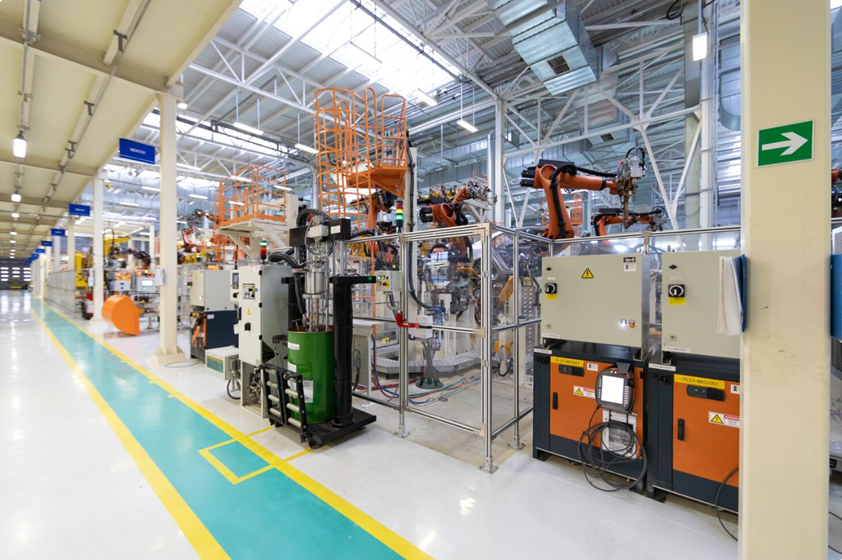
How OK Makes Industrial Automation Reliable and Affordable

Manufacturing is changing quickly, and industrial automation is becoming one of the most important tools for factories that want to stay competitive. Around the world, companies are using robots and smart systems to improve productivity, maintain consistent quality, and handle increasing production demands.

But while the benefits of industrial automation are clear, choosing the right robotics partner is not always easy. Some well-known brands offer advanced technology but come with very high costs. Other suppliers may offer lower prices, but raise concerns about reliability or support.

So how can manufacturers find a solution that truly balances performance, cost, and long-term value?

This is exactly where OK stands out. With a simple philosophy built around three ideas, qualità OK, price OK, and service OK, the company focuses on delivering practical industrial automation solutions that meet real manufacturing needs.

Before looking at what makes OK unique, it helps to understand why industrial automation is becoming such a critical part of modern manufacturing.

The Rising Demand for Industrial Automation in Modern Manufacturing

Industrial automation has moved from being a future concept to becoming a daily reality for factories across many industries. From electronics and automotive production to packaging and metal processing, automation systems are transforming how products are made.

But why are so many manufacturers investing in industrial automation today?

Why factories are accelerating automation adoption

One major reason is efficiency. Industrial automation allows machines to perform repetitive tasks quickly and with high precision. Robots do not get tired, and they can operate continuously for long periods. This helps factories maintain stable production while reducing human error.

Another important factor is labor availability. Many manufacturing regions are experiencing labor shortages, especially for physically demanding or repetitive tasks. Industrial automation helps fill this gap while improving workplace safety.

Automation also allows companies to respond faster to market changes. When production needs increase, robots can help factories scale output without dramatically increasing labor costs.

How industrial automation improves productivity and consistency

Consistency is another major advantage of industrial automation. Robots can repeat the same movement thousands of times with the same level of precision. This reduces defects and helps maintain stable product quality.

For industries that depend on tight tolerances and reliable production, this level of consistency is extremely valuable.

However, adopting industrial automation also raises an important question. If robots are so important to production, how can manufacturers be sure they are choosing reliable equipment?

This leads directly to the first principle behind OK’s approach.

industrial automation

Qualità OK: How OK Delivers Reliable Industrial Automation

When companies invest in industrial automation, reliability becomes a top priority. A robot that performs well in a demonstration but struggles in real production can quickly create costly downtime.

That is why quality is such an important factor in industrial automation systems.

OK focuses on delivering industrial automation solutions that perform consistently in demanding factory environments.

Engineering and precision behind OK robots

Strong engineering is the foundation of reliable industrial automation. From mechanical structure to motion control systems, every part of a robot must work together with precision.

OK designs its robotic systems to maintain accurate movement, stable performance, and long operational life. Careful component selection and rigorous testing help ensure that each system meets the needs of modern manufacturing.

This focus on engineering helps manufacturers trust that their industrial automation systems will perform reliably during daily production.

Consistency and durability in industrial automation systems

Durability is another key part of quality. Industrial automation equipment must handle continuous operation and demanding working conditions.

OK robots are designed to maintain stable performance even during long production cycles. This reliability helps factories avoid interruptions and maintain steady output.

Ease of use also plays an important role. Industrial automation should simplify production, not complicate it. With user-friendly programming and system integration, OK helps companies adopt automation with confidence.

Reliable performance builds trust on the factory floor. But even the most advanced industrial automation system must also make financial sense.

So the next question becomes clear. Can manufacturers adopt automation without facing extremely high costs?

Prezzo OK: Making Industrial Automation Affordable for More Manufacturers

For many companies, the biggest barrier to industrial automation has traditionally been cost. High-end robotics systems can require a significant investment, especially for smaller factories.

This challenge often forces businesses to delay automation projects or adopt only limited automation.

OK approaches this problem differently by focusing on cost-effective industrial automation solutions.

The challenge of expensive robot brands

Large global robot brands have built strong reputations, but their systems often come with premium pricing. For manufacturers that want to automate multiple production lines, the cost can become a major obstacle.

As a result, some companies hesitate to move forward with industrial automation even when it could improve their operations.

How OK balances cost and performance in industrial automation

OK works to make industrial automation more accessible by combining efficient manufacturing with practical engineering.

By optimizing production processes and focusing on real industry needs, the company offers robotic systems that deliver reliable performance at competitive prices.

This balanced approach allows more companies to adopt industrial automation without stretching their budgets.

Affordable solutions also help factories expand automation more quickly. Instead of installing a single robot, manufacturers can deploy multiple industrial automation systems across their facilities.

Still, price and quality are only part of the equation. Once automation systems are installed, another factor becomes just as important.

What kind of support will manufacturers receive after installation?

industrial automation

Servizio OK: The Support That Makes Industrial Automation Successful

Even the best industrial automation systems require proper setup, integration, and maintenance. Without reliable support, companies may struggle to get the full value from their robotics investment.

That is why service plays such an important role in successful industrial automation projects.

OK focuses on providing strong customer support throughout the entire automation journey.

Why technical support matters in industrial automation

Industrial automation systems are often integrated with other production equipment. During installation and configuration, technical expertise is essential to ensure everything works smoothly.

Responsive support can also help resolve issues quickly if problems arise. In a factory environment where downtime can be expensive, fast assistance makes a big difference.

How OK helps customers succeed with automation

OK works closely with customers during planning, installation, and ongoing operation of industrial automation systems.

By understanding each factory’s production needs, the company can recommend solutions that fit specific applications. During implementation, support teams help ensure the system operates correctly and efficiently.

This level of service helps manufacturers feel confident about expanding their industrial automation capabilities.

With strong quality, competitive pricing, and dependable support, OK offers a balanced approach to automation.

But how does this combination translate into real value for manufacturers?

Why OK Is a Smart Choice for Industrial Automation

Selecting the right partner for industrial automation is a major decision. The technology will influence production efficiency, product quality, and operational costs for years to come.

Manufacturers want a partner who understands the real challenges of modern production.

A practical alternative to high-cost robot brands

OK provides an attractive alternative to expensive robotics suppliers by delivering reliable industrial automation without excessive pricing.

Companies can adopt advanced robotics technology while maintaining control over their investment costs.

This makes automation achievable for more businesses, including small and medium-sized manufacturers.

The long-term value of choosing the right industrial automation partner

Beyond equipment, the right partner supports long-term success. Industrial automation is not just about installing robots. It is about improving production systems and building a more efficient factory.

With its focus on quality, price, and service, OK helps manufacturers move forward with confidence.

And as automation continues to expand across industries, choosing the right partner becomes even more important.

Conclusione

Industrial automation is transforming manufacturing by helping companies improve productivity, maintain quality, and adapt to changing market demands. For many factories, the challenge is not whether to adopt automation but how to do it in a practical and cost-effective way.

OK addresses this challenge by focusing on the three values that matter most to manufacturers: reliable quality, competitive pricing, and dependable service. This balanced approach makes industrial automation more accessible while ensuring strong performance in real production environments.

For companies looking to begin or expand their automation journey, the right partner can make all the difference.

If you are exploring industrial automation solutions and want to see how robotics can improve your production efficiency, the team at OK would be glad to help. Reach out to learn more or reach out to discuss how the right industrial automation system could support your manufacturing goals.

FAQs

1. What is industrial automation?

Industrial automation refers to the use of robots, control systems, and smart technology to operate machinery and production processes with minimal human intervention. It helps factories improve efficiency, accuracy, and productivity.

2. Why should manufacturers invest in industrial automation?

Industrial automation allows companies to increase production speed, reduce human error, and maintain consistent product quality while lowering long term labor costs.

3. What industries use industrial automation the most?

Industries such as automotive, elettronica, metal fabrication, packaging, and logistics widely use industrial automation to improve production efficiency.

4. How does OK support industrial automation projects?

OK provides reliable robots, competitive pricing, and strong technical support to help manufacturers successfully adopt industrial automation.

From Jiangxi to the World: How a Chinese Tech Leader Is Redefining Industrial Automation

Manufacturing is changing faster than ever. Around the world, factories are under pressure to produce more goods, reduce errors, and stay competitive in a global market. At the same time, many companies struggle with labor shortages, rising costs, and growing expectations for product quality. Because of these challenges, many manufacturers are turning to robotics and smart systems to upgrade their production lines.

This shift has created huge momentum for industrial automation in China, where technology companies are building advanced robotics solutions for global factories. One of these companies is OK, a robotics manufacturer that is showing how innovation from Jiangxi Province can compete on the international stage.

From its modern production facilities to its intelligent robot systems, OK is helping manufacturers automate operations, increase efficiency, and improve production reliability. But how did a company from Jiangxi become part of the growing story of industrial automation in China? To understand that, we need to look at the bigger shift happening in manufacturing today.

The Rise of Industrial Automation in China in Global Manufacturing

Factories around the world are going through a major transformation. In the past, many production lines relied heavily on manual labor. Workers handled tasks like stacking boxes, sorting products, and moving materials from one station to another. While this approach worked for decades, modern manufacturing demands faster and more consistent performance.

Because of these pressures, more companies are exploring industrial automation China solutions that combine robotics, smart systems, and intelligent software. Automation allows factories to maintain stable production speeds while reducing repetitive physical work for employees.

Robots can work continuously, perform precise movements, and maintain consistent quality during long production runs. This reliability makes them valuable in industries such as food production, logistics, packaging, and e-commerce.

As more businesses recognize the advantages of robotics, the demand for trusted automation partners continues to grow. That raises an important question. Which companies are helping drive the growth of industrial automation in China?

Industrial Automation

How OK Is Advancing Industrial Automation in China

OK is one of the companies contributing to the growth of industrial automation China. Officially known as Jiangxi OK Bolong Intelligent Equipment Co., Ltd., the company focuses on the research and development of industrial robots and intelligent automation systems.

The company operates as a subsidiary of OK Technology, a publicly listed enterprise on the Shenzhen Stock Exchange with the stock code 001223. This connection provides strong financial backing and supports long-term research in robotics and automation.

OK develops a wide range of robotic solutions designed to help factories modernize their production lines. Rather than offering one single product, the company builds flexible automation systems that can be integrated into many types of manufacturing environments.

As interest in industrial automation China continues to grow globally, companies like OK are proving that Chinese robotics manufacturers can deliver both advanced technology and reliable service. However, behind every successful robotics company is a strong manufacturing foundation. So where are these automation systems actually built?

Inside Jiangxi: The Manufacturing Strength Behind Industrial Automation China

The production heart of OK is located in the OK Science and Technology Industrial Park in Xiushui County, Città di Jiujiang, Provincia dello Jiangxi. This facility represents the growing manufacturing strength behind industrial automation China.

The industrial park covers about 260 acres and includes approximately 98,000 square meters of modern production workshops. These facilities support large-scale manufacturing of intelligent equipment and high-end automation systems.

Each year, the factory has the capacity to produce around 1,000 sets of advanced post processing lines. Hardware investment in the facility exceeds 500 million yuan, reflecting the company’s commitment to high quality production and long term innovation.

Smart Factory Technology

The Jiangxi facility also demonstrates how industrial automation China is evolving through smart factory technology. The production line uses advanced systems such as 5G connected equipment and AI visual

inspection technology.

These digital systems help monitor product quality in real time. As a result, the factory maintains a yield rate of around 99.7 percent while also reducing order delivery cycles by roughly 25 percent.

Full Process Manufacturing Capability

Another important strength of the facility is its complete production capability. The factory includes equipment for cutting, bending, welding, heat treatment, forming, milling, and drilling.

By handling the entire manufacturing process internally, the company can maintain strict quality control while ensuring reliable production timelines. This strong manufacturing base helps support the global growth of industrial automation China.

However, advanced factories alone do not solve production challenges. The real value comes from the robotics systems that help manufacturers improve efficiency.

Industrial Automation

Smart Robots Powering Industrial Automation in China

Robotics technology is the driving force behind many modern factories, and OK has developed several types of robots that support the growth of industrial automation in China.

These robots are designed to work efficiently in real manufacturing environments while remaining flexible enough to integrate with existing production equipment.

Collaborative Palletizing Robots

Collaborative robots, often called cobots, are designed to work safely near human operators. Unlike traditional industrial robots that require large safety cages, collaborative robots allow people and machines to share the same workspace.

OK’s palletizing robots can handle cartons, borse, e botti, helping automate stacking tasks that are often physically demanding for workers.

Delta Robots for High Speed Tasks

Delta robots are designed for applications that require extremely fast pick and place movements. Their lightweight structure allows them to perform rapid motions while maintaining accuracy.

These robots are commonly used in industries like food packaging and electronics assembly where speed is critical.

SCARA Robots for Precision Assembly

SCARA robots are known for their precision and repeatability. They are widely used in assembly operations where components must be placed accurately and consistently.

Their compact design also allows manufacturers to introduce automation without major changes to the layout of existing production lines.

Six Axis Robots for Flexible Automation

Six axis articulated robots provide a high level of flexibility. Their multi directional movement allows them to handle complex manufacturing tasks, including packaging and material handling.

Some of these robots can reach speeds of up to twelve cycles per minute and stack products as high as 2.6 meters. With repeat positioning accuracy of plus or minus 0.04 millimeters, they represent the precision that defines modern industrial automation China.

But impressive technology alone is not enough to convince manufacturers to invest. Businesses want to know one thing above all else. Will automation actually improve profitability?

Why Industrial Automation China Delivers Real ROI

For many companies, the decision to adopt robotics comes down to return on investment. Fortunately, many factories implementing industrial automation China solutions see clear financial benefits.

One of the most immediate advantages is labor cost reduction. In many cases, manufacturers have reduced labor expenses by more than thirty percent after introducing automation.

Higher Production Efficiency

Robotic systems can run continuously without fatigue, allowing production lines to maintain stable speeds throughout the day.

For example, a food packaging company that replaced manual stacking with robotic palletizers reduced packing time by about forty percent. Improvements like this show why industrial automation China solutions are becoming more attractive to manufacturers.

Reduced Errors and Higher Consistency

Automation also improves consistency. Robots follow programmed movements with high precision, which helps reduce mistakes during repetitive tasks.

In logistics operations, companies using robotic sorting and visual inspection systems have reduced handling errors by as much as seventy percent.

Faster Payback Period

Because of the combined savings in labor and efficiency, many automation projects achieve a full return on investment within twelve to eighteen months.

This relatively fast payback makes robotics accessible not only to large factories but also to small and medium-sized manufacturers exploring industrial automation China.

As more businesses experience these benefits, interest in automation continues to spread worldwide.

A New Chapter for Industrial Automation China

Although its production base remains in Jiangxi, OK has expanded its operations to reach customers around the world. The company operates an office headquarters and research center in Guangzhou, a major international trade hub.

From this location, the company connects with global customers and partners who are looking for reliable industrial automation China solutions.

OK supports international clients with full process service, working directly with manufacturers to design automation systems that match their production needs.

Its robotic solutions are used in many industries, including food production, logistics, packaging, prodotti farmaceutici, e-commerce, and building materials.

As more factories adopt robotics to improve efficiency, companies that combine strong manufacturing capabilities with advanced technology are gaining global recognition.

Bottom Line

The rise of industrial automation in China reflects a larger shift in how factories operate around the world. Manufacturers are looking for smarter ways to improve productivity, reduce errors, and stay competitive in a rapidly changing market.

OK’s journey from Jiangxi to the global stage shows how Chinese technology companies are contributing to this transformation. With modern manufacturing facilities, advanced robotics systems, and practical automation solutions, the company is helping manufacturers upgrade their operations and prepare for the future.

If your company is exploring automation or searching for a reliable robotics partner, the OK team is ready to help. Visit the OK website to learn more about their robotics solutions or contact the team to discuss how automation can support your next stage of manufacturing growth.

FAQs

What is industrial automation in China?

Industrial automation in China refers to robotics, smart machines, and automated systems developed by Chinese manufacturers to improve factory efficiency, speed, and accuracy.

Why are manufacturers adopting industrial automation China solutions?

Many factories adopt these solutions to reduce labor costs, improve production speed, and maintain consistent product quality.

What industries benefit most from industrial automation in China?

Industries such as food production, logistics, packaging, prodotti farmaceutici, e-commerce, and building materials commonly use automation.

How quickly can automation deliver ROI?

Many companies recover their investment within twelve to eighteen months through improved efficiency and reduced operational costs.