Привет, я Шелли!

Сосредоточение внимания на исследованиях и разработках в области робототехники., мы успешно разработали автоматизированные рабочие станции для совместной паллетизации, три- и четырехосный параллельный (ДЕЛЬТА) роботы, четырехосный горизонтальный (СКРЕБОК) роботы, шестиосные шарнирно-сочлененные роботы и многие другие интеллектуальные промышленные роботы, а также системы и программное обеспечение для управления роботами., с объемом продаж, достигающим 130 миллион. Мы выросли из Китая до глобального расширения..

Заводской дисплей

Мы являемся дочерней компанией зарегистрированной на бирже компании OK Technology. (биржевой код: 001223), специализирующийся на исследованиях и разработках, производство, и продажа интеллектуального оборудования. Использование возможностей нашей материнской компании, OKBOLONG стремится предоставлять комплексные решения клиентам по всему миру., включая роботов-паллетировщиков, многофункциональное кинопроизводство, печать, изготовление сумок, интеллектуальная логистика, и автоматизированная упаковка, помогая компаниям добиться эффективной и разумной модернизации производства.

Связаться с нами

Паллетирующая машина: Высокоэффективный автоматизированный укладчик паллет для производственных линий

Palletizers: How to Improve Efficiency for Your Production Line

If you’re looking for ways to reduce labor costs, improve stacking accuracy, and speed up your production line, a high-quality palletizer is the answer.

What is a palletizer?

A palletizer is an automated device used to stack packaged products (such as bagged, boxed, drummed, and cartoned products) neatly, stably, and consistently onto pallets. It replaces the labor-intensive, time-consuming, and error-prone manual stacking method. As a core piece of equipment in modern automated production lines, palletizers are widely used across various industries to simplify workflows and improve overall production efficiency.

Unlike manual stacking, palletizers can operate 24/7 without fatigue, ensuring uniform stacking shapes and reducing product damage during warehousing and transportation. Whether you are a small factory or a large manufacturing enterprise, you can find a palletizer to suit your production needs.

What is the working principle of a palletizer?

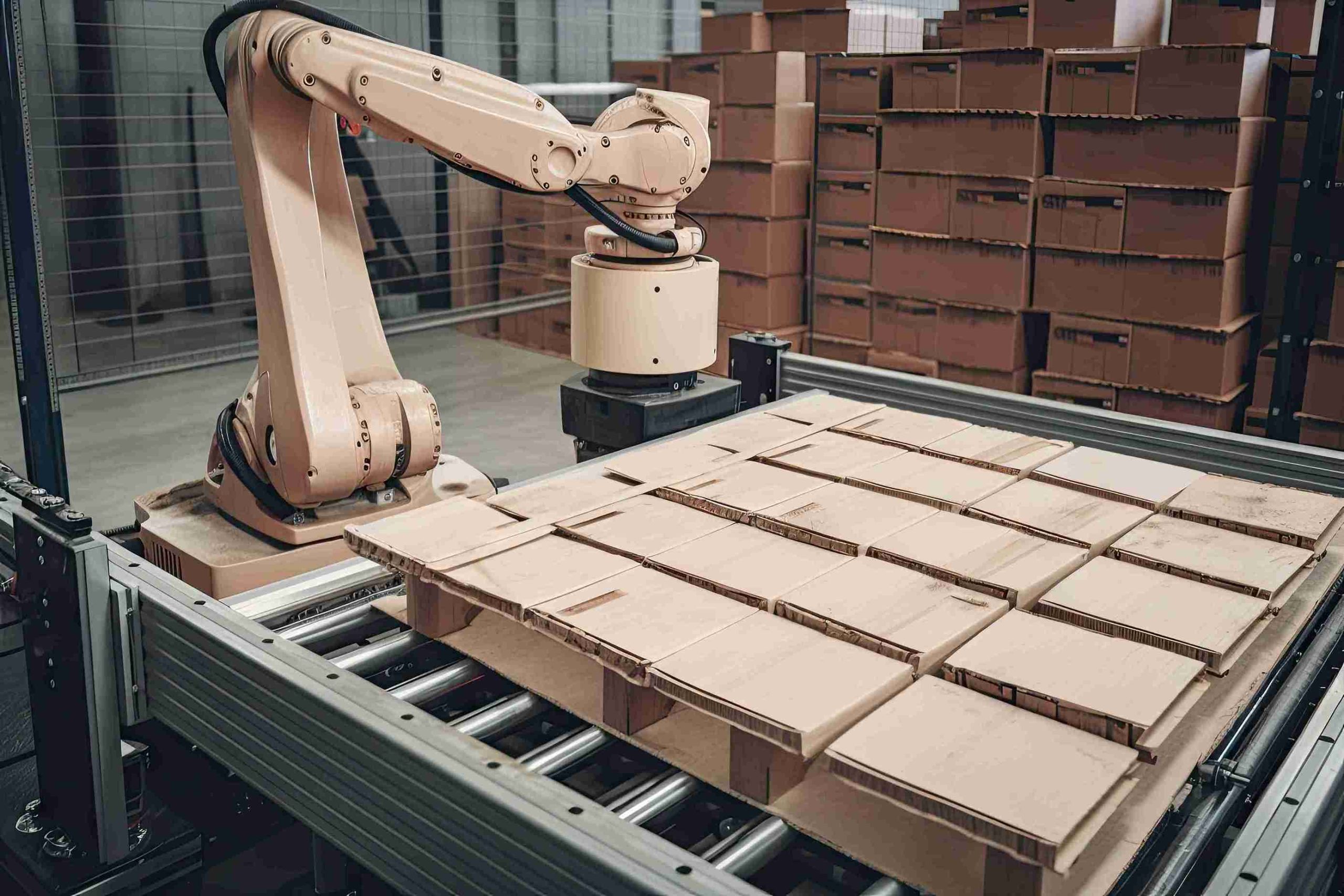
Palletizing robot structure

The working principle of a palletizer is simple and efficient, primarily completing the stacking process through four key steps:

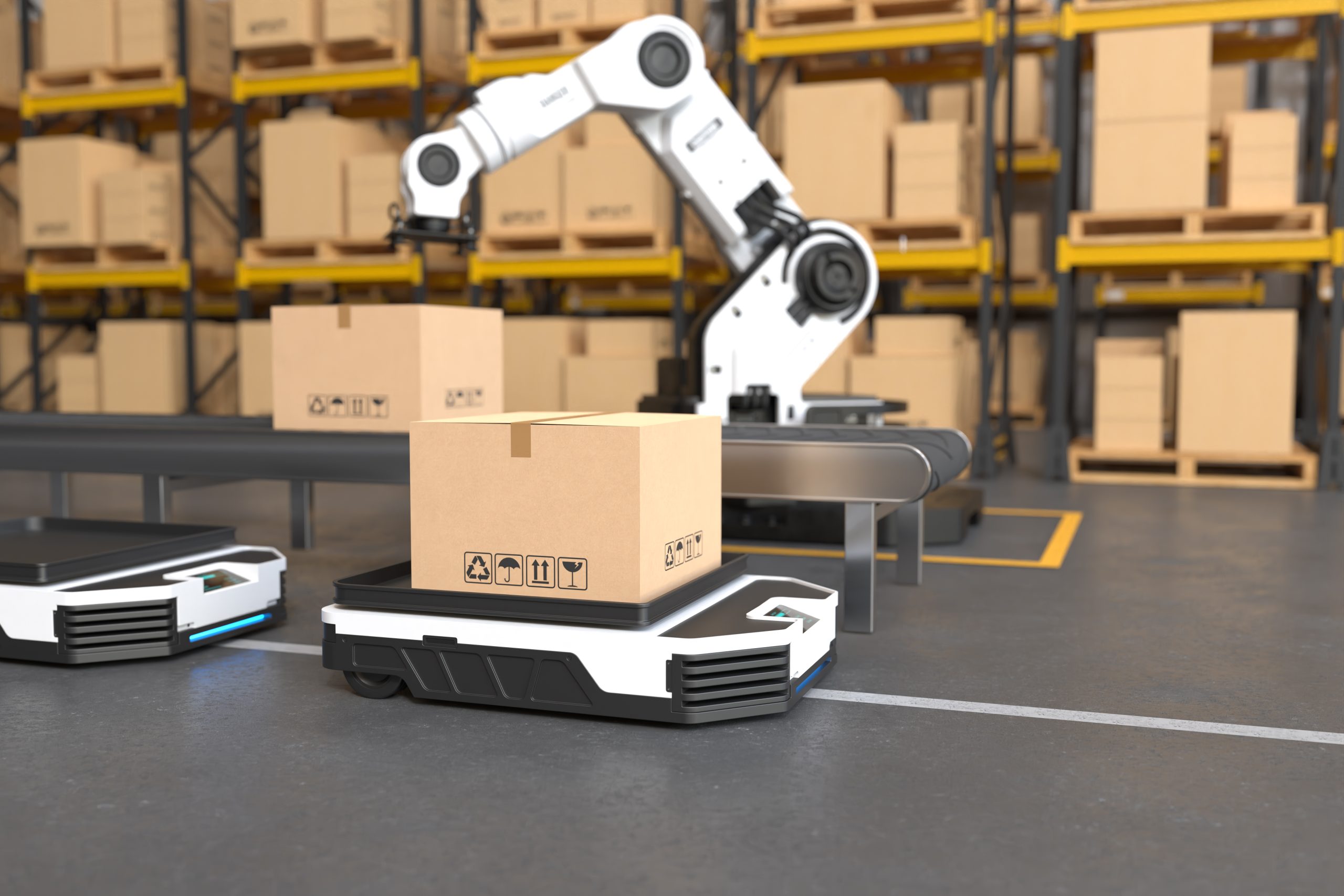
First, packaged products are conveyed to the palletizer via a conveyor belt. This step ensures stable product transport and eliminates the need for manual loading.
Second, the palletizer’s end effector (such as suction cups or mechanical grippers) firmly grasps or holds the product—this component can be customized according to the product’s shape, масса, и материал.

Third, a control system driven by a PLC (Programmable Logic Controller) or artificial intelligence guides the end effector to move the product to a designated position on the pallet. The system is pre-set with stacking patterns (such as square stacking or staggered stacking) to ensure stacking stability. Finally, once a pallet is stacked, the machine moves the finished pallet to the designated area while automatically feeding in a new empty pallet, starting the next stacking cycle.

Modern palletizers are also equipped with user-friendly touchscreens, allowing operators to easily adjust parameters (such as stacking height, speed, and mode) to adapt to different product specifications.

Advantages of using a palletizer

Investing in a reliable palletizing machine (automated palletizer) brings numerous tangible advantages to enterprises, directly impacting production efficiency, cost control, and workplace safety—especially for [Target Industry: Logistics/Manufacturing] businesses. Below are the key benefits of integrating a palletizing system into your production line:
1. Reduce Labor Costs: A single palletizing machine can replace 4-6 manual workers, eliminating overtime pay, training costs, and management expenses. It operates continuously without breaks, maximizing production time and reducing labor turnover— a major benefit of automated palletizing for businesses of all sizes.
2. Improve Production Efficiency: Palletizing machines operate at a stable speed (up to [Number] products per hour), far faster than manual stacking. This reduces bottlenecks in the production line, increases overall output, and helps meet tight [Order Deadline] requirements— making robotic palletizer and mechanical palletizing systems essential for high-volume production.
3. Enhance Operation Safety: Manual stacking involves heavy lifting, which is prone to work-related injuries (such as back pain, muscle strains, or product drops). A palletizing machine eliminates these risks, creating a safer working environment and reducing workers’ compensation costs— a key advantage of automated palletizing solutions.
4. Ensure Stable Stacking Quality: Uniform stacking ensures pallets are stable, reducing the risk of collapse during transportation and storage. This minimizes product damage and loss, improves warehouse space utilization by up to [Percentage]%, and simplifies loading/unloading processes— a critical benefit of any high-quality palletizing system.
5. Strong Versatility and Customization: Most palletizing machines are compatible with various product types (bagged, cartoned, drummed, и т. д.) and can be customized with different grippers or stacking patterns to meet specific production needs, such as [Special Product Requirement: Heavy Load/Fragile Items] handling. This versatility makes robotic palletizer and collaborative palletizer models suitable for diverse industries.
6. Low Maintenance Requirements: The modular design makes palletizing machines easy to maintain, with fewer wearable moving parts. This reduces downtime, lowers maintenance costs, and ensures long-term reliable operation for [Service Life: 5-10 Years]— maximizing the return on your automated palletizer investment.
Опыт автоматизации

Common Application Scenarios of Palletizing Machines

Palletizing machines (automated palletizer) are highly versatile and widely used in various industries that require efficient stacking of packaged products. Common application scenarios for robotic palletizer, collaborative palletizer, and mechanical palletizing systems include:
• Food and Beverage Industry: Stacking beverage cartons, snack packaging bags, or frozen food boxes with a food-grade palletizing machine, balancing hygiene and efficiency— a top use case for automated palletizing.
• Chemical Industry: Handling drummed/bagged products of chemical raw materials, fertilizers, or pesticides with a corrosion-resistant palletizing system, reducing human contact with dangerous goods— ideal for robotic palletizer models.
• Building Materials Industry: Stacking cement bags, mortar bags, or ceramic tiles with a heavy-duty palletizing machine, easily handling heavy objects that are difficult for manual workers to carry— a key application for mechanical palletizing systems.
• Feed and Agriculture Industry: Stacking animal feed, grain, or seed bags with a high-capacity automated palletizer, adapting to large-volume production needs— a common use for palletizing machines.
• Logistics and Warehousing Industry: Stacking cartons or packages for transportation and storage with a fast-acting palletizing system, simplifying the order fulfillment process— essential for modern logistics operations.
• Pharmaceutical and Daily Chemical Industry: Stacking medicine boxes, cosmetics, or cleaning products with a precision palletizing machine, ensuring stacking accuracy and hygiene— suitable for collaborative palletizer models.

Заключение

A palletizing machine (automated palletizer) is a key equipment for enterprises to realize the automation of stacking processes, reduce costs, and improve efficiency. Whether you choose a robotic palletizer, collaborative palletizer, or mechanical palletizing system, integrating this equipment into your production line can streamline operations, enhance workplace safety, and increase enterprise profits. It’s a smart investment for businesses looking to stay competitive in smart manufacturing.
Whether you are a small enterprise or a large manufacturer, a suitable palletizing machine can adapt to your needs and bring long-term value. If you’re considering investing in a palletizing system, it’s recommended to focus on product compatibility, production capacity, customization options, and after-sales service to ensure that it meets your enterprise’s development goals. For businesses in [Target Region], choosing a local or trusted palletizing machine supplier can also simplify installation and maintenance.

Делитесь нашими интересными знаниями и историями в социальных сетях

Фейсбук
Твиттер
Х
Пинтерест

У вас есть вопросы??Получить ценовое предложение

Хотите узнать больше?
Нажмите кнопку сейчас.

Корзина

Проконсультируйтесь для получения более подробной информации о продукте

Заполните форму ниже и мы свяжемся с вами как можно быстрее.